Table of Contents
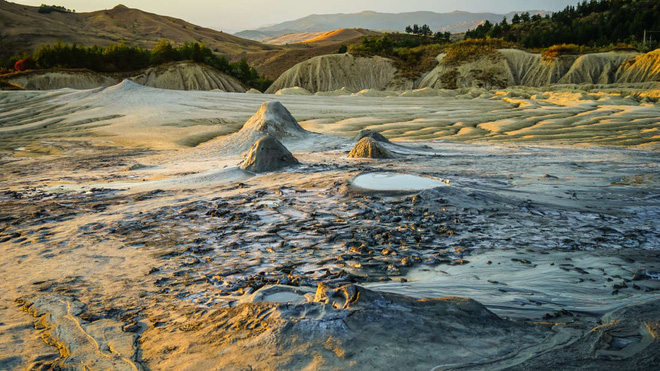
The Lusi volcano of Indonesia's Java island, abruptly erupting in May 2006 surprised the whole world and instead of lava, it spewed mud with a terrible smell. So far, after 11 years, Lusi has continued to erupt and its mud has covered the entire area within a 10km radius.
Key Facts About Lusi Volcano
This volcano spewed a super-dirty sulfur slurry. This mud quickly covered many towns, all residents in the surrounding area had to evacuate.
According to experts from the University of Oslo (Norway), Lusi is not really a true volcano. It is connected to Arjuno-Welirang - a nearby pyramid-shaped volcano, and this is what caused Lusi to erect nonstop for the past 11 years.
Why Lusi Volcano Matters
Arjuno-Welirang's "very rich" organic sediments beneath the magma are "burned", producing a large amount of gas that accumulates over time just below Lusi. When the pressure peaks, it explodes. But because the location erupted too far from Arjuno-Welirang's magma source, instead of spitting out lava, Lusi spewed mud with an unpleasant odor.

At one point, this volcano spewed out up to 180,000 cubic meters of mud per day, enough to fill 72 Olympic swimming pools. The amount of mud that Lusi spewed has submerged more than 60,000 houses, including a deep flooding of up to 40m.
According to the researchers, the source of sediment below is still being heated, so for many years Lusi will continue to erupt.
In Iceland, North America. there exist volcanoes erupting mud, but they erupt because the mud is compressed and pressed on the surface - like toothpaste. And Lusi has a part of the geothermal hydrothermal system - like hydrothermal underwater tubes. Therefore, its eruptions are stronger, and extremely dirty due to the presence of steam.
The study was published in Geophysical Research.
FAQ
What is lusi volcano?
The Lusi volcano of Indonesia's Java island, abruptly erupting in May 2006 surprised the whole world and instead of lava, it spewed mud with a terrible smell.
What makes lusi volcano notable?
So far, after 11 years, Lusi has continued to erupt and its mud has covered the entire area within a 10km radius.
What are the key facts about lusi volcano?
Key Facts About Lusi Volcano This volcano spewed a super-dirty sulfur slurry.
Related Articles
 Strange Beauty of Lava Pillow Under the Atlantic Ocean4 minutes read
 Rare Volcano Spits Out Real Gold: What to Know4 minutes read
 Good for the Fierce Battle Between 'Fire God' and 'Water God'4 minutes read
 Strangely, the Mountain Spits Out Real Gold Every Day but No One Collects It6 minutes read
 See Active Volcanoes Around the World7 minutes read
 Despite the Usual Laws of Physics, These 10 Surreal Locations Are9 minutes read
Reader Comments 0
Sign in with email or Google to join the discussion.