Table of Contents
This guide provides a clear, practical overview of "Breakthrough Device Can Extract Clean Drinking Water Directly from". It organizes the most useful details, explains important considerations, and highlights the steps or choices that matter most.
The device, called the Atmospheric Water Harvesting Window (AWHW), uses a special hydrogel sheet shaped like black bubble wrap. These dome-shaped bubbles absorb water vapor from the air at night when humidity is high. During the day, sunlight evaporates the stored water, condensing it on the glass surface and flowing through a tube into drinkable water.
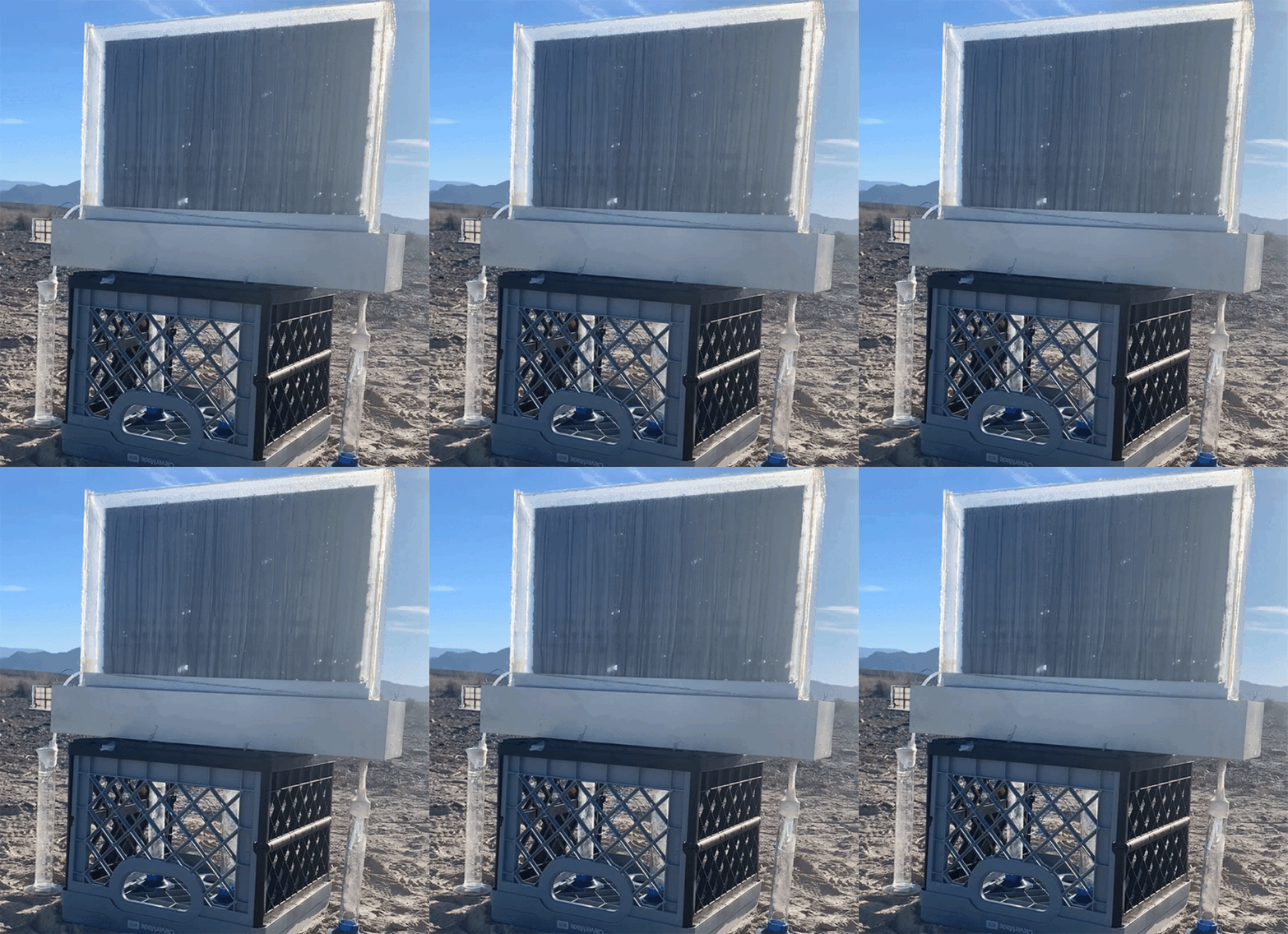
The impressive thing is that AWHW works completely passively, without batteries or solar panels. When tested in Death Valley (California) - one of the driest places in North America, a 1m² panel collected 57-161.5ml of water/day even with a humidity of only 21%, surpassing similar passive devices.
'We want to deploy this technology in areas where solar energy is difficult to access,' said MIT professor Xuanhe Zhao. 'This is a stepping stone to scaling up. People can install multiple panels in parallel to provide real drinking water.'
The team also solved the problem of salinity, a weakness of traditional hydrogels. By mixing glycerol into the mixture, they kept the lithium chloride salt intact in the gel without leaking into the finished water. Test results showed that the lithium ion concentration was below 0.06 ppm, well below the safety threshold.
Hydrogel domes increase the absorption surface area, while a special polymer coating on the glass panel aids cooling for more efficient condensation.
'This is just a prototype,' said Professor Chang Liu, who led the research team. 'We are developing next-generation materials with superior properties, and are also working on multi-panel designs.'
The AWHW has a lifespan of at least a year and promises to provide a sustainable water source in harsh climates. Scientists believe that the vertical panel system could one day provide drinking water to individual households in remote areas.
FAQ
What does this guide cover?
This guide explains breakthrough device can extract clean drinking water directly from, including the main steps, important details, and practical considerations.
Who is this guide for?
It is designed for readers who want a clear, practical overview and a reliable process they can follow without unnecessary complexity.
What should you check before getting started?
Review the requirements, confirm that your software or device is up to date, and save any important data before changing settings.
Related Articles
 New Technology Removes Salt from Water with the Lowest Energy3 minutes read
 Drink Water According to Scientific Methods to Treat Constipation4 minutes read
 Scientists Generate Electricity from the Air by Nanowires3 minutes read
 What if You Drink Water as Soon as You Wake Up7 minutes read
 Mistakes When Drinking Water Make Your Skin Dry6 minutes read
 Medical Discovery: 'Drinking Clean Water Increases the Risk of Asthma'4 minutes read
Reader Comments 0
Sign in with email or Google to join the discussion.