The Thames Barrier was designed by Rendel, Palmer and Tritton, and officially opened in 1984 after 8 years of construction at a cost of £535 million (equivalent to £2.4 billion today).
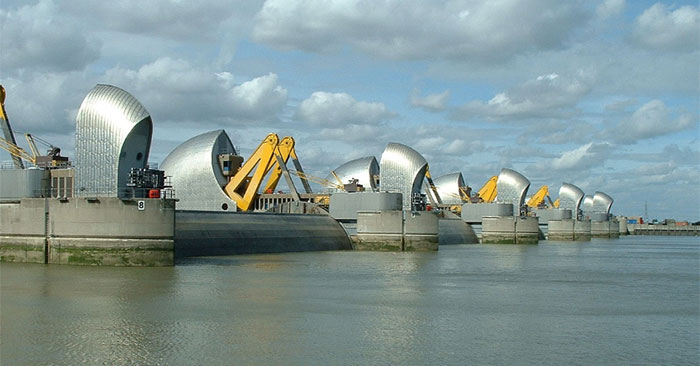
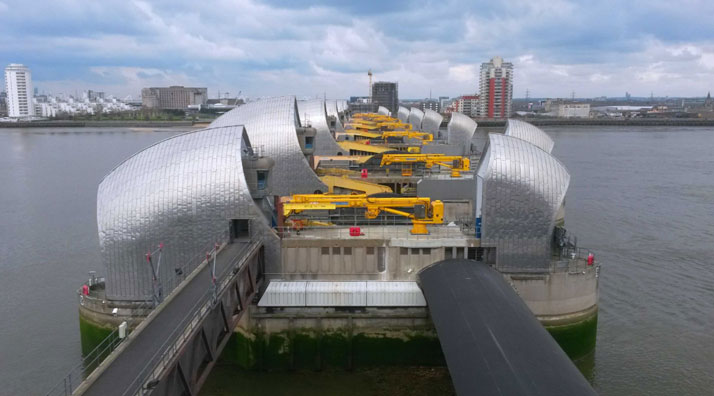
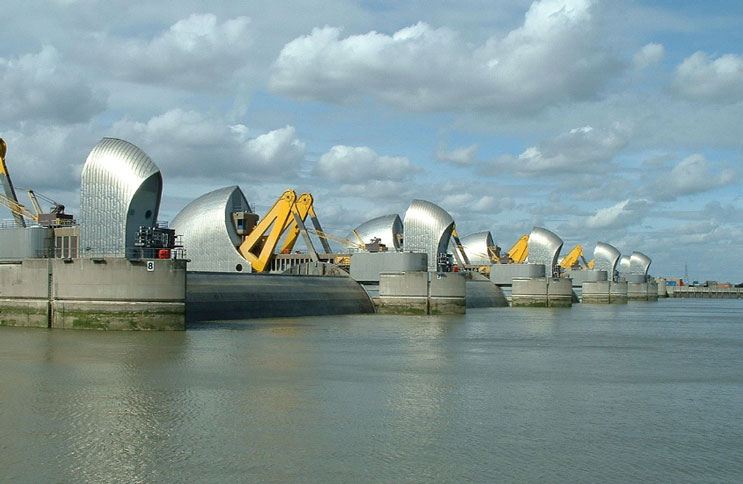
The Thames Barrier consists of nine iron pillars, which join the two river banks, forming ten steel gates, covering 520 metres of the Thames in the Woolwich area.
When raised, the 10 steel gates of the Thames Barrier are over 20 metres high, equivalent to a five-storey building. Each gate weighs about 3,000 tonnes and can hold back 9,000 tonnes of water.
Each single gate can be opened and closed in 10 minutes. And it will take up to 1.5 hours to close the entire system.
The barrier would form a giant wall across the Thames when fully raised, helping to protect London from flooding, storms, rising tides, etc.
4 out of 10 gates are almost always closed, only the 6 middle gates are regularly raised and lowered depending on the weather.
When the gates are down, the Thames continues to maintain a peaceful flow, allowing ships to pass without affecting trade or tourism.
The British proudly describe the Thames Barrier with its unique shape and high aesthetics as an engineering wonder, the most impressive flood protection system in the world.






Reader Comments 0
Sign in with email or Google to join the discussion.