Table of Contents
Complex prompts are useful when a decision has several constraints or a draft needs a careful review. Start with a clear task and source material. Add one technique that addresses a real problem: comparing options, challenging an assumption, finding a failure mode, or checking the finished output. More instructions are not automatically better.
Ask for a reviewable answer, not an internal transcript
The original “think step by step” technique is often described as a universal upgrade. It is not. Some reasoning models work through a task internally, and requesting a verbatim chain of thought may be unnecessary or unavailable. For a decision, ask for a concise explanation of the recommendation, the evidence used, key assumptions, alternatives, and what would change the answer. For a simple factual question, ask for the answer and a source when needed.
Example: “Compare these two rollout plans using the attached timeline. List the dependencies, risks, and missing information. Recommend an option only if the timeline supports it. Keep the rationale to five bullets.” This produces something you can check against the source.
Separate perspectives without inventing experts
A request can ask the model to review the same proposal for usability, accessibility, and implementation risk. Label each perspective and require specific evidence. This is a way to organize a review, not a substitute for a qualified person or actual testing.
| Task | Useful perspectives |
|---|---|
| Website redesign | Reader task, accessibility checks, content maintenance |
| Code change | Correctness, security considerations, performance |
| Product proposal | User need, delivery constraints, support burden |
| Content plan | Reader intent, factual support, distribution |
For example: “Review this checkout flow under three headings: usability, accessibility, and error recovery. Cite the screen or step behind each concern. Do not claim compliance without testing.” This gives each concern a place without assigning imaginary credentials to the model.
Challenge a plan from different angles
Premortem: imagine a plausible failure
Ask: “Imagine this project misses its stated goal. Based on the plan below, list three plausible causes, early warning signs, and one mitigation for each. Mark anything that requires new data.” A premortem helps surface risks; it does not predict the future.
Steelman: strengthen the opposing view
If you favor option A, ask for the strongest reasonable case for option B using the same evidence. Then compare both cases against your decision criteria. Do not ask the model to argue against a position regardless of facts; that can produce a polished but unsupported objection.
First principles and the five whys
For a messy problem, list established facts, constraints, and assumptions before proposing solutions. Asking “why?” repeatedly can help trace a symptom, but five repetitions do not prove root cause. Verify the proposed cause with logs, measurements, interviews, or other evidence appropriate to the task.
State uncertainty in concrete terms
A model's self-assigned “90% confidence” is not a calibrated probability simply because it appears as a number. Ask instead: “Which claims are supported by the supplied material? Which are assumptions? What three facts should I verify before acting?” A source-backed uncertainty list is more useful than a decorative score.
Draft, critique, and revise
- Ask for a draft against clear requirements.
- Ask for a targeted review: missing evidence, contradictions, or failure to meet those requirements.
- Revise only the parts that failed, then check the final output against the source.
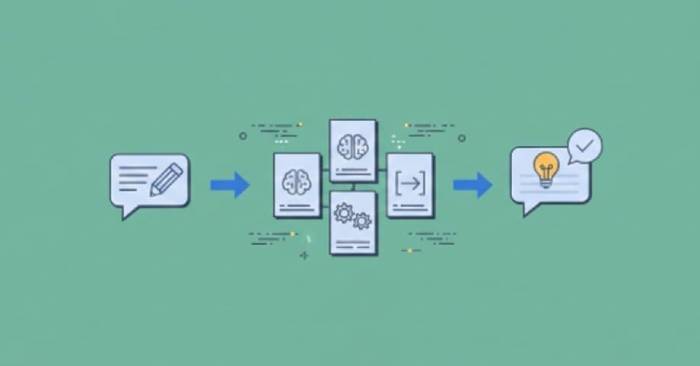
For a process with distinct stages, TipsMake explains when a prompt chain can be clearer than one large prompt. A quality gate between stages helps prevent an unsupported claim from being carried into a polished final answer.
One reusable decision prompt
Decision: [state the options]. Criteria: [list what matters and any constraints]. Evidence: [paste or attach the source]. Compare the options against the same criteria. Give the strongest evidence-based objection to your initial preference. List plausible failure modes and how to detect them. Separate facts from assumptions, name missing information, and provide a concise recommendation only if the evidence is sufficient.
Use the parts that serve the task. For consequential decisions, verify the evidence and involve the people responsible for the decision before acting.
Check your understanding
-
Question 1:
What does it mean to ask AI to perform "steelman" (build the strongest version) for an argument?
EXPLAIN:
"Steelman" means presenting the strongest version of an opposing argument – a useful way to test your own ideas and understand different perspectives.
-
Question 2:
When is it useful to ask for several perspectives on one task?
EXPLAIN:
Separate perspectives can help organize a review, but they do not give the model professional credentials or replace expert verification.
-
Question 3:
For a complex decision, which request gives you a reviewable answer?
EXPLAIN:
A concise rationale and explicit assumptions let you inspect the answer. Asking a reasoning model to reveal every internal step is unnecessary and may not improve accuracy.
Related Articles
 Advanced Prompt Design12 minutes read
 10 AI Prompt Writing Techniques That Will 'Shape' 20267 minutes read
 How Prompt Chaining Works: Four Patterns and When to Use Them12 minutes read
 What Is Prompt Engineering? a Comprehensive Guide to Prompt Engineering in7 minutes read
 Prompt Design: an Essential Skill for Developers13 minutes read
 Fix Advanced Options Without Command Prompt5 minutes read
Reader Comments 0
Sign in with email or Google to join the discussion.