Table of Contents
Kanji are characters used alongside hiragana and katakana in written Japanese. The table below gives 100 common kanji and a short English meaning for each. Use it as a reference when reading and as a starting point for building vocabulary. Frequency varies with the texts you read, so the rows are presented as a study list.
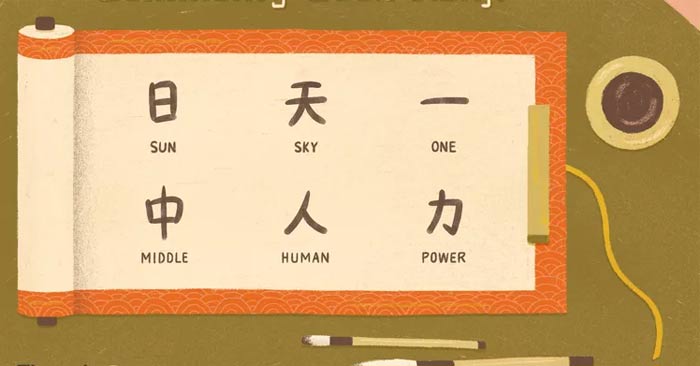
Why one kanji can have several readings
Hiragana and katakana represent sounds. Kanji help identify meanings in written words, and the pronunciation depends on the word. For example, 日 appears in 日本 (にほん, Japan) and 日曜日 (にちようび, Sunday). In 今日 (きょう, today), learn the reading of the whole word.
100 common Japanese kanji
The English glosses describe common uses. Look up the complete word if you need its precise meaning or pronunciation.
| Kanji | Common meanings |
|---|---|
| 日 | sun, day |
| 一 | one |
| 大 | big, large |
| 年 | year |
| 中 | middle, inside |
| 会 | meet, association |
| 人 | person, people |
| 本 | book, origin |
| 月 | moon, month |
| 長 | long, chief |
| 国 | country |
| 出 | go out |
| 上 | up, top |
| 十 | ten |
| 生 | life, birth |
| 子 | child |
| 分 | part, minute |
| 東 | east |
| 三 | three |
| 行 | go, carry out |
| 同 | same |
| 今 | now |
| 高 | high, expensive |
| 金 | money, gold |
| 時 | time, hour |
| 手 | hand |
| 見 | see |
| 市 | city |
| 力 | strength, power |
| 米 | rice |
| 自 | self |
| 前 | front, before |
| 円 | circle, yen |
| 合 | combine |
| 立 | stand |
| 内 | inside, within |
| 二 | two |
| 事 | matter, event |
| 社 | company, shrine |
| 者 | person (often in compounds) |
| 地 | ground, location |
| 京 | capital city |
| 間 | interval, space between |
| 田 | rice field |
| 体 | body |
| 学 | study, learning |
| 下 | down |
| 目 | eye, ordinal marker |
| 五 | five |
| 後 | after, behind |
| 新 | new |
| 明 | bright, clear |
| 方 | direction, way |
| 部 | part, section |
| 女 | woman, female |
| 八 | eight |
| 心 | heart |
| 四 | four |
| 民 | people, nation |
| 対 | opposite, versus |
| 主 | main |
| 正 | correct, proper |
| 代 | replacement, generation |
| 言 | say, word |
| 九 | nine |
| 小 | small |
| 思 | think |
| 七 | seven |
| 山 | mountain |
| 実 | fruit, reality |
| 入 | enter |
| 回 | turn, occurrence |
| 場 | place, setting |
| 野 | field |
| 開 | open |
| 万 | 10,000 |
| 全 | all, whole |
| 定 | decide, fix |
| 家 | house, family |
| 北 | north |
| 六 | six |
| 問 | question, ask |
| 話 | talk, story |
| 文 | sentence, writing |
| 動 | move |
| 度 | degree, occurrence |
| 県 | prefecture |
| 水 | water |
| 安 | peaceful, inexpensive |
| 氏 | surname, respectful suffix |
| 和 | harmony, peace |
| 政 | government, politics |
| 保 | protect, keep |
| 表 | surface, express |
| 道 | road, way |
| 相 | mutual, appearance |
| 意 | meaning, intention |
| 発 | departure, emit |
| 不 | not, un-, in- |
| 党 | political party |
Practice with whole words
Pick three characters from the table and learn one word that uses each. Start with 山 (やま, mountain), 学校 (がっこう, school), and 時間 (じかん, time). Write each word on the front of a flashcard and put its kana reading and meaning on the back. Try recalling both before turning the card over.
For typing practice on Android, add Japanese to Gboard, enter a word’s reading, and choose the matching kanji from the candidates.
Related Articles
 Japanese alphabet
 Top 10 common errors in cover letters that need immediate correction
 Instructions for installing Japanese keyboard for Windows
 A few reviews of Japanese goods 2 old Japanese goods, Japanese goods
 What kind of Japanese annealing pot is worth buying today?
 What is Your Sincerely? How to use Your Sincerely when sending letters
Reader Comments 0
Sign in with email or Google to join the discussion.