Table of Contents
A Corn Moon is a traditional name associated with the late-summer full Moon and the ripening or harvesting of corn in parts of North America. It is commonly used for September's full Moon, especially when that Moon is not the Harvest Moon. The name describes a seasonal tradition, not a different kind of Moon or a guaranteed yellow color.
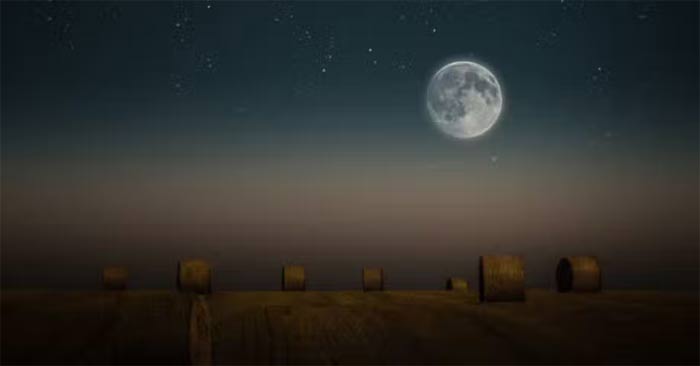
Why is it called the Corn Moon?
Full-Moon names often connect the lunar cycle with seasonal activities. Corn Moon refers to a time when corn was ripening or ready to harvest. These names vary between communities and sources; they should not be presented as one universal calendar shared by all Indigenous peoples.
NASA's Corn Moon explanation attributes the name to traditions of some northern Indigenous peoples of the Americas. It is a cultural label rather than an official astronomical classification.
Corn Moon and Harvest Moon are not identical labels
The Harvest Moon is the full Moon nearest the September equinox, marking the start of autumn in the Northern Hemisphere. It usually falls in September but can fall in October. When October's full Moon is closest to the equinox, September's is often called the Corn Moon.
The distinction depends on the actual full-Moon and equinox dates, not a fixed rule that every early-September Moon has one name and every late-September Moon has another. “Advent Moon” is not the term for the full Moon nearest the autumnal equinox. See NASA's Harvest Moon definition.
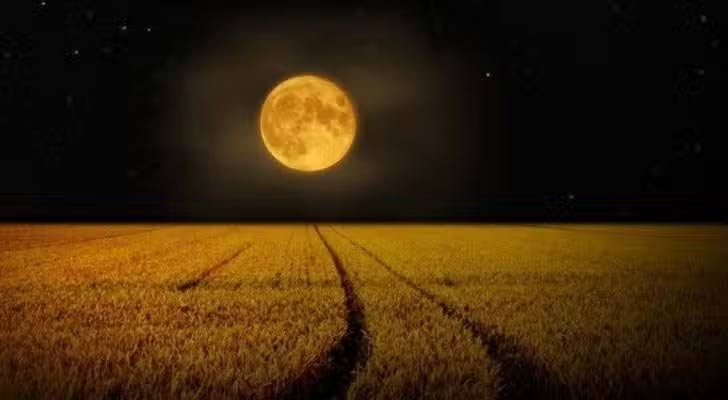
Does a Corn Moon look different?
No special color is required. A rising Moon may look yellow or orange because its light travels through more of Earth's atmosphere near the horizon. Its seasonal name does not change its physical color.
A Corn Moon is also not automatically a supermoon or a blue moon. Those labels refer to different circumstances. A supermoon is associated with the Moon being near its closest orbital approach; a blue moon depends on the calendar or seasonal definition being used. Our explanation of blue-moon traditions covers that separate distinction.
How to observe it
Check a reliable lunar calendar for the full-Moon date in your time zone and local moonrise time. Choose an unobstructed eastern horizon if you want to watch it rise. No special equipment is needed to enjoy the view.
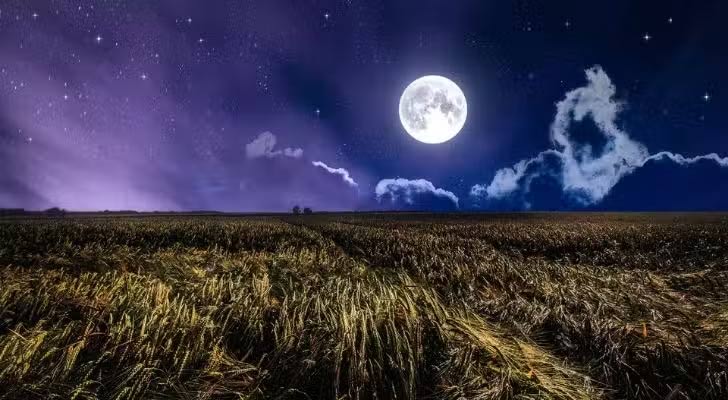
The Moon can appear nearly full on surrounding nights, although the astronomical full phase occurs at a specific instant. For more background, see our full-Moon overview. Festival dates, including Mid-Autumn celebrations, follow their own calendar traditions and should not be inferred from an English seasonal nickname alone.
Related Articles
 Can pregnant women eat corn?
 Fat in corn, coconut oil increases the risk of developing intestinal tumors
 Are the uses of all kinds of nut milk, bean milk, and corn milk you know?
 Full Moon facts - Full moon you may not know yet
 Discover incredible facts about the Moon
 This is why we always see the Moon always following us
Reader Comments 0
Sign in with email or Google to join the discussion.