Table of Contents
In mobile gaming, a whale is a player who spends much more money than the typical player. The label is most often used around free-to-play games, where downloading costs nothing but characters, cosmetic items, battle passes, energy, or randomized rewards can be purchased repeatedly.
There is no universal amount that turns someone into a whale. A large spend in one community may be ordinary in another, so the term describes relative spending behavior rather than a fixed price threshold.

What “whale” means—and what it does not
Whale is informal community and industry shorthand, not an official player category. Related labels such as “dolphin” and “minnow” are sometimes used for medium and low spenders, but these terms also lack standard definitions.
The label does not indicate skill, experience, or commitment. Some games sell only visual customization, while others let purchases speed up progress or improve a roster. Spending can therefore affect different games in very different ways.
It is also best used to discuss monetization patterns, not to shame an individual. A person's disposable income and reasons for buying digital items are not visible from their account.
Why free-to-play games pay attention to high spenders
A free-to-play game needs paying customers to fund development and operation. Many players may never purchase anything, while a smaller group buys frequently. Developers can respond by offering limited-time bundles, upgrade materials, subscriptions, or repeated chances to obtain a rare item.
Gacha and loot-box systems deserve particular care because the buyer receives a randomized reward rather than a known item. The U.S. Federal Trade Commission describes loot boxes as in-game microtransactions that offer randomized virtual items; its consumer guidance on loot boxes also recommends checking a game's purchase settings and discussing costs with children.
For an example of how a gacha system fits into a larger game, see TipsMake's Genshin Impact review. Players interested in the genre without focusing on purchases can also start with this Gacha Club beginner's guide.

How to keep in-game spending under control
- Set a monthly entertainment limit. Count every small purchase; repeated low-cost transactions can be easy to overlook.
- Check the real price before confirming. Games often use gems, coins, or another intermediate currency that makes the cost less obvious.
- Do not chase money already spent. A failed attempt does not make the next randomized reward more valuable unless the game clearly states a guaranteed-reward system.
- Use a cooling-off period. Waiting a day before buying a limited bundle helps separate genuine value from urgency created by a countdown.
- Review receipts and remove stored payment methods when necessary. If a charge is unfamiliar, check the platform purchase history and contact its support channel promptly.
If you mainly want games that work without constant online events or store prompts, TipsMake also maintains a list of offline games for iPhone and iPad.
Controls for children's accounts
Parents should not rely on a verbal rule alone. Apple provides Ask to Buy for eligible family accounts and separate controls for disabling in-app purchases. Google Play supports purchase approvals for family members. These controls apply to purchases handled by the relevant app store; a game may use a different payment route, so review the title's own account and payment settings too.
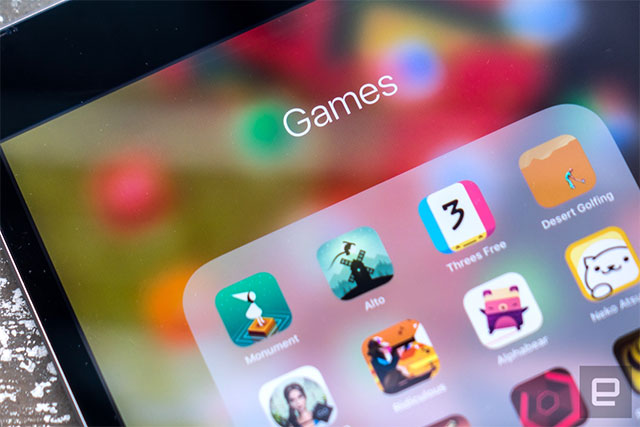
Spending money in a game is not automatically a problem. The useful question is whether the purchases fit a deliberate budget, are understood before confirmation, and remain enjoyable without causing financial stress.
Related Articles
 Why Can Whale Carcass Explode: Whale Carcasses3 minutes read
 Super Rare Scene: Blue Whales... 'Walk Heavy' in the Middle of2 minutes read
 minutes read
 10 Lightweight Mobile Games but Extreme Gameplay8 minutes read
 Tap: How to Make a Whale on Apple Messages3 minutes read
 Summary of Common Game Terms and Their Meanings27 minutes read
Reader Comments 0
Sign in with email or Google to join the discussion.