Table of Contents
On July 15, 2025, a solar filament erupted along the Sun’s northeastern limb and left a bright, canyon-shaped feature in ultraviolet images. Spaceweather.com estimated that the feature stretched more than 250,000 miles (about 400,000 km). The nickname “canyon of fire” describes the appearance of the glowing plasma after the eruption.
Watch the filament erupt
In this sequence from NASA’s Solar Dynamics Observatory, follow the material lifting away from the Sun, then look for the bright structure left along its path.
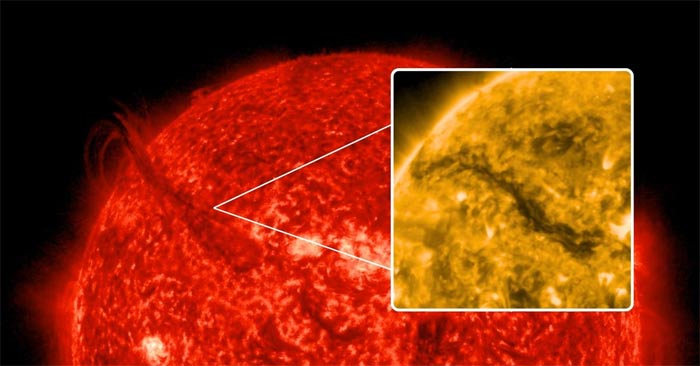
What made the feature look like a canyon?
A solar filament is relatively cool, dense plasma held above the visible solar surface by magnetic fields. When the magnetic structure becomes unstable, the filament can lift off. The field rearranges, and heated plasma traces the structure left behind. What appears to be a trench is a temporary feature in the Sun’s atmosphere.
Did the eruption send material toward Earth?
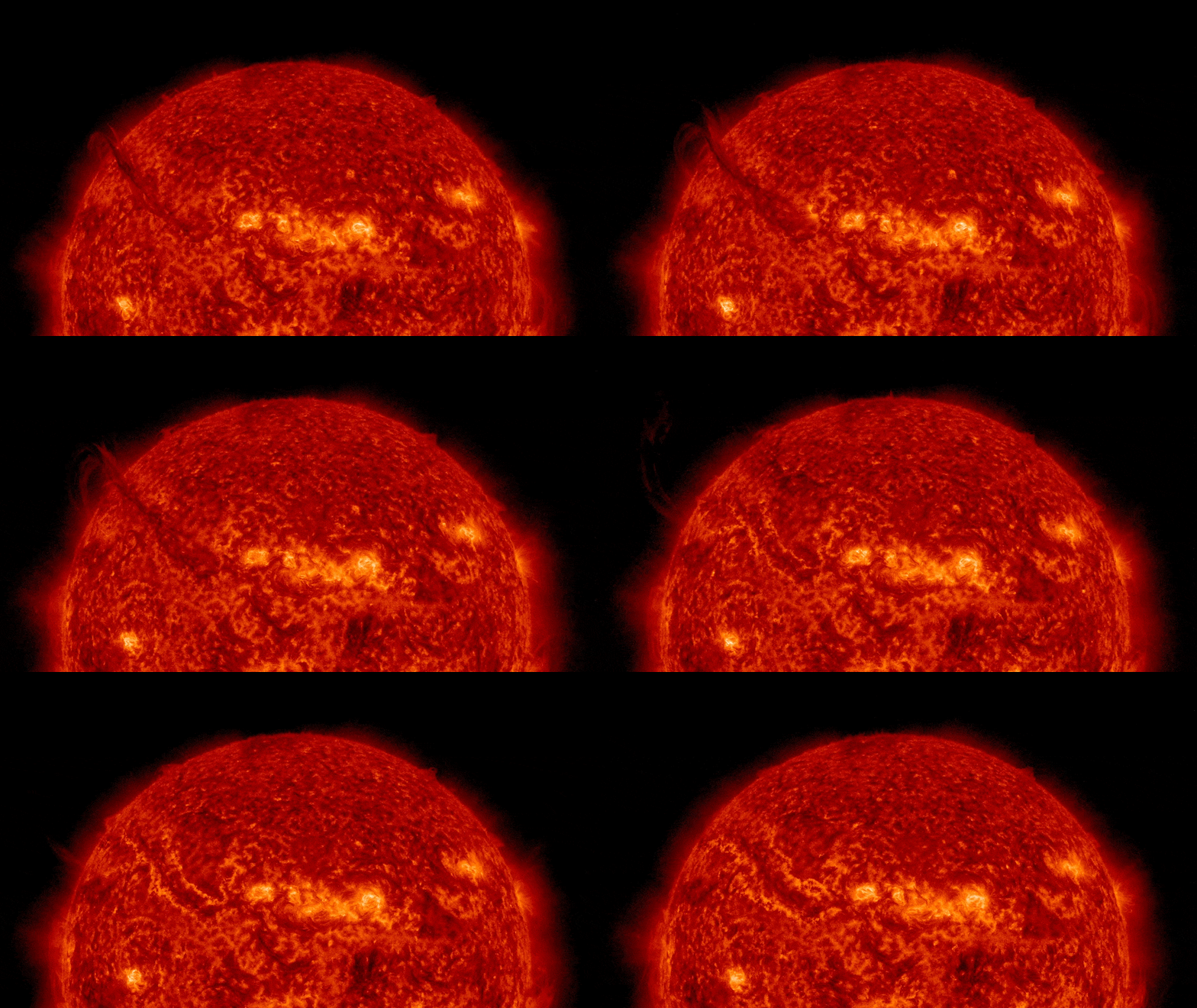
The eruption released a coronal mass ejection, a cloud of plasma carrying a magnetic field. Coronagraph images from SOHO and GOES-19 showed the cloud moving away from Earth, according to reporting on the event. Whether a CME can trigger a geomagnetic storm depends in part on its direction and how its magnetic field interacts with Earth’s field. See how solar storms affect Earth and more about the Sun.
Related Articles
 Close up of the scene of the horrifying explosion of the super volcano, engulfing the whole city
 The Earth will cool when volcanic eruptions on Bali island erupt
 Super Earth's most dangerous volcano can 'explode' soon causing the biggest eruption in history
 NASA wants to penetrate the world's dangerous dangerous volcano to prevent a massive eruption and energy gathering
 How to download and play free game Crying Suns
 Unmanned aircraft help predict volcanic eruptions
Reader Comments 0
Sign in with email or Google to join the discussion.