Table of Contents
This updated guide examines The Biggest Problem with Facebook's Electronic Currency: Trust and organizes the essential facts, background, and practical takeaways in clear American English.

- Facebook will test a cryptographic currency competing with the bank later this year
Theoretically, Central Banks are organizations that are confident in ensuring the value as well as the smooth circulation of a monetary system. But in fact, the circulation history of legal currencies (fiat money - which is recognized by the government but not backed by material value (such as gold, silver.)), is full violations of that trust. Most of what we use to connect with electronic money - the dense technology foundation, the peach coin fever, the strong price fluctuation - is a direct result of the fundamental rejection of put trust in a central financial agency.
Now, that power is gradually in Facebook's hands. Recently, Facebook has officially announced the decision to launch an ambitious new electronic money called Libra, managed by a prestigious association of financial and technology companies as well as the largest. gender, including Facebook along with large businesses operating in the financial-monetary sector such as Visa and Mastercard.
This is an extremely ambitious, even the most ambitious project that CEO Mark Zuckerberg cherished since Facebook was officially established in 2004. Basically, the launch of this currency It is possible to have a strong impact on global blockchain finance. At the technical level, Libra is similar to bitcoin and Ethereum: it has the same anonymity and provides similar support for smart contracts and independent applications. In theory, Libra possesses all the advantages that an electronic currency can have, bigger and faster.
- Power theft from oil rig to dig Bitcoin, a Chinese man is about to be "fed the State"
 Libra - Facebook
But although Libra operates in hierarchical mode, it is basically a Facebook project. Facebook's team is responsible for designing the blockchain and selecting partners to manage it. The Libra wallet will be embedded in Facebook applications like Messenger and WhatsApp, which means that Facebook products will also serve as the primary platforms through which people can experience the Libra wallet.
Thus, it can be said that using Libra means you have put your trust in Facebook - something that seems a bit 'precarious' in 2019. And while early electronic money meant power decentralization, owning Libra meant you would be behind one of the strongest companies on earth. If this project is successful, it is likely that the decentralized era of electronic money has come to an end.
Despite possessing many technical aspects similar to bitcoin, Libra knows how to get rid of the 'man's' shadow in important ways. The electronic currency of Facebook circulates on a licensed blockchain, which means that only companies within the Libra Association can exploit it.
- Hacker earned $ 32,000 in 7 weeks by fixing a series of gaps in e-money projects
As the developers have described, it is a necessary concession for general stability, allowing this young currency to avoid the already existing, energy-consuming and energy-delay issues. and it will also make it difficult for 'long' for bitcoin and many other large electronic currencies. But this may also make the Libra Association a 'de facto central bank', proactively managing money for stability backed by bond reserves and currency.
For a blockchain business, this brings perfect meaning: you need a blockchain that can delete transactions quickly and will not discount after you have purchased it. But as a question of faith, it's a strange choice: if you don't really trust agencies like the Federal Reserve, or the State Bank, then why do you trust on Visa and Mastercard news?
- Detecting new electronic phishing malware, redirecting payment transactions to attackers
 Facebook will release its own virtual currency
Libra does not have a permanently licensed plan. A recently released separate document shows the Libra Association's plan to 'enroll' more members, eventually moving to an unlicensed model after five years, when issues Scalability may have been resolved.
This plan is entirely possible, but there is a reason to be skeptical. Nearly no blockchain has ever been shifted from 'licensed' to 'unlicensed', and there will be important policy barriers to prevent this - many of which stem from companies. within the association itself, may want to keep their privileged position in the network.
Hopefully after that 5-year milestone, technical problems will no longer appear with Libra. The Libra Association acknowledges that a centrally managed blockchain will not be able to gain much credibility, promising that this is only temporary, and intends to come up with a solution later.
- US $ 1.7 billion of electronic money was beaten by hackers in 2018
Meanwhile, people who are not sympathetic to Facebook (which is quite large) are evaluating Libra as a potential threat to the financial-monetary system. Financial expert Matt Stoller from Open Market - one of Facebook's leading antitrust critics - described this idea as an exclusively operated 'global private monetary fund'..
Susan Fowler from Uber brought this currency into even more harsh terms: 'Facebook is one of the biggest platforms causing misinformation across the globe, and when they encroach on talent. Mainly, that would be a major concern '. In a related move, European regulators also considered options to contain the new currency, considering it a threat to national sovereignty.
- 7 best safety wallets for Bitcoin and other electronic currencies
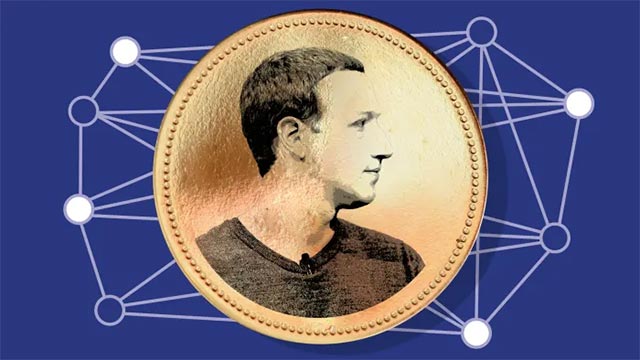 Participation opens up great potential for Facebook
Return to the question of faith. In theory, extending the physical control over Libra to dozens of different technology companies is said to help solve trust issues, making people believe that the Libra virtual money community seems to be a playground where there are dozens of big companies. But Facebook's role in sketching this virtual money system is still hard to ignore. If you've ever believed in how to operate and manage Facebook's News Feed, then trusting this company as a business building a financial system is too 'reckless'. or not?
Participating in a business that was previously solely managed by the central bank system may open up great potential for companies to grow. Just look at the soaring Facebook stock price after announcing the release of Libra is understandable, but it's hard to find the reason for the 'common investors' to be excited about the launch. This electronic coin.
FAQ
What is The Biggest Problem with Facebook's Electronic Currency: Trust about?
It provides a structured overview of Libra, explains the main context, and highlights practical takeaways for readers.
Why does this topic matter?
Understanding the main concepts helps readers evaluate the issue, avoid common mistakes, and make better-informed decisions.
How should readers use this information?
Use the guidance as a practical starting point, confirm details that may have changed, and follow current product, safety, or security recommendations.
Related Articles
 Facebook Will Test a Cryptographic Currency Competing with the3 minutes read
 Build an Offline PDF-to-Markdown Tool With Claude Code11 minutes read
 Stealing, Electronic Money Scams in 2019 May Hit a Record of $$10 minutes read
 How to Change the Network Logo on Android Phones4 minutes read
 How Can Zero-trust Security Prevent Ransomware Attacks?7 minutes read
 The 5 Biggest Problems Microsoft Needs to Fix on Windows 118 minutes read
Reader Comments 0
Sign in with email or Google to join the discussion.