What you will learn
- Run separate factual, structural and editorial passes.
- Detect unsupported and duplicated claims.
- Replace generic language with concrete evidence or action.
- Create a final sign-off record.
What you need
- A complete draft and its source material.
- A defined audience and purpose.
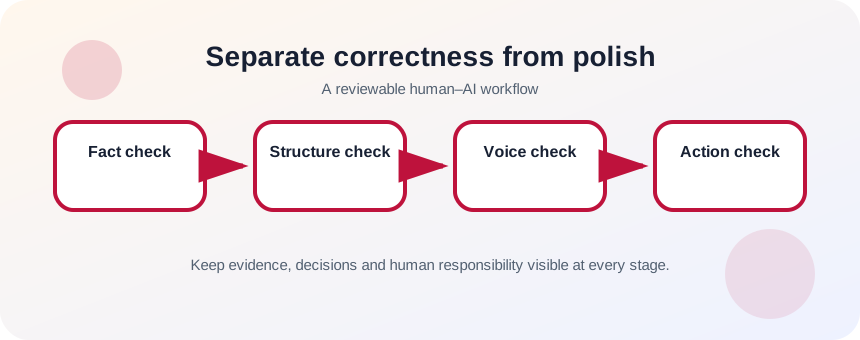
Separate correctness from polish
OpenAI warns that ChatGPT may produce inaccurate or misleading information and recommends checking important information with reliable sources.
NIST’s Generative AI Profile highlights information-integrity and over-reliance risks, which are relevant when generated content is published without sufficient review.
A spelling pass cannot find an invented statistic. A fact check cannot decide whether the introduction serves the reader. Running one pass at a time reduces accidental changes and produces a clearer review record.
Build a source and requirement checklist
Collect the brief, approved facts, sources, legal or brand requirements and the intended action. Freeze the draft version before review so changes can be compared. High-impact claims, quotations and promises should be visible in a separate list.
- 1
Save the draft as a new review version.
- 2
Attach the original brief.
- 3
List mandatory facts and prohibited claims.
- 4
Mark dates, numbers, quotations and references.
- 5
Write the desired reader action.
- 6
Name the final approver.
Run four focused review passes
First verify facts and source support. Second review structure and remove repetition. Third edit voice, examples and specificity. Fourth test the action, links, names and final formatting. AI can help locate repeated phrases or propose alternatives, but the editor should accept changes one category at a time.
- 1
Verify every high-impact claim.
- 2
Remove unsupported statements.
- 3
Check paragraph order and headings.
- 4
Combine duplicated ideas.
- 5
Replace vague praise with evidence.
- 6
Restore the author’s real point of view.
- 7
Test links, names, dates and action text.
- 8
Approve the final version and archive the evidence.
Use a release checklist proportionate to risk
A private brainstorm needs less process than a public policy explanation or customer commitment. Increase source verification, legal review and approval for higher-consequence content. Record what AI did when organizational rules require disclosure or auditability.
Use separate review passes because one read rarely catches every class of defect. First check facts and citations without polishing style. Next inspect structure and whether each section earns its place. Then check tone, accessibility, formatting and the requested action. Finally compare the released version with the approved source notes. Separating passes reduces the chance that fluent wording distracts you from an unsupported claim.
- Verified claims survived the final rewrite.
- The main action is clear and testable.
- A named person owns publication.
Audit a 500-word AI-assisted draft
Use four passes and produce a concise change log.
- 1
Freeze the draft.
- 2
Run the factual pass.
- 3
Run the structural pass.
- 4
Run the voice and specificity pass.
- 5
Run the action and link pass.
- 6
Write a change log and obtain sign-off.
Common mistakes to avoid
- Asking for one universal “improvement” pass.
- Editing tone before verifying claims.
- Removing caveats because they sound less confident.
- Publishing without a named owner.
Key takeaways
- Quality control is a sequence of different tests.
- Generic language often signals missing evidence or audience context.
- Final accountability remains human.
Frequently asked questions
Can AI proofread its own draft?
It can identify possible issues, but it cannot independently verify all facts or organizational requirements. Use the source material and a human reviewer.
Should I disclose AI assistance?
Follow applicable law, platform rules, client agreements and organizational policy. Disclosure requirements vary by context.
Sources and further reading
Ready to continue?
Mark the lesson complete so your Learning Path progress stays current on this device.