Table of Contents
This article provides a clear overview of Intel's Loihi Neural Chip Has the Ability to ... Smell Like, with the main facts, useful context, and practical details organized for easy reading.
Specifically, in a research report published in Nature Machine Intelligence, Intel said that it collaborated with Cornell University to train Loihi in interpreting and distinguishing odors related to potentially harmful chemicals. In the future, the electronic nose could be used to identify dangerous materials, or even diseases. For example, research has shown that people with Parkinson's disease will have a characteristic odor on the body.

Intel said it connected Loihi to the output of 72 chemical sensors, "teaching" it that each specific reaction of a sensor would correspond to the presence of a specific chemical. Loihi, which is designed to mimic the way the human brain works, is trained through machine learning that the information generated by the sensors corresponds to a specific smell, among them the smell of acetone and ammonia., and methane. Intel revealed that it also uses many other odors to "jam" to test how good Loihi's ability to recognize odors.
According to the US Department of Homeland Security, hand-held explosives detectors that "sniff" your bags at the airport operate by collecting tiny particles of material emitted from the explosives., or steam rising from them. While these sensors seek to detect chemicals themselves, what Intel does with Loihi seems a bit more abstract: they seek to model the electronic signal that your brain will emit. out when your olfactory cells catch the smell.
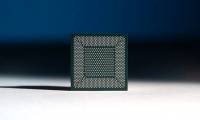
Intel developed the Loihi chip - a neural research chip capable of simulating the human brain - in 2017. Although the chip was originally designed with 130,000 silicon neurons connected to 130 million "synapses". "Intel increased its target to more than 1 billion synapses by 2019 - making Loihi nearly as smart as a mouse - and it even created a" cloud "of 64 Loihi chips connected together.

Intel's Nahuku circuit, containing 8 - 32 Loihi chips
"My next step is to generalize this approach to a range of issues - from sensory analysis (understanding the relationship between objects you observe) to abstract issues like planning and making decisions, "said Nabil Imam, senior researcher in the Intel Lab neuroscience team. Imam is the person who is holding a Loihi chip test version in the picture above.
" Understanding how the brain's neural circuits solve complex computational problems will give us important clues to improve design efficiency and enhance the power of machine learning algorithms. ".
Reference: PCWorld
FAQ
What is the main focus of Intel's Loihi Neural Chip Has the Ability to ... Smell Like?
The article explains the most important facts, context, and practical details related to Intel's Loihi Neural Chip Has the Ability to ... Smell Like.
Who may find this information useful?
It is useful for readers who want a clear overview, practical context, and a better understanding of the subject.
What should readers verify before taking action?
Check current product versions, official requirements, regional availability, and any details that may have changed since the original publication.
Related Articles
 Intel's AI Chip Is Nearly as Complex as the Mouse Brain, 100 Billion Nerve Connections3 minutes read
 Intel Introduced Chips That Act Like Human Brains3 minutes read
 Intel Is Developing a Chip That Can Distinguish Scents3 minutes read
 Intel Launches a New AI Chip That Is 1,000 Times Faster Than CPU3 minutes read
 The Human Brain Simulation Chip Consumes Almost No Energy3 minutes read
 Discover Human Limits Through 5 Senses: Taste6 minutes read
Reader Comments 0
Sign in with email or Google to join the discussion.