Table of Contents
To survive 99 Nights in the Forest, keep the campfire fueled, gather food and crafting materials during daylight, return before dangerous night encounters, and steadily improve the camp. Rescue missing children and build beds to increase the number of days credited after each night, shortening the route to the day-99 milestone.
The Roblox experience receives frequent updates, so item tiers, enemies, classes, and recipes may differ from older screenshots. Treat the in-game crafting menu and event notices as the final authority.
Understand the core objective
A successful run balances five tasks:
- maintaining and upgrading the central campfire;
- finding food, wood, fuel, scrap, and better equipment;
- surviving supernatural creatures, wildlife, and hostile raids;
- rescuing the missing children;
- building beds and long-term resource systems.
The campfire is both a safe hub and a progression tool. Upgrading it reveals more of the map, which opens routes to stronger loot and child-rescue areas.
Early-game priorities
1. Stabilize the campfire
Collect nearby wood and other valid fuel immediately. Do not burn every log you find: wood is also required for crafting and construction. Upgrade the fire gradually and keep a reserve so an unexpected trip or storm does not leave the team in darkness.
2. Craft a map and improve the bench
A map makes exploration safer because it helps players return to camp and revisit useful structures. Upgrade the crafting bench after basic fire and food needs are under control; higher tiers unlock storage, farming, defenses, and other long-term tools.
3. Establish food
Collect safe food during every daytime trip and start a renewable source when the crafting options allow it. Hunger can ruin an otherwise strong run by forcing a player to explore at the wrong time or waste healing supplies.
4. Explore in short daylight loops
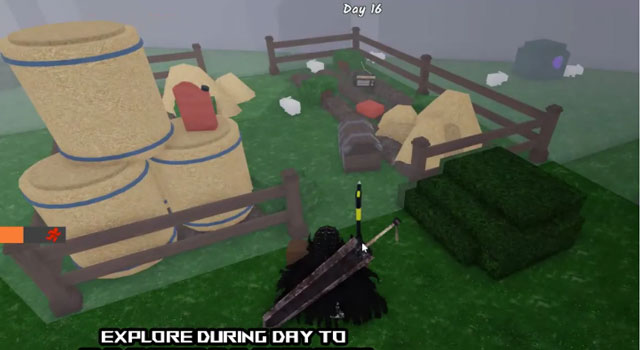
Search cabins, camps, and other structures for fuel, scrap, tools, weapons, seeds, and healing items. Mark a return time and turn back early. A small bag or weak weapon is a reason to shorten the route, not to gamble on one more building.
Surviving The Deer and other night threats
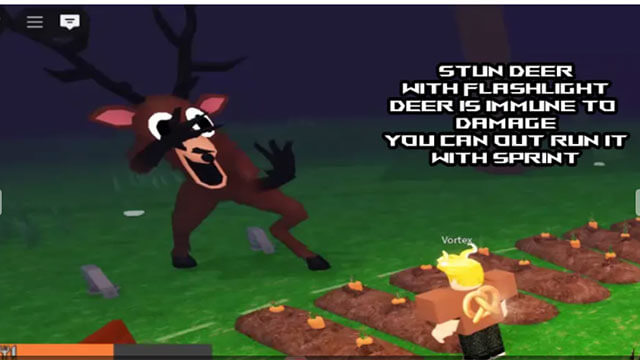
The Deer is a major nighttime threat and should not be treated like ordinary wildlife. Stay close to the campfire when you lack a reliable flashlight or escape route. When a light tool can stun or repel a creature, aim deliberately and preserve its charge.
Updates have added other threats with different behaviors, so listen for audio cues and read warning icons. Some creatures cannot be killed through normal combat; wasting ammunition only leaves the team weaker for raids.
Prepare for cultist raids
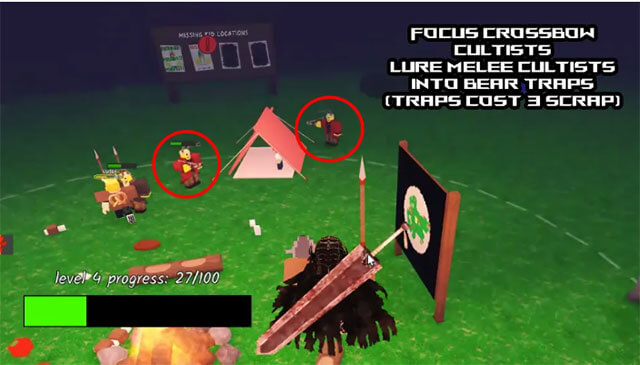
Hostile raids become harder as a run continues. Keep ranged enemies from firing freely, use cover, and avoid surrounding yourself with attackers. A teammate with healing items should remain able to revive downed players.
- Store spare ammunition rather than carrying all of it on one explorer.
- Place traps where the team can see and exploit them safely.
- Keep the area around important crafting stations navigable.
- Do not rely on an exploit or an impenetrable wall; updates can change enemy pathfinding.
Rescue missing children
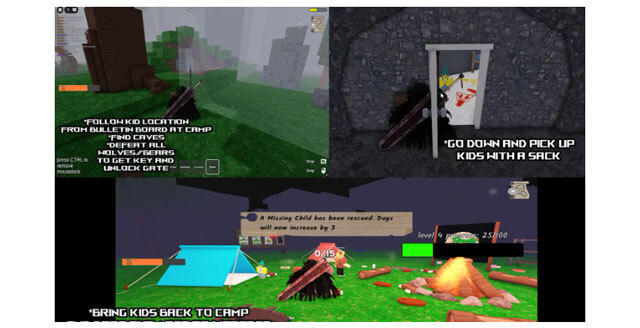
Children are found in protected areas away from the initial camp. A rescue normally requires enough campfire progress to reach the location, equipment to defeat or avoid its guards, and capacity to carry the child back.
- Prepare food, light, a weapon, and at least one healing item.
- Use the map or notice-board information to plan the route.
- Clear the immediate threat before interacting with the child.
- Carry the child directly to camp instead of extending the loot run.
- Confirm that the rescue registered before the team leaves again.
Rescued children and crafted beds increase day progression, so an organized team can reach the completion milestone in fewer night cycles than the number “99” suggests.
Mid-game base and resource strategy
Build storage with a purpose
Separate fuel, food, healing, ammunition, and trade items so players do not waste daylight searching piles. Protect resources affected by weather and keep emergency fuel beside the campfire.
Replant and use natural barriers carefully
Cutting every nearby tree creates a long-term wood shortage. Replant saplings where they remain accessible and, when useful, arrange some as obstacles around the camp. Leave clear gates and sightlines so teammates are not trapped during a raid.
Trade valuable pelts
The pelt trader requests increasingly difficult animal drops and can offer stronger bags, axes, lights, armor, or weapons. Store requested pelts until the trader returns. Do not risk the whole run chasing a dangerous animal before the team has the necessary gear.
Develop renewable fuel and food
Farm plots, cooking equipment, and fuel-processing items reduce dependence on long scavenging trips. Once those systems are stable, explorers can focus on rescues, higher-level structures, and rare materials.
Useful crafting priorities
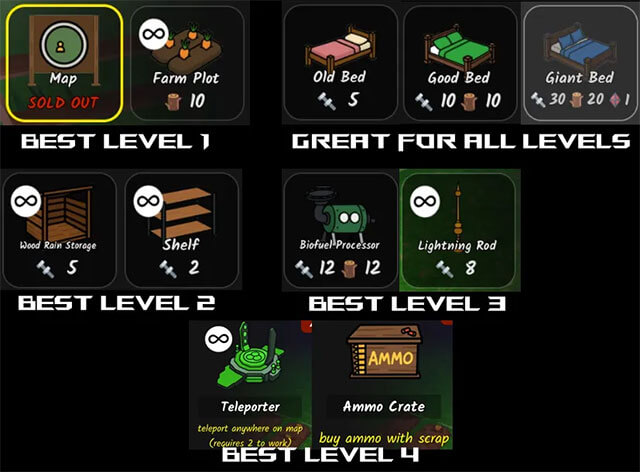
Priority | Why it matters |
Map and navigation tools | Reduce the chance of getting lost after dark. |
Farm plots and cooking | Create a dependable food supply. |
Beds | Increase credited day progression. |
Dry or organized storage | Preserve fuel and make emergencies faster to handle. |
Bench upgrades | Unlock higher-tier survival systems. |
Healing and ammunition supply | Keep raids from ending a long run. |
Late-game transport or teleport tools | Reduce travel time after the map has expanded. |
Recipe tiers can change. Open the bench and compare the immediate survival benefit with the material cost before committing rare components.
Choose classes for team roles, not a static tier list
Class balance changes with updates. Instead of assuming one class is always strongest, build a group that covers resource gathering, exploration, combat, and support. A wood-focused class can accelerate early upgrades, a mobile scout can handle distant routes, and a food or healing specialist can stabilize the team.
Unlock and upgrade requirements are shown in the current class menu. Spend premium currency only after confirming the class is available and that its role fits how you play.
Simple team plan
- Player 1: manages fire, storage, crafting, and food.
- Player 2: gathers wood and common resources near camp.
- Player 3: explores structures and brings back tools or fuel.
- Player 4: prepares rescue routes and provides combat support.
Roles should change as the run develops. During raids, everyone returns; during a rescue, at least two players travel together when possible.
Common mistakes that end a run
- burning all wood instead of reserving materials for crafting;
- leaving camp late without food, light, or a return route;
- spending ammunition on an enemy that cannot be killed;
- carrying every critical item on one player;
- neglecting beds and rescues, which makes the run unnecessarily long;
- building defenses that also block teammates;
- depending on an outdated class ranking or base exploit.
The safest progression is straightforward: secure the fire and food, upgrade navigation and crafting, rescue children in prepared trips, build beds, then invest in renewable resources and late-game mobility. Consistency keeps a run alive longer than rushing one rare item.
Related Articles
 99 Nights in the Forest: Best Options and Key Tips6 minutes read
 Latest 99 Nights in the Forest Roblox Codes: Complete Guide4 minutes read
 How to Beat Bats in 99 Nights in the Forest: Step-by-Step Guide7 minutes read
 Updated Full List of 99 Nights in the Forest Codes For 20267 minutes read
 Download and Play Squid Game Roblox, Squid Game on Roblox: Step-by-Step Guide4 minutes read
 How to Play Dien Bien Phu 56 Days and Nights: Beginner's Guide6 minutes read
Reader Comments 0
Sign in with email or Google to join the discussion.