Table of Contents
This updated guide explains how to Drive Long Distances Alone through clear steps, practical examples, and important checks that help prevent common errors.
Getting Ready for a Trip
-
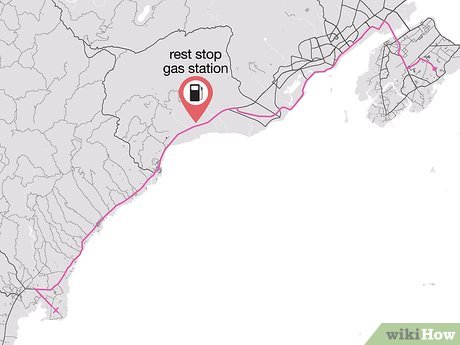 Plan your route and include stopping points. Decide which main roads you'll take to get to your destination and pick any places of interest you may need to see along the way. Even if you're trying to drive straight to your destination, make notes of rest stops along the route. It's important to plan even if you'll be using your GPS since you might lose the signal or run out of battery.[1]XResearch source
- If you're driving for several days, make an itinerary for how far you may need to drive each day. For example, you might want to drive 7 hours for the first day, but only drive 5 hours the next.
-
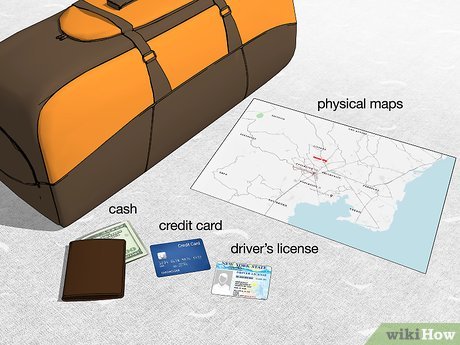 Pack your car with everything you need for the trip. In addition to your luggage, bring a little cash along with your credit cards. Remember to have your license and proof of car insurance in your vehicle. It's also a good idea to pack physical maps even if you'll be relying on your car or phone's GPS.[2]XResearch source
- If you're crossing borders, check that your passport is still valid and pack it in a safe place in the car.
- Don't forget your phone charger, especially if you're using the phone a lot to navigate.
-
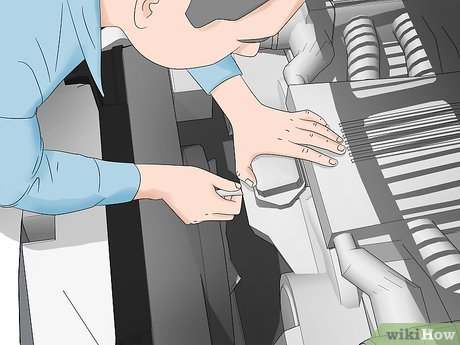 Schedule a car inspection before your trip. In the week before you travel, get your car looked at by a mechanic and ask them if there are any issues to fix. Getting your car in shape could prevent mechanical emergencies during your trip. You might need to get an oil change, top up the fluids, replace an air filter, or get new tires, for instance.[3]XResearch source
- Do this well before your trip so you can schedule additional maintenance as needed.
-
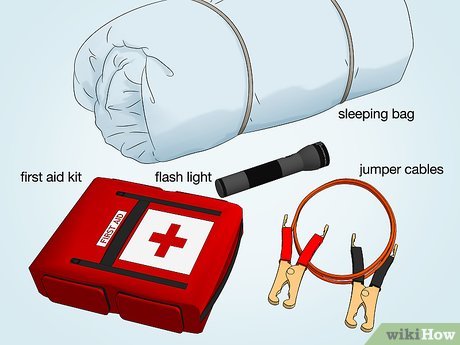 Load the car with emergency car supplies. No one needs to experience a flat tire or road emergency, but it's best to be prepared. Pack a spare tire along with any other supplies you might need. For example, if you're traveling through a hot location and worry that your car might overheat, pack a jug of water or coolant. Consider traveling with:[4]XResearch source
- Jumper cables
- Flashlights
- First aid kit
- Simple tool kit
- Blanket or sleeping bag
-
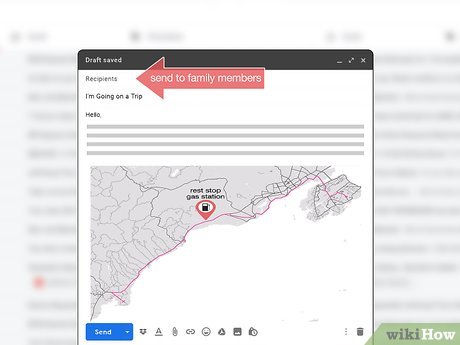 Inform family and friends about your plans. Since you'll be traveling alone, it's important to let people close to you know where you'll be. Tell them your route, let them know when you'll be passing through each destination, and tell them you'll contact them along the way.[5]XResearch source
- Email the info or write it down so your family or friends can refer back to the information.
Making the Drive Enjoyable
-
 Wear comfortable clothes so you feel relaxed. Avoid dressing in tight, restrictive clothing since you'll be sitting for a long time. Choose light, loose fabrics that allow you to move easily. Layer your clothes so you can stay warm or cool during your drive.[6]XResearch source
- If you start driving in the morning when it's cool, you might want a fleece jacket. You can remove it later when you warm up or drive to a hotter destination.
-
 Listen to your favorite music. Load an MP3 player with a variety of your favorite music or pack plenty of CDs. Enjoying music is a great way to pass the time during a long drive.[7]XResearch source
- If you don't like listening to music in the car, find an audiobook or podcast to enjoy.
Tip: See if your local library allows you to borrow CDs. This is a good way to enjoy some new music on the trip.
-
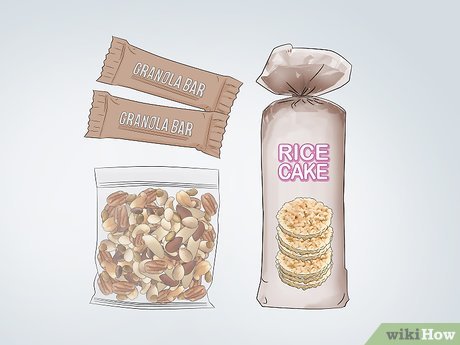 Pack healthy snacks to munch on. Keep easy-to-eat snacks in the passenger seat so you can eat something when you feel hungry. Snacking on something healthy is also a good way to stay awake since it will help you focus on something. Avoid snacking on salty foods, which can dehydrate you. Good snack options include:[8]XResearch source
- Granola bars
- Unsalted nuts
- Rice cakes
- Fresh fruit and vegetables
- Crackers
-
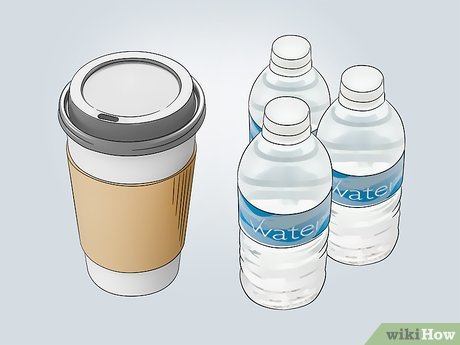 Bring refreshing beverages to drink so you stay hydrated. Water is one of the best drinks for a long car ride, but you could also bring coffee, tea, caffeinated drinks, or juice. Avoid drinks with a lot of added sugar, such as energy drinks, which could make you jittery.[9]XResearch source
- If you'd like the drinks to stay cool, put them into a small cooler and place it near the bottom of the passenger seat so it's easy to get to.
-
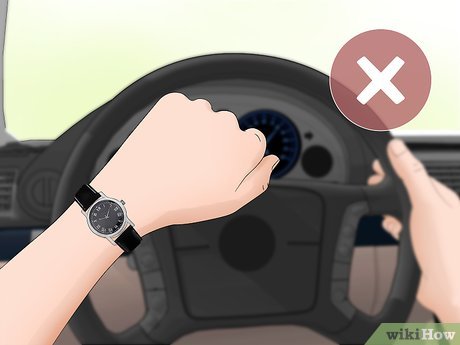 Don't look at the clock to track how far you've driven. If you're in a hurry to get to your destination, glancing at the clock every few minutes will only make you more stressed. Make a point of not looking at the clock. Instead, relax and try to enjoy the drive.[10]XResearch source
- Instead of focusing on how much longer you have in the car, think about how many miles you've put behind you.
Staying Safe While Driving Alone
-
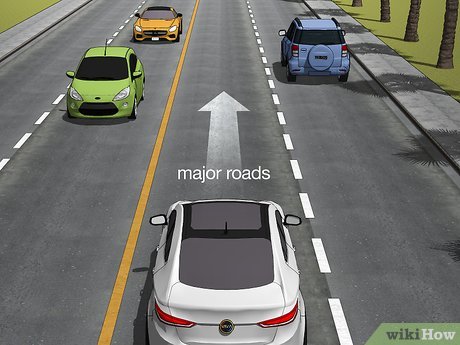 Take a popular route with major roads. Stick to your travel itinerary and avoid taking shortcuts. If you do need to take a detour, follow the detour signs closely. Don't take unmarked roads or routes that you're unsure of.[11]XResearch source
- Stay on main roads so you can stop and ask for help if necessary.
- Adjust your travel plans if the weather worsens and you don't feel comfortable driving.
-
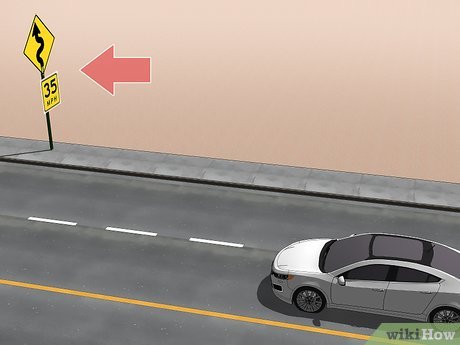 Follow the local traffic laws and drive below the speed limit. Always wear your seat belt and be aware of your surroundings. Avoid speeding or breaking local traffic laws. Instead, drive cautiously and safely.[12]XResearch source
- If you're driving into a foreign country, it's especially important to read about their driving laws since they might be very different than the ones you're used to.
-
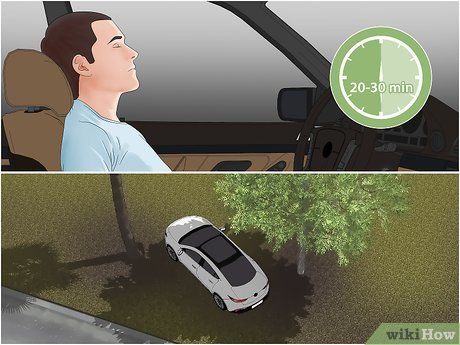 Pull off and take a short nap if you feel drowsy. Find a safe, well-lit location and park your car. Lock your doors and close your eyes for 20 to 30 minutes. It's better to take a little time to rest than risk getting into an accident by driving drowsy.[13]X Trustworthy Source Centers for Disease Control and PreventionMain public health institute for the US, run by the Dept. of Health and Human Services Go to source
- Start your journey after a good night's sleep so you're less likely to be tired on the drive.
- Drink something caffeinated before you rest so you wake up feeling more energized.
Tip: To help you feel refreshed, open your Windows every once in a while. The fresh air can help you stay alert.
-
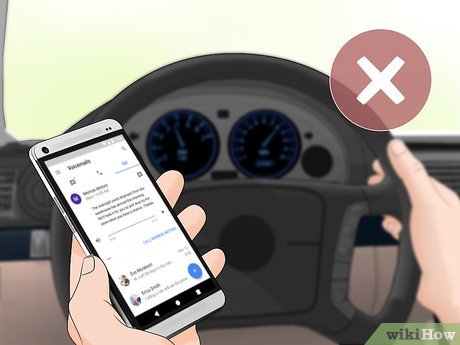 Avoid talking on the phone or texting while you drive. It's illegal to talk on a cell phone or text in many areas, so don't use your phone or you may get a ticket. Talking on the phone or texting distracts you when you should be focusing on your surroundings.[14]XResearch source
- If you do need to take a call, pull off to a safe spot and have your conversation.
- Having a hands-free phone call is just as distracting as holding the phone up to your ear, so avoid using a headset to call someone.
-
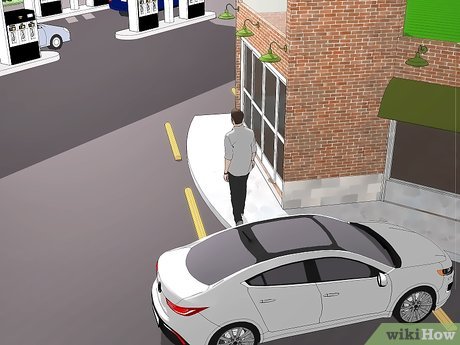 Take rest breaks to recharge. Getting out of the car for a few minutes to stretch your legs and use the restroom is a simple way to break up the drive. You can use these short breaks to contact friends or family and tell them where you're at.[15]XResearch source
- Stop at designated rest stops or well-lit businesses. Avoid taking a break on the side of the road or in an unsafe area.
FAQ
What is the easiest way to Drive Long Distances Alone?
Start with the requirements in this guide, then follow each step in order. Check the result after every major change so problems are easier to identify.
Can beginners follow these instructions?
Yes. The process is organized into practical steps, and you can repeat any step before moving forward.
What should I check if the method does not work?
Confirm your software or device version, permissions, settings, file format, and internet connection when the task depends on online services.
Related Articles
 9 Tips to Extend iPhone Battery Life6 minutes read
 Command: How to Map a Folder to a Drive Letter in Windows4 minutes read
 How Long Can You Drive After Drinking Alcohol?3 minutes read
 What Is Bit Rot? Why Can Leaving a Hard Drive Unattended for a Long Time Lead to Data Loss8 minutes read
 What Is Super Wi-Fi: Where Does Super Wi-Fi Long-range Exist?6 minutes read
 How Long Will Hard Drives, Ssds and Usbs Last?10 minutes read
Reader Comments 0
Sign in with email or Google to join the discussion.