Table of Contents
Try these five activities with everyday materials and a question to investigate. Before each test, ask children to predict what will happen. Change one thing at a time and write down or draw what you observe. An adult should supervise, especially when tools or small objects are involved.

What makes an activity an experiment?
A test has an outcome you can observe and a condition you can change. For example, putting ice in one cup and room-temperature water in an otherwise identical cup lets you compare what happens at two temperatures.
Five activities to try
1. Compare condensation on two cups
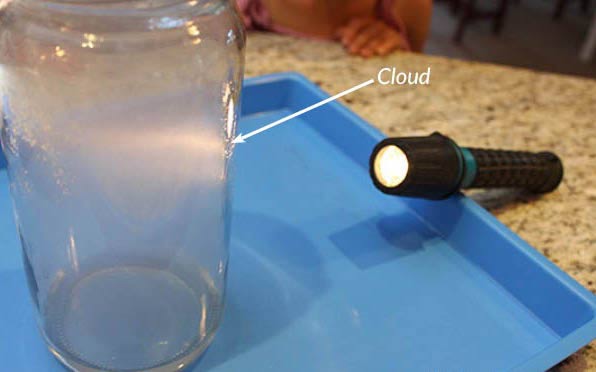
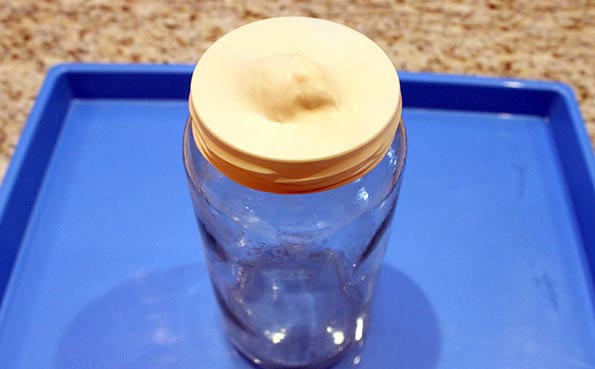
Put ice water in one clear cup and room-temperature water in another. Dry the outside of both cups, place them side by side and look for new droplets. The water on the colder cup comes from water vapor in the air. Clouds also form when water vapor condenses into tiny droplets, although the droplets in a cloud form in the air itself. The UCAR cloud-in-a-jar demonstration shows that process in a different setup.
2. Match numbers with sticky notes
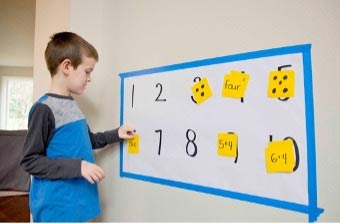
Write 1 through 10 on a sheet. Draw a different number of dots on each sticky note and ask children to place it by the matching numeral. Once that is easy, mix dots with short sums such as 3 + 3. Ask whether two different pictures or sums can represent the same number.
3. Grow salt crystals as water evaporates
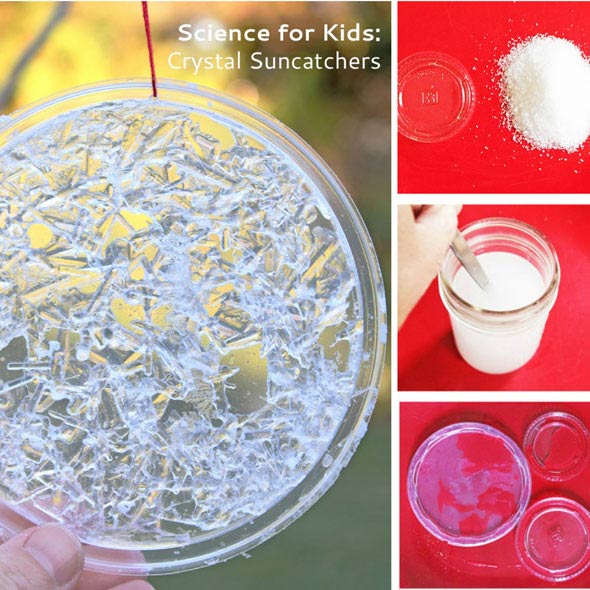
Stir table salt into a small amount of room-temperature water until some salt remains undissolved. Pour a little of the clear liquid into a shallow dish. Set it somewhere it will not be disturbed and check it daily. Compare a thin layer of solution with a deeper layer. As the water evaporates, the dissolved salt can form crystals.
4. Build a hand winch
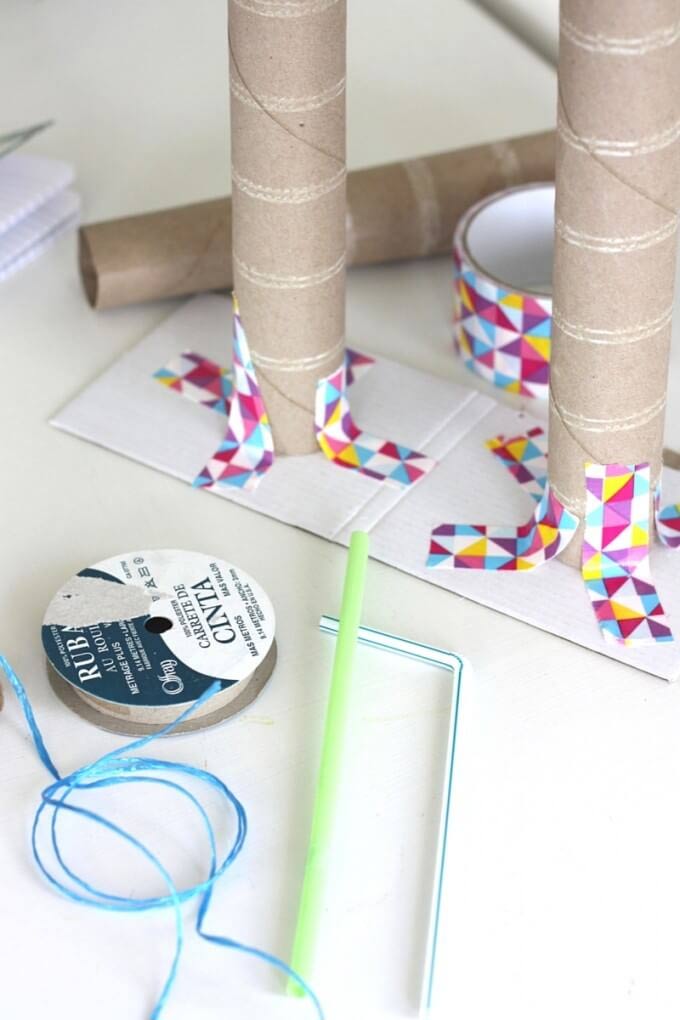
Tape two cardboard tubes to a base and have an adult make matching holes for a pencil or sturdy straw to turn across them. Tape string to the axle, tie the other end to a small paper cup and turn the axle to raise it. Mark the string and count how much winds up per turn. Compare two axle sizes using the same load.
5. Test what a magnet can pull through paper
Use a large, intact household magnet and a steel paper clip under adult supervision. Put one sheet of paper between them and see whether the clip moves. Add sheets one at a time until it stops. Leave small or high-powered magnets out of this activity because swallowed magnets can cause serious injury. See the CPSC magnet safety guidance.
For a follow-up, try more counting and math activities or pick a topic from these science channels for kids.
Related Articles
 Perfect STEM Activities for Middle School Students
 What are the special houses for millions of dollars built to deal with the end of the world?
 Science successfully created 3D lung models with the size and characteristics of true lungs
 3D printing houses from mud, straw and rice husk materials are cheaper than the iPhone
 Listed 10 most terrible experiments on animals
 How to Help Kids Learn STEM and Build Logical Thinking Skills with Thinkrolls Play & Code
Reader Comments 0
Sign in with email or Google to join the discussion.