Table of Contents
This article examines Bioplastic Biodegradable in Natural Environment Made from Shrimp Shells. It presents the main facts, practical implications, and key points in a clearer, easier-to-follow format.
Understanding Bioplastic Biodegradable in Natural Environment Made from Shrimp
Scientists at the Wyss Research Institute at Harvard University are studying how to make biodegradable plastics in natural environments made from shrimp shells to minimize plastic waste, which are difficult to decompose causing pollution. environment worldwide.
- Plastic pieces move like crawling worms under ultraviolet rays.
- The Earth has more than 8 billion tons of plastic, weighing about 1 billion elephants.
- The following 5 inventions can "save" Earth and humanity.
 Bio-plastics are made from shrimp shells that are cheap and environmentally friendly.
Scientists used a substance called chitosan to make bioplastic capable of biodegradable. This chitosan is found in shrimp, insects, mushroom cells and butterfly wings. In particular, shrimp shells are available waste in the seafood processing industry, so they will focus on extracting chitosan from this material source.
The production of bioplastic made from shrimp shells is very cheap because it only uses conventional production techniques. Scientists have combined chitosan from shrimp shells and nanoscale silk proteins to create a bioplastic known as Shrilk.
After finishing, Shrilk plastic will be transparent like a natural shrimp shell, very strong and flexible. Shrilk resins can be applied in many areas such as phone production or even chess pieces.
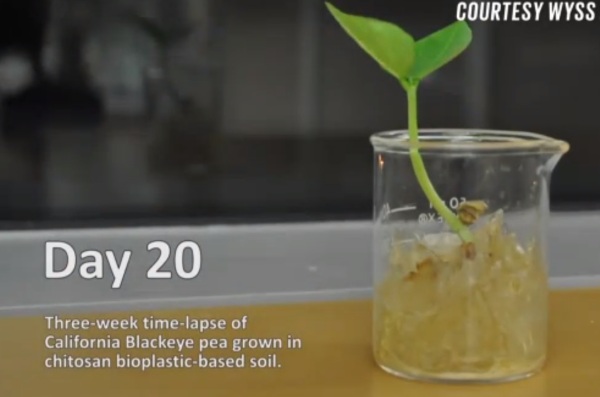 The plant germinates in the cup containing the debris of the Shrilk material.
Every year, the United States discharges into the environment 34 tons of plastic waste, most of which are difficult to decompose plastic, but only 7% are recycled. Among them, many plastic waste goes to the ocean, forming floating islands on the water, threatening the habitat of marine species. Shrilk is the first positive step to help us find a substitute for plastic in the future.
FAQ
What is the main point of Bioplastic Biodegradable in Natural Environment Made from Shrimp Shells?
Scientists at the Wyss Research Institute at Harvard University are studying how to make biodegradable plastics in natural environments made from shrimp shells to minimize plastic waste, which are difficult to decompose causing pollution. Plastic pieces move like crawling worms.
Why is Bioplastic Biodegradable in Natural Environment Made from Shrimp Shells important?
Bioplastic Biodegradable in Natural Environment Made from Shrimp Shells matters because it can affect how readers understand, choose, use, or respond to the subject discussed in the article.
What should readers verify about Bioplastic Biodegradable in Natural Environment Made from Shrimp Shells?
Check the date, product or software version, compatibility, and any current guidance before acting, especially when technology, security, health, or pricing is involved.
Related Articles
 Turns Out We Are Eating Shrimp the Wrong Way without Knowing3 minutes read
 Why Do Shrimp and Crab Shells Turn Red After Cooking: What You Need to Know4 minutes read
 10 Ways to Cook Delicious Shrimp Porridge, Nutritious Baby9 minutes read
 Which Part of the Shrimp Should Not Be Eaten?5 minutes read
 Mantis Shrimp: Complete Guide and Key Details4 minutes read
 Misconceptions When Eating Shrimp That Many People Have5 minutes read
Reader Comments 0
Sign in with email or Google to join the discussion.