Table of Contents
These 51 everyday English words give beginners useful vocabulary for simple conversations and sentences. Each entry includes one common meaning and a short example. This is a practice list, not a ranked claim about the 51 most frequent words in English.
Many words have other meanings or grammatical uses. Learn the meaning used in the example first, then add other uses as you encounter them.
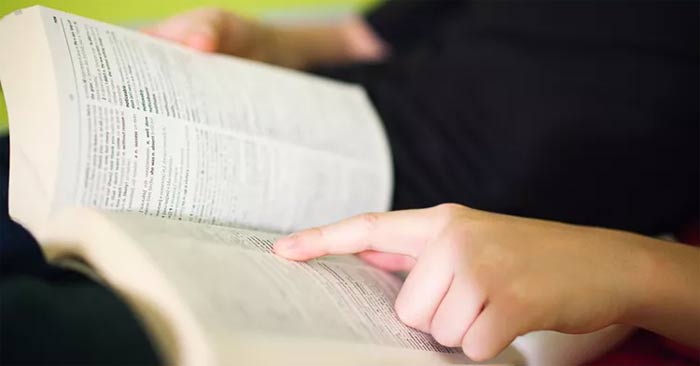
51 useful words with meanings and examples
| Word | Meaning in this example | Example sentence |
|---|---|---|
| All | the whole number or amount | All the seats are full. |
| And | joins words or ideas | We need tea and milk. |
| Boy | a male child | The boy is reading. |
| Book | a set of written or printed pages | I borrowed a book. |
| Call | to telephone someone or speak loudly to get attention | Please call me tomorrow. |
| Car | a road vehicle used to carry people | Our car is outside. |
| Chair | a seat for one person | Put the bag on the chair. |
| Children | the plural of child | The children are playing. |
| City | a large town | She lives in a busy city. |
| Dog | an animal often kept as a pet | The dog is asleep. |
| Door | a movable barrier at an entrance | Please close the door. |
| Enemy | a person or group that opposes or wants to harm another | The two enemies agreed to talk. |
| End | the final part of something | Wait until the end of the film. |
| Enough | as much or as many as needed | We have enough chairs. |
| Eat | to take food into the mouth and swallow it | We eat lunch at noon. |
| Friend | a person you know well and like | My friend lives nearby. |
| Father | a male parent | Her father is a teacher. |
| Go | to move or travel somewhere | We go by bus. |
| Good | of a high standard or satisfactory | That is a good idea. |
| Girl | a female child | The girl opened her book. |
| Food | things people or animals eat | The food is ready. |
| Hear | to notice sound with your ears | I can hear a bird. |
| House | a building where people live | Their house has a blue door. |
| Inside | in the inner part of something | The keys are inside the bag. |
| Laugh | to make sounds that show amusement | That joke made us laugh. |
| Listen | to pay attention to sound | Listen to the instructions. |
| Man | an adult male person | The man is waiting outside. |
| Name | the word used to identify someone or something | What is your name? |
| Never | not at any time | I never drink coffee at night. |
| Next | immediately following | Take the next bus. |
| New | recently made, bought, or introduced | I have a new notebook. |
| Noise | a sound, especially an unwanted one | What is that noise? |
| Often | many times or frequently | We often walk together. |
| Pair | two things used together or forming a set | I need a pair of socks. |
| Pick | to choose | Pick a color you like. |
| Play | to take part in a game or enjoyable activity | They play football after school. |
| Room | a separate space within a building | This room is quiet. |
| See | to notice with your eyes | I can see the sea. |
| Sell | to give something in exchange for money | They sell fresh bread. |
| Sit | to rest your weight on your bottom, usually on a seat | Please sit here. |
| Speak | to say words or use a language | Do you speak English? |
| Smile | to form a pleased or friendly expression with your mouth | Please smile for the photo. |
| Sister | a female sibling | My sister is older than me. |
| Think | to use your mind or hold an opinion | I think this answer is correct. |
| Then | after that or at that time | Wash your hands, then eat. |
| Walk | to move on foot | I walk to work. |
| Water | the clear liquid people drink | May I have some water? |
| Work | to do a job or a task | I work in a shop. |
| Write | to form words or record them as text | Write your name here. |
| Woman | an adult female person | The woman is our new teacher. |
| Yes | expresses agreement or a positive answer | Yes, I can help. |
Differences worth noticing
- Hear and listen: you can hear a noise without trying; listening means directing your attention to sound. Use listen to music, not “listen music.”
- Laugh and smile: laughing normally involves sound; smiling describes a facial expression. They are related actions, not identical meanings.
- Child and children: children is an irregular plural. Do not add another plural ending.
- Woman and women: woman is singular; women is plural. Man becomes men.
- Enough: enough means sufficient, not necessarily more than needed. Compare “enough food” with “too much food.”
Practice a few words at a time
Choose five words, read their examples, and write a new sentence about your own day. Cover the meaning column and explain each word aloud. Later, review the same words in a different order so you are recalling them rather than memorizing their place in the table.
Use a learner's dictionary to hear pronunciation and check additional meanings. TipsMake's English-learning website guide offers starting points for further practice. Teachers working with young learners can turn familiar nouns into a simple ScratchJr vocabulary activity.
Related Articles
 200+ first sight words for children learning English
 The most difficult English words to pronounce
 Ancient words synonymous with evil in English you may not know
 Link Download Advanced English Dictionary 4.1.0.1
 Microsoft announced 10 pairs of the most easily mistaken English words
 The Surprising Origins of Our Favorite English Slang Words
Reader Comments 0
Sign in with email or Google to join the discussion.