Table of Contents
Crows, African grey parrots, chimpanzees and some fish have performed tasks involving numbers or quantities. The results depend on what researchers asked the animals to do. Choosing a larger group, remembering digit order and adding one are different skills.
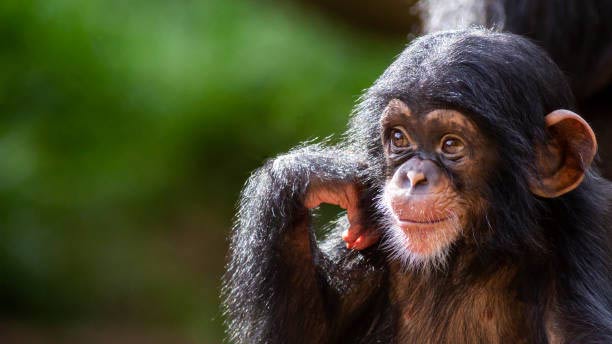
Chimpanzees can remember the order and location of digits
In experiments with the chimpanzee Ayumu, digits appeared briefly on a screen and were then covered. Ayumu touched the locations in numerical order. The task combines learned digit order with visual memory. It does not by itself test whether he can add the numbers.
Elephants can compare food quantities
In an experiment that used smell, Asian elephants distinguished between containers with different amounts of food. A larger amount can produce a stronger odor, so the result demonstrates quantity discrimination without showing that elephants counted individual pieces.
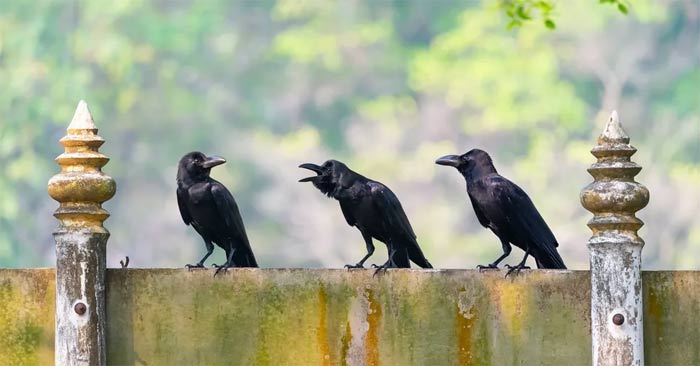
Crows can produce a requested number of calls
In a Science study, carrion crows learned to make between one and four calls in response to a cue. Producing a target number of sounds is a different task from choosing the larger of two visible groups.
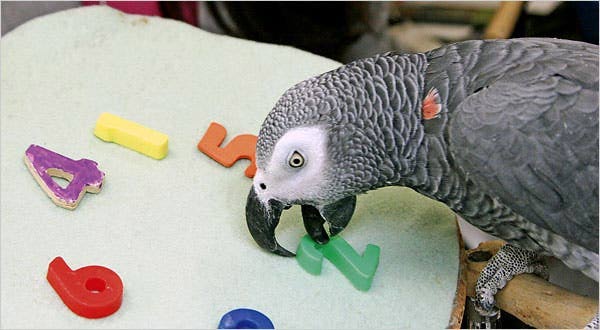
Alex the parrot could label small quantities
Alex, an African grey parrot studied by Irene Pepperberg, learned spoken labels for quantities up to six. Researchers could ask about items of a particular color or type within a mixed group. See more examples of birds that can imitate human speech.
Some fish learned to add or subtract one
Researchers trained cichlids and stingrays to use color cues to select a group with one more or one fewer item. The fish study tested quantities from one to five. The experiment shows what the fish learned under controlled conditions. In the wild, fish may use several cues when choosing between groups, including size and movement.
Related Articles
 Turn Facebook into a pocket computer
 AI translates animal sounds to help people understand barking dogs
 MS Excel 2003 - Lesson 5: Excel formulas and functions
 4D animal photo collection for Animal 4D +
 The best animal riddles
 Download App Animal 4D + for free - Create Animal Animal 4D Cards app on your phone
Reader Comments 0
Sign in with email or Google to join the discussion.