Table of Contents
Wordle gives you six attempts to identify a five-letter word. A strong strategy uses each guess to collect information, then switches from broad letter testing to solving the exact pattern. The color feedback is simple: green means the right letter in the right position, yellow means the letter appears elsewhere, and gray usually eliminates that letter.
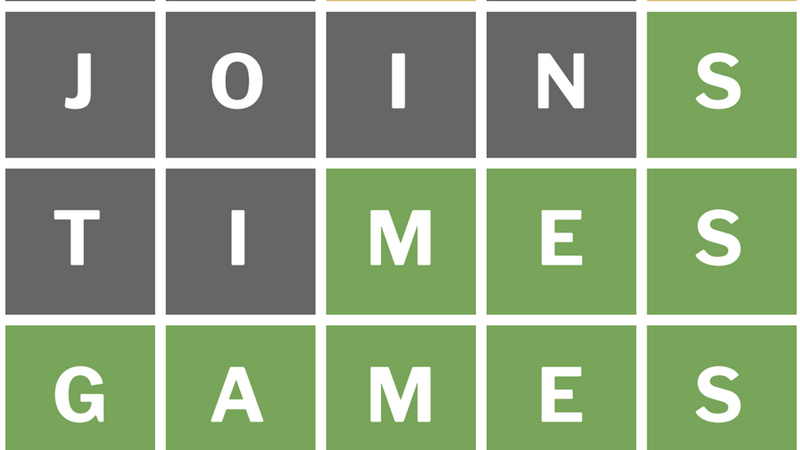
Choose an informative opening word
A useful first guess contains five different, common letters and a balance of vowels and consonants. Words such as SLATE, CRANE, or TRACE test several frequent letters without duplication. There is no single mandatory opener; consistency matters less than using the result intelligently.
Avoid opening with a double-letter word unless you have a specific reason. Testing five distinct letters normally reveals more information on the first turn.
Make the second guess answer a question
Do not automatically force every yellow letter into the next word if the first result was weak. Your second guess should either:
- test several common letters that have not been used, or
- place confirmed letters while separating the most likely remaining answers.
For example, if the opening guess produces no green tiles and only one yellow, a second word with four new letters may be more useful than guessing a possible answer immediately.
Read repeated-letter clues correctly
Wordle can use the same letter more than once. A green or yellow tile does not prove that the answer contains only one copy. Words such as ABBEY and BANAL demonstrate why a repeated letter sometimes needs to be tested.
Coloring can also reveal a maximum count. If a guess contains two copies of a letter but only one receives a green or yellow tile, the answer usually contains one copy. Use that count when building the next candidate.
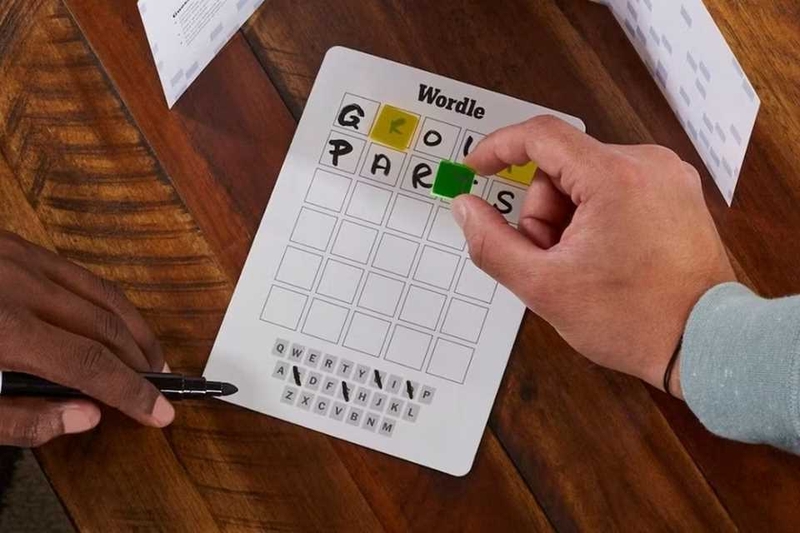
Use position constraints, not just known letters
A yellow tile provides two facts: the letter belongs in the answer, and it does not belong in that position. Keep track of both. When several yellow letters are present, write a simple pattern and list the forbidden positions before choosing another word.
Green letters should normally stay fixed. Moving them wastes confirmed information unless you are deliberately using a probe word to distinguish between several similar answers.
Handle a cluster of similar answers
The hardest situations often leave a pattern such as _IGHT, where several answers remain. Guessing one candidate at a time can fail if too many possibilities exist. A better move may be a valid probe word that tests several distinguishing first letters at once, even if that probe cannot be the final answer.
This approach is especially useful in normal mode. In Hard Mode, every revealed hint must be used in later guesses, so candidate management becomes more restrictive.
Common Wordle mistakes
- Reusing eliminated letters: Gray letters should not return unless the earlier clue involved duplicates or you are intentionally testing a special case.
- Ignoring yellow positions: A known letter cannot be placed back in the same rejected square.
- Chasing vowels only: Vowels are helpful, but common consonants often separate more candidates.
- Guessing too quickly: Wordle does not reward speed. Check every clue before submitting.
- Forgetting American spelling: The official game uses US English conventions.
A practical six-turn plan
- Turn 1: Test five common, distinct letters.
- Turn 2: Add new high-frequency letters or separate the strongest candidates.
- Turn 3: Build a shortlist that obeys every color and position clue.
- Turns 4–5: Use a probe word if a large family of similar answers remains.
- Turn 6: Recheck duplicate letters, spelling, and every excluded position before committing.
Should you look up old Wordle answers?
A giant static answer table is not a dependable solving tool: the official word list can change, and memorizing hundreds of past entries does not teach you how to use today's clues. A compact record of your own mistakes is more useful. Note when you overlooked a repeated letter, reused a gray tile, or failed to distinguish a word family.
If you enjoy daily puzzle games beyond Wordle, this list of free mobile games includes other word and logic options. The official Wordle game is part of The New York Times Games.
Related Articles
 Ultimate Guide to Wordle: Tips, Tricks, and How to Play (2026 Edition)8 minutes read
 Latest Wordle Answers Today 25/05/20239 minutes read
 The Latest Wordle Answer as of Today, April 22, 202610 minutes read
 Wordle Answer Suggestions Today4 minutes read
 Top Tips for Playing Classic LINE 98 to Help You Get High Scores8 minutes read
 Here Is How You Can Win More Playing Roulette6 minutes read
Reader Comments 0
Sign in with email or Google to join the discussion.