Table of Contents
Samsung’s ISOCELL HP5 is a 200-megapixel mobile image sensor with 0.5µm pixels. It is designed to fit a compact camera module while supporting high-resolution wide and telephoto camera designs.
A compact sensor with very small pixels
Samsung describes a 1/1.56-inch optical format in its HP5 development interview. Optical-format labels are a sensor-size convention, not a literal measurement of its diagonal in inches.
Smaller pixels allow a high pixel count in a smaller area, but they also create light-collection and signal-handling challenges. Resolution alone therefore cannot establish how a finished camera will perform in low light.
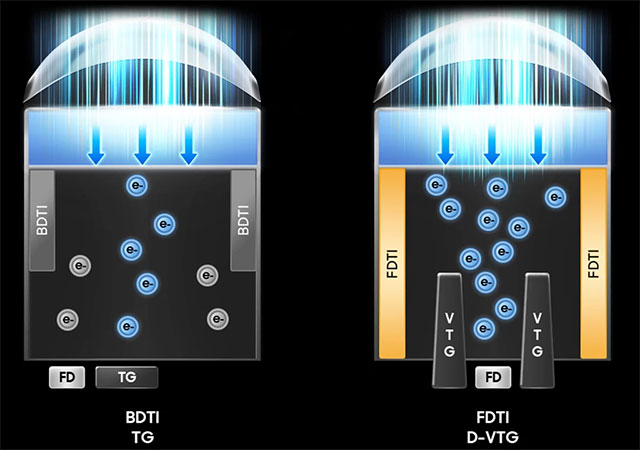
How Samsung addresses the pixel tradeoff
On its HP5 product page, Samsung describes FDTI and D-VTG structures for improving full-well capacity, plus DTI center-cut technology for conversion-gain improvements.
In practical terms, full-well capacity concerns how much charge a pixel can hold before saturation. Samsung also describes microlens and anti-reflection-layer improvements intended to make better use of incoming light. These are manufacturer design claims, not a guarantee that every HP5-equipped phone produces the same result.
In-sensor zoom and video depend on implementation
The current product page describes up to 4x in-sensor zoom for a wide camera, extending to 12x when combined with a 3x telephoto module. These figures describe a camera configuration; cropping the sensor is different from physically changing a lens’s optical focal length.
Samsung also lists 8K recording at 30 frames per second in its HP5 technology overview. Check a phone manufacturer’s specifications for the modes, autofocus, stabilization, and recording limits actually enabled on that handset.
What buyers should compare
Evaluate real camera samples at the focal lengths and lighting conditions you use. Lens quality, stabilization, processing, and software settings all matter alongside sensor resolution.
Our photography terminology guide explains pixel count and related concepts. The separate Galaxy S23 in-sensor zoom guide illustrates the difference between a phone feature and a sensor’s capabilities; it does not imply that the S23 uses HP5.
Related Articles
 Samsung reveals 108MP camera sensor, designed for Xiaomi phones?
 Sony developed a camera sensor 'like the human eye'
 Samsung plans to launch smartphone with 600MP camera?
 Leaked images Galaxy S9, Galaxy S9 +, fingerprint sensor under the camera
 How to enable 2x Zoom feature on Samsung Galaxy S23
 Megapixel or sensor size is more important for smartphone cameras?
Reader Comments 0
Sign in with email or Google to join the discussion.