Table of Contents
Short parables can be useful when they give us a question to carry into real life—not when they pretend that every problem has a one-line answer. The stories below are presented as parables, and details may differ across retellings. Each one is followed by a practical interpretation rather than a sweeping promise.
If you enjoy visual reflections as well as stories, see these meaningful photos about life. For a more practical approach to personal growth, these essential soft skills are also worth exploring.
1. The test choices
A teacher offers a class three versions of a test. The hardest version can earn 10 points, the middle one 8, and the easiest one 6. Most students choose the middle option. The exercise is meant to reveal how confidence affects the risks people take.
What to take from it: Confidence can help you attempt harder work, but confidence is not the same as competence. A better habit is to judge the evidence: What do you already know? What can you learn? What is the cost of failure? Choose a challenge that stretches you without turning the decision into a test of your worth.

2. The gifts that crossed
A cash-strapped couple each sells a treasured possession to buy a gift for the other. She sells her long hair to buy a chain for his watch; he sells the watch to buy combs for her hair. The gifts cannot be used immediately, but the sacrifices reveal how deeply each person cares.
This is the central plot of O. Henry's 1905 short story “The Gift of the Magi,” available through Project Gutenberg, rather than an anonymous modern anecdote.
What to take from it: A gift's meaning is not measured only by price or utility. At the same time, love does not require people to harm their financial security. Thoughtful communication can prevent two generous people from making sacrifices neither wanted the other to make.
3. Two grains of rice
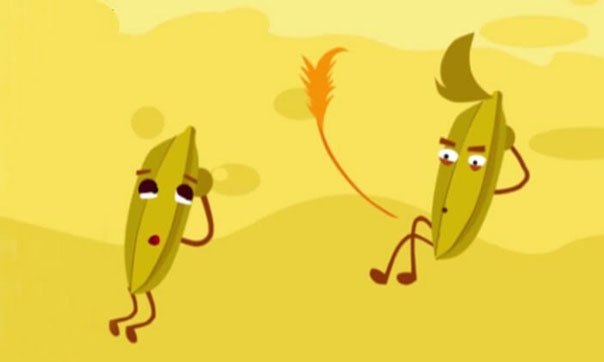
Two grains of rice lie in a storehouse. One hides in a dry corner to stay unchanged. The other accepts being planted in wet soil. The hidden grain eventually withers, while the planted grain becomes part of a new crop.
What to take from it: Growth usually involves uncertainty, but not every risk is wise. Ask whether a risk has a meaningful purpose, whether you can recover if it fails, and what small experiment could reduce the uncertainty.
4. The crow that wanted to be a swan
A crow envies the swan's pale feathers and assumes the water must be responsible. It leaves the food and habitat that suit it, spends its days in the lake, and grows weak.
What to take from it: Copying another person's visible habits does not reproduce their circumstances or strengths. Comparison becomes useful only when it helps you identify a skill you genuinely want to develop. Keep what fits your values and situation.
5. The egg seller and the restaurant
A shopper bargains aggressively with a street vendor over a small basket of eggs, then later leaves a generous tip at an expensive restaurant. The contrast makes the shopper reconsider why it felt normal to squeeze the person with less bargaining power.
What to take from it: Frugality and fairness are not opposites. Compare prices when necessary, but consider the value of the seller's time and labor. Generosity matters most when it is respectful, affordable, and not performed for an audience.
6. The burnt toast
A tired parent burns the toast at dinner. Rather than turning the mistake into a conflict, their partner eats it without complaint and later explains to their child that people deserve gentleness after a difficult day.
What to take from it: Not every minor mistake needs correction in the moment. Respond to the person and the circumstances, not only to the error. This does not mean hiding serious problems; it means distinguishing an inconvenience from something that actually needs discussion.
7. Preparing for the journey
A traveler plans to leave on foot. A teacher keeps adding hypothetical needs: extra sandals, umbrellas for every kind of weather, and even a boat for rivers that may appear. The traveler finally understands that preparation can become another way to postpone departure.
What to take from it: Prepare for likely risks, define a minimum safe starting point, and then begin. For large goals, turn the first stage into a small, reversible step. A practical time-management framework can help you separate important work from endless preparation; for example, review this 40/30/20/10 prioritization method.

8. The second shoe
A passenger accidentally drops one shoe from a new pair out of a train window. Knowing a single shoe is useless to the owner, the passenger throws the matching shoe near it so that whoever finds them may have a usable pair.
What to take from it: When a loss cannot be reversed, ask whether what remains can still help someone else. Donation, repair, and reuse can turn an unusable possession into something valuable—but only when the item is safe and genuinely useful.
9. A different view of wealth
A wealthy parent takes a child to the countryside, expecting the child to notice what a family lacks. Instead, the child notices the river, open sky, animals, friends, and time spent together. The parent realizes that the visit did not prove the lesson they expected.
What to take from it: Money, relationships, time, health, and security are different forms of well-being. The parable should not be used to romanticize poverty: material hardship is real. Its better point is that income alone cannot describe a person's whole life.
10. The stone's changing price
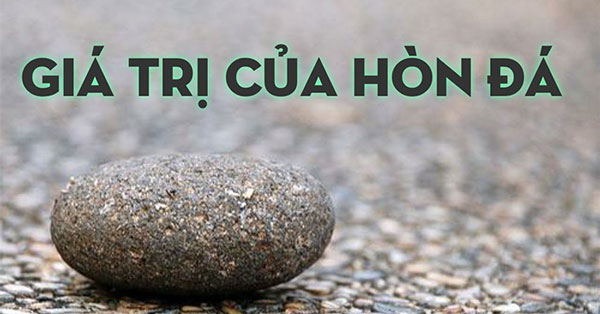
A teacher asks a student to show the same unusual stone at a market, a jewelry shop, and an antiques dealer without selling it. The offers rise as each observer recognizes different qualities in the object.
What to take from it: Context affects how skills, work, and objects are valued. A poor fit does not prove that you have no value, but praise from one audience does not establish universal worth either. Seek informed feedback and a setting where your abilities solve a real need.
11. The scholar and the woodcutter
A scholar proposes a riddle contest with uneven stakes, assuming a woodcutter will be easy to beat. The woodcutter asks a riddle the scholar cannot solve, collects the larger payment, then admits not knowing the answer and pays back the smaller amount. The scholar's overconfidence costs the difference.
What to take from it: Education is valuable, but credentials do not eliminate blind spots. Respect practical intelligence, agree on fair rules, and do not confuse status with judgment.
12. The donkey and the mule
A donkey complains that a mule receives more food while both initially carry similar loads. As the journey continues, the mule takes on more of the exhausted donkey's burden.
What to take from it: A snapshot rarely explains an arrangement. Before calling a situation unfair, look at responsibility, difficulty, duration, and hidden work. If the system still appears unfair, ask for the criteria rather than guessing.
13. The coin choice
Children repeatedly offer a boy a choice between a larger coin with lower value and a smaller coin with higher value. He chooses the larger coin, and they laugh. When a teacher asks why, he explains that choosing the higher-value coin once would end the game—and the stream of lower-value coins.
What to take from it: Behavior that looks irrational may make sense when you understand the person's incentives and time horizon. Ask what information you are missing before judging someone's decision. The story also raises an ethical question: is gaining money worth allowing others to continue a humiliating game?
14. The jar and the stones
A teacher fills a jar first with large stones, then pebbles, then sand. If the sand had gone in first, the large stones would not have fit. The jar represents limited time; the large stones represent the commitments that matter most.
What to take from it: Put important work on the calendar before small requests consume the available space. The categories are personal: health, family, learning, rest, or a major project may be a “large stone.” Revisit them regularly rather than treating the metaphor as a rigid productivity rule.
How to use a parable without oversimplifying life
- Name the useful idea. Reduce the story to one testable principle, such as “ask what context is missing.”
- Look for exceptions. Determination cannot remove every obstacle, and kindness should not conceal unsafe behavior.
- Try one small action. Schedule a priority, offer fair payment, ask a clarifying question, or make a reversible first attempt.
- Keep the story in proportion. A parable is a prompt for reflection, not evidence that one response will work for everyone.
The strongest lesson across these stories is not that life is simple. It is that better questions—about context, fairness, risk, and priorities—can lead to better choices.
Related Articles
 6 Meaningful Stories About Life You Should Read Once in Your Life11 minutes read
 7 Profound Stories About Happiness, Meaning of Life: Truth Is10 minutes read
 Meaningful Small Stories to Help You Change Your Life6 minutes read
 Meaningful Short Stories, the More You Read, the More You Think12 minutes read
 9 Meaningful Stories About Money, Willpower and Wealth: the More10 minutes read
 War and 10 Inspirational Stories Live13 minutes read
Reader Comments 0
Sign in with email or Google to join the discussion.