Table of Contents
This article examines History of Digging a Bitcoin, from a Regular CPU to an ASIC System. It presents the main facts, practical implications, and key points in a clearer, easier-to-follow format.
Understanding History of Digging a Bitcoin
In 2009, the first bitcoin excavator used conventional multi-core CPUs to create 50 BTC per block. If there are a few machines with good specs, you earn about $5 per day. Difficulty when digging (calculation power needed) is very low, so it is worth it to consider it as a hobby.
- Are you curious what inside the vast Bitcoin Iceland digging plant looks like?
- Life inside the secret "Bitcoin mines"
Now, 50 BTC will give you $434,000 each. A month ago, when the trading price was nearly $20,000, that so-called "hobby" could bring in millions of dollars.
Surprisingly the first value intended for bitcoin does not come from any big company from a hungry guy named Lazlo Hanyecz, in 2010 posted on the Bitcointalk forum with the subject: 'Change pizza get bitcoin? '.
I will pay 10,000 bitcoin in exchange for some pizzas, maybe 2 big ones for the next few days. I usually save pizza to eat later. You can do it yourself and bring it to my house or call from some store.
Finally, there were people who accepted it and Hanyecz got a meal that 8 years later would cost $8.6 million.
- 9-year-old Bitcoin concept, looking back at the first Block in the blockchain chain.
- How to prove you are Satoshi Nakamoto - the father of Bitcoin?
More importantly, in October 2010, the code for digging bitcoin using a GPU was widely released. As digging becomes more difficult, the need for better equipment also increases and that is when the GPU enters.
 Previously you could dig virtual money with just one GPU.
Digging a bitcoin with a GPU doesn't need any super skills. With several hundred dollars, almost everyone can do it and the calculation requirement is also low. But that soon changed when virtual money was noticed.
According to a study by Professor Michael Taylor from the University of Washington: "The effort to improve the computational speed by GPU has pushed the computation limit in very strange ways. The general standard has changed when 5 GPUs are used with 1. AMD motherboards are inexpensive, minimal DRAM, connect via 5 PCI Express extension cables to reduce motherboard costs and use power more efficiently for GPUs ".
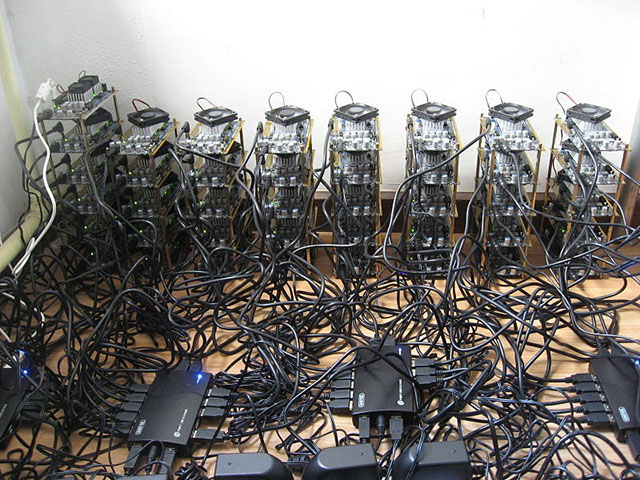 The horrors of a bomber are just the same.
In the end, ordinary people can also make money with the blockchain's magic and encryption technology. Unless digging bitcoin becomes more difficult and the power requirement is too much for a hobby. By June 2011, the FPGA (Field-Programmable Gate Arrays) could become a trend.
- What is a blockchain? How does blockchain work? Pros and cons of blockchain?
- This is why 10 years from now, every company will use blockchain.
When FPGA is used for this particular purpose, digging is different. Its biggest advantage is less power consumption than simple GPU settings 3 times for the same task.
FPGA must quickly make way for the Application-Specific Integrated Circuit (ASIC) and Bitcoin from a hobby that has become an industry.
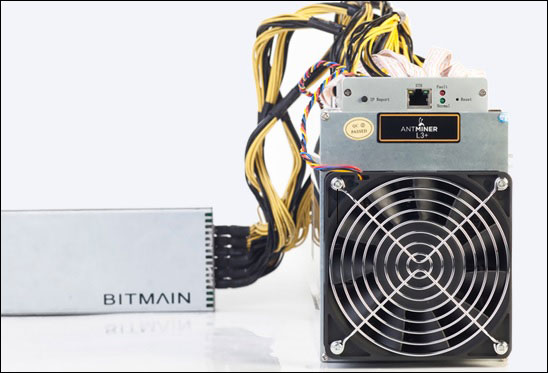 Now you have to invest in ASIC if you want to dig virtual money.
While FPGA needs users to edit after buying, ASIC is created specifically for one purpose, here is to dig virtual money. That's why ASIC excavators are still standard.
Bitcoin's future is unpredictable and there are many other alternative currencies you can dig without having to spend millions of dollars on storage, machinery and electricity.
FAQ
What is the main point of History of Digging a Bitcoin, from a Regular CPU to an ASIC System?
In 2009, the first bitcoin excavator used conventional multi-core CPUs to create 50 BTC per block. If there are a few machines with good specs, you earn about $5 per day.
Why is History of Digging a Bitcoin, from a Regular CPU to an ASIC System important?
History of Digging a Bitcoin, from a Regular CPU to an ASIC System matters because it can affect how readers understand, choose, use, or respond to the subject discussed in the article.
What should readers verify about History of Digging a Bitcoin, from a Regular CPU to an ASIC System?
Check the date, product or software version, compatibility, and any current guidance before acting, especially when technology, security, health, or pricing is involved.
Related Articles
 How to Digging Bitcoin for Beginners?9 minutes read
 How to Dig Bitcoin Without Wasting Electricity9 minutes read
 Are You Curious What Inside the Vast Bitcoin Iceland Digging Plant Looks Like?7 minutes read
 Bitcoin Digging Around the World Consumes Electricity in a Country4 minutes read
 How to Dig Bitcoin on Android and iOS Phones8 minutes read
 Samsung Produces Dedicated Chips to Dig Virtual Money3 minutes read
Reader Comments 0
Sign in with email or Google to join the discussion.