Table of Contents
How are data types in Python: string, number, list, tuple, set and dictionary used? Let's find out with TipsMake.com!
Key Takeaways About Python String
- How are data types in Python: string, number, list, tuple, set and dictionary used?
- The details are explained below. with TipsMake.com!
- Data types are ways of classifying data items.
Data types are ways of classifying data items. It represents a type of value that indicates what operations can be performed on a particular data. Since everything is an object in Python programming, data types are actually classes, and variables are objects of these classes.
Python has many different data types. If you want to program good applications, you should definitely know them.
When taking tests, you easily come across questions like in python, what is the output of the following function? float(' -12345 ') note: the number of spaces before the number is 5… So how to answer these questions accurately? The answer is very simple. That is, you must master Python data types.
Python is a special programming language with many data types that help you create a useful program. Some of the most common data types are:
- Integer: is a type of scalar numeric data, such as 1, 2, 3, 4, 5.
- Real number (float): is a type of numeric data with a decimal point, such as 1.5, 2.7, 3.14.
- String: is a data type containing a string of characters, such as "hello", "goodbye".
- Boolean: is a data type with two values: True or False.
- List: is a data type containing a set of values, for example [1, 2, 3, 4, 5].
- Dictionary: is a data type that contains key-value pairs, for example {"name": "John", "age": 30}.
For example, you can use a function typeto check the data type of a variable as follows:
x = 1 print(type(x)) # in ra "

 " y = 1.5 print(type(y)) # in ra "

 " z = "hello" print(type(z)) # in ra "

 "
Because the article will list the most important contents of all data types in Python, it will be quite long. Each data type comes with specific examples for you to easily visualize.
Be sure to save this Python Documentation page to update the latest articles. Don't forget to do the Python exercises to reinforce your knowledge.
1. Variables in Python
A variable is a location in memory used to store data (value). Variables are given unique names to distinguish between different memory locations. The rules for writing a variable name are the same as the rules for writing identifiers in Python.
In Python, you don't need to declare a variable before using it, just assign the variable a value and it will exist. There is also no need to declare the variable type, the variable type will be automatically determined based on the value you assigned to the variable.
Assign value to variable:
To assign a value to a variable we use the = operator. Any type of value can be assigned to a valid variable.
For example:
hoa = "Hồng" la = 3 canh = 5.5Above are 3 assignment statements, " Hong " is a string of characters, assigned to a capital variable , 3 is an integer and assigned to la , 5.5 is a decimal number and assigned to canh .
Assign multiple values:
In Python you can assign multiple values in one command like this:
hoa, la, canh = "Hồng", 3, 5.5If you want to assign the same value to multiple variables, you can write the command as follows:
hoa, la, canh = 3The above command will assign the value 3 to all 3 variables: hoa, la and canh.
2. Numeric Data Type in Python
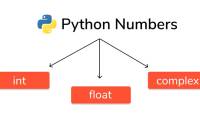
Numeric Data Types in Python
Python supports integers, decimals, and complex numbers, which are respectively defined as int, float, and complex classes in Python. Integers and decimal numbers are distinguished by the presence or absence of a decimal point.
For example: 5 is an integer, 5.0 is a decimal number. Python also supports complex numbers and uses the suffix jor Jto indicate the imaginary part. For example: 3+5j. In addition to intand float, Python supports two more types of numbers: Decimaland Fraction.
We will use functions type()to check to see which numeric class a variable or value belongs to, and functions isinstance()to check if they belong to a specific class.
a = 9 # Output:

 print(type(a)) # Output:

 print(type(5.0)) # Output: (10+2j) b = 8 + 2j print(b + 2) # Kiểm tra xem b có phải là số phức không # Output: True print(isinstance(b, complex))
Integers in Python are not limited in length, decimals are limited to 16 numbers after the decimal point.
The numbers we work with every day are usually base 10, but computer programmers (usually embedded programmers) need to work with binary, hexadecimal and octal number systems. To represent these coefficients in Python, we place an appropriate prefix before the number.
Coefficient prefix for Python numbers:
| Number system | Prefix |
| Binary system | '0b' or '0B' |
| Octal system | '0o' or '0O' |
| Hexadecimal system | '0x' or '0X' |
(You can put the prefix without the ' ').
This is an example of using coefficient prefixes in Python, and when we use the function print()to print their value to the screen, we will get the corresponding number in the coefficient of 10.
# Output: 187 print(0b10111011) # Output: 257 (250 + 7) print(0xFA + 0b111) # Output: 15 print(0o17)Convert Between Numeric Types in Python
We can convert one number type to another number type. This is also known as coercion. Operations such as addition and subtraction will implicitly convert integers to decimals (automatically) if there is an operator in the operation that is a decimal number.
For example : If you perform addition between the integer 2 and the decimal number 3.0, then 2 will be forcibly converted to decimal 2.0 and the returned result will be decimal 5.0.
>>> 2 + 3.0 5.0We can use built-in Python functions like int(), float()and complex()to convert between numeric types explicitly. These functions can even convert from strings.
>>> int(3.6) 3 >>> int(-1.2) -1 >>> float(7) 7.0 >>> complex('2+8j') (2+8j)When converting from decimal to integer, the number will be omitted, only the integer part will be taken.
Decimal Module in Python
The class float built into Python may surprise us a bit. Normally, if we calculate the sum of 1.1 and 2.2, we think the result will be 3.3, but that seems not to be the case. If you check the correctness of this math operation in Python, the result will be False.
>>> (1.1 + 2.2) == 3.3 FalseWhat happened?
This is because, decimal numbers are implemented in computer hardware as binary fractions, since computers only understand binary numbers (0 and 1) so most of the decimal fractions we know , cannot be stored correctly in the computer.
For example, we cannot represent the fraction 1/3 as a decimal, because it is an infinite repeating decimal, with the numbers after the decimal point infinitely long, so we can only evaluate it. .
When converting the decimal part 0.1, it results in an infinitely long binary part of 0.000110011001100110011. and the computer only stores a finite part of the number after the . its only. Therefore, the number stored is only approximately 0.1 and never equal to 0.1. That's why the addition we talked about above doesn't give the results we expected. That is a limitation of computer hardware, not Python's fault.
Now try typing the above addition into Python to see what the return result is:
>>> 1.1+2.2 3.3000000000000003To overcome this problem, we can use the Decimal module in Python. While float numbers only take 16 numbers after the decimal point, the Decimal module allows customizing the length of the number.
import decimal # Output: 0.1 print(0.1) # Output: 0.1000000000000000055511151231257827021181583404541015625 print(decimal.Decimal(0.1))This module is used when we want to perform mathematical operations in decimal numbers to get results like we learned in school.
This is also quite important, for example 25.50kg will be more accurate than 25.5kg, because 2 decimal places are still more accurate than 1 digit.
from decimal import Decimal # Output: 3.3 print(Decimal('1.1') + Decimal('2.2')) # Output: 10.000 print(Decimal('4.0') * Decimal('2.50'))If you want more concise code, you can import the Decimal module and change the module name to D.
from decimal import Decimal as D # Output: 3.3 print(D('1.1') + D('2.2')) # Output: 10.000 print(D('4.0') * D('2.50'))In this code we import the Decimal module and change its name to D, the result is unchanged from the above code.
You may wonder in the multiplication section, why not use Decimal numbers to multiply but have to add 0 after 4 and 2.5. The answer is efficiency, float operations are performed faster than Decimal operations.
When Should Decimal Be Used Instead of Float?
We often use Decimal in the following cases:
- When creating financial applications, precise decimal representation is essential.
- When you want to control the precision of numbers.
- When you want to perform math operations like you learned in school.
Fractions in Python
Python provides mathematical operations involving fractions through the fractions module. A fraction has a numerator and a denominator, both of which are integers. We can create Fraction objects in many different ways:
import fractions # Tạo phân số từ số thập phân print(fractions.Fraction(4.5)) # Output: 9/2 # Tạo phân số từ số nguyên # Code by TipsMake.com print(fractions.Fraction(9)) # Output: 9 # Tạo phân số bằng cách khai báo tử, mẫu số print(fractions.Fraction(2,5)) # Output: 2/5When creating fractions from floats, we may get unusual results, which is due to computer hardware limitations as discussed in the decimal module section.
In particular, you can initialize a fraction from string. This is the preferred initialization when using decimal numbers.
import fractions # Khởi tạo phân số từ float print(fractions.Fraction(0.1)) # Output: 3602879701896397/36028797018963968 # Khởi tạo phân số từ string # Code by TipsMake.com print(fractions.Fraction('0.1')) # Output: 1/10The fraction data type fully supports basic mathematical operations such as addition, subtraction, multiplication, division, and logic:
# Output: 1 print(F(2,5) + F(3,5)) # Output: 3/5 print(F(2,5) + F(1,5)) # Output: 7/1 print(1 / F(3,7)) # Output: False print(F(-2,9) > 0) # Output: True print(F(-2,9) < 0)Mathematics in Python
Python provides math and random modules to solve other mathematical problems such as trigonometry, logarithms, probability and statistics, etc. Because the math module has quite a lot of functions and properties, I calculated Will make a separate post to list them. Below is an example of math in Python.
from fractions import Fraction as F import math # Output: 3.141592653589793 print(math.pi) # Output: -1.0 print(math.cos(math.pi)) # Output: 22026.465794806718 print(math.exp(10)) # Output: 2.0 print(math.log2(4)) # Output: 1.1752011936438014 print(math.sinh(1)) # Output: 40320 print(math.factorial(8))Use the Interpreter as a Calculator
The interpreter works like a simple calculator: You can enter a calculation and it writes out the value. The expression syntax is quite simple: operators like +, -, * and / work the same as in most other programming languages (Pascal, C), parentheses () can be used for grouping . For example:
>>> 2 + 2 4 >>> 50 - 5*6 20 >>> (50 - 5*6) / 4 5.0 >>> 8 / 5 # phép chia luôn trả về một số dạng thập phân với dấu chấm 1.6Integers (like 2, 4, 20) have type int, decimal numbers (like 5.0, 1.6) have type float.
Division ( /) always returns a float. To perform integer division (removing numbers after the decimal point) you can use the operator //; To calculate the remainder, use %the example below:
>>> 17 / 3 # phép chia thường trả về số thập phân 5.666666666666667 >>> >>> 17 // 3 # phép chia lấy số nguyên, loại bỏ phần sau dấu thập phân 5 >>> 17 % 3 # toán tử % trả về số dư của phép chia 2 >>> 5 * 3 + 2 # thương * số chia + số dư 17With Python, you can use operators **to calculate exponents:
>>> 5 ** 2 # 5 bình phương 25 >>> 2 ** 7 # 2 mũ 7 128The equal sign =is used to assign a value to a variable. Then no results are displayed before the next command prompt:
>>> width = 20 >>> height = 5 * 9 >>> width * height 900If a variable is not defined (assigned a value), try to use it and you will receive the following error:
>>> n # bạn đang cố truy cập vào biến n chưa được gán giá trị Traceback (most recent call last): File "", line 1, in NameError: name 'n' is not definedPython fully supports floating point, calculations with both integers and decimals, the result will be returned as a decimal number (sic: operators with mixed type operands convert integer operands to decimal):
>>> 4 * 3.75 - 1 14.0In interactive mode, the last printed expression will be assigned to the variable _, making it easier to perform subsequent calculations. For example:
>>> tax = 12.5 / 100 >>> price = 100.50 >>> price * tax 12.5625 >>> price + _ 113.0625 >>> round(_, 2) 113.06You should consider this variable as read-only, do not assign a value to it - because if you create a variable with the same name it will take over this default variable and no longer be able to do the cool things above.
3. String
String in Python is a sequence of characters. Computers don't deal with characters, they only work with binary numbers. Although you can see characters on the screen, they are stored and processed internally as combinations of 0s and 1s. Converting characters to numbers is called encoding, and the process is the reverse. is called decoding. ASCII and Unicode are two of the popular encodings commonly used.
In Python, a string is a sequence of Unicode characters. Unicode covers every character in all languages and provides uniformity in encoding.
How to Create Strings in Python
Besides numbers, Python can also manipulate strings, represented in many ways. '.'They can be enclosed in single ( ) or double ( ) quotes "."with the same result. is used to "escape" these two quotes.
>>> 'spam eggs' # dấu nháy đơn 'spam eggs' >>> 'doesn't' # sử dụng ' để viết dấu nháy đơn. "doesn't" >>> "doesn't" # .hoặc sử dụng dấu nháy kép "doesn't" >>> '"Yes," he said.' '"Yes," he said.' >>> ""Yes," he said." '"Yes," he said.' >>> '"Isn't," she said.' '"Isn't," she said.'In the interactive interpreter, the resulting string includes the quotation marks and special characters that are "hidden" using . Although the output may look slightly different from the input (enclosing quotes may vary), the two strings are equivalent. Strings are written in double quotes when the string contains single quotes and no double quotes), otherwise it is written in single quotes. The print() function creates a more readable output string, by ignoring the accompanying quotes and printing special characters that "escape" the quotes:
>>> '"Isn't," she said.' '"Isn't," she said.' >>> print('"Isn't," she said.') "Isn't," she said. >>> s = 'First line.nSecond line.' # n nghĩa là dòng mới >>> s # không có print(), n sẽ được viết trong kết quả đầu ra 'First line.nSecond line.' >>> print(s) # có print(), n sẽ tạo ra dòng mới First line. Second line.If you do not want the characters added by to be interpreted as special characters by the interpreter, use the raw string by prefixing the rfirst quote:
>>> print('C:somename') # ở đây n là dòng mới! C:some ame >>> print(r'C:somename') # thêm r trước dấu nháy C:somenameString characters can be written on multiple lines using three quotes: """."""or '''.'''. Line endings are automatically included in the string, but this can be prevented by appending to the end of the line. For example:
print(""" Usage: thingy [OPTIONS] -h Display this usage message -H hostname Hostname to connect to """)Here is the result (the original newline is not counted):

Here is a list of all escape sequences supported by Python:
| Escape Sequence | Describe |
|---|---|
| newline | Backslashes and newlines are ignored |
| Backslash | |
| ' | Apostrophe |
| " | Quotation marks |
| a |
ASCII Bell |
| b | ASCII Backspace |
| f | ASCII Formfeed |
| n | ASCII Linefeed |
| r | ASCII Carriage Return |
| t | ASCII Horizontal Tab |
| v | ASCII Vertical Tab |
| ooo | The character with octal value is ooo |
| xHH | The character with hexadecimal value is HH |
For example: Let's run each command individually right in the compiler to see the results.
>>> print("C:Python32TipsMake.com") C:Python32TipsMake.com >>> print("In dòng nàynthành 2 dòng") In dòng này thành 2 dòng >>> print("In giá trị x48x45x58") In giá trị HEX >>> How to Access Elements of a String
Strings can be indexed with the first character numbered 0. There is no separate character type, each character is simply a number:
>>> word = 'Python' >>> word[0] # ký tự ở vị trí số 0 'P' >>> word[5] # ký tự ở vị trí số 5 'n' The index can also be negative, starting from the right:
>>> word[-1] # last character 'n' >>> word[-2] # second-last character 'o' >>> word[-6] 'P'Note that because -0 is the same as 0, negative indices start at -1.
In addition to numbering, slicing is also supported. While index is used to get individual characters, slicing will allow you to get substrings:
>>> word[0:2] # các ký tự từ vị trí 0 (bao gồm) đến 2 (loại trừ) 'Py' >>> word[2:5] # các ký tự từ vị trí 2 (bao gồm) đến 5 (loại trừ) 'tho'Pay attention to how characters are retained and excluded. It always ensures that s[:i] + s[i:]by s:
>>> word[:2] + word[2:] 'Python' >>> word[:4] + word[4:] 'Python'The indices in string slicing have a pretty useful default setting, there are 2 indices that are ignored by default, which are 0 and the size of the string to be cut.
>>> word[:2] # các ký tự từ đầu đến vị trí thứ 2 (loại bỏ) 'Py' >>> word[4:] # các ký tự từ vị trí thứ 4(lấy) đến hết 'on' >>> word[-2:] # các ký tự thứ hai tính từ cuối lên (lấy) đến hết 'on'Another way to remember how string slicing works is to visualize the subscripts as separators between characters, with the leftmost character numbered 0. Then, the last character on the right, in A string of n characters will have index n, for example:
+---+---+---+---+---+---+ | P | y | t | h | o | n | +---+---+---+---+---+---+ 0 1 2 3 4 5 6 -6 -5 -4 -3 -2 -1The first row of numbers gives the position of the index from 0 to 6 in the string. The second row is the corresponding negative indices. Cutting from i to j will include all characters between i and j, respectively.
For non-negative indices, the length of a slice is the difference of the indices, if both are within the bounds. For example, the length of word[1:3] is 2.
Attempting to use an index that is too large will return an error:
>>> word[42] # từ chỉ có 6 ký tự Traceback (most recent call last): File "", line 1, in IndexError: string index out of rangeHowever, indexes outside the slice range are still handled neatly when used for slicing:
>>> word[4:42] # cắt ký tự từ vị trí thứ 4 đến 42 'on' >>> word[42:] # cắt ký tự sau vị trí 42 ''Change or Delete a String
Python strings cannot change - they are fixed. Therefore, if you intentionally assign a certain character to an indexed location, you will receive an error message:
>>> word[0] = 'J' . TypeError: 'str' object does not support item assignment >>> word[2:] = 'py' . TypeError: 'str' object does not support item assignmentIf another string is needed, it's best to create a new one:
>>> 'J' + word[1:] 'Jython' >>> word[:2] + 'py' 'Pypy'You cannot delete or remove characters from a string, but like a tuple, you can delete an entire string, using the del keyword:
qtm_string = 'TipsMake.com' del qtm_string # Output: NameError: name 'qtm_string' is not defined qtm_stringString Concatenation
Strings can be concatenated using the operator +and replaced with *:
>>> # thêm 3 'un' vào sau 'ium' >>> 3 * 'un' + 'ium' 'unununium'Two or more string characters (i.e. characters within quotation marks) next to each other are automatically concatenated.
>>> 'Py' 'thon' 'Python'The above feature only works with literal strings, does not apply to variables or expressions:
>>> prefix = 'Py' >>> prefix 'thon' # không thể nối một biến với một chuỗi . SyntaxError: invalid syntax >>> ('un' * 3) 'ium' . SyntaxError: invalid syntaxIf you want to concatenate variables together or variables with strings, use +:
>>> prefix + 'thon' 'Python'This feature is especially useful when you want to break long strings into shorter strings:
>>> text = ('Put several strings within parentheses ' . 'to have them joined together.') >>> text 'Put several strings within parentheses to have them joined together.'If you want to concatenate strings in different lines, use parentheses:
>>> # sử dụng () >>> s = ('Xin ' . 'chào!') >>> s 'Xin chào!'Iterate and Check Elements of the String
Like lists and tuples, you also use a for loop when you need to iterate over a string, like in the example below to count the number of "i" characters in the string:
count = 0 for letter in 'TipsMake.com': if(letter == 'i'): count += 1 # Output: Có 1 chữ i được tìm thấy print('Có', count,'chữ i được tìm thấy')To check whether a substring is present in a string, use the in keyword, like this:
>>> 'TipsMake' in 'TipsMake.com' True >>> 'python' in 'TipsMake.com' False >>> Built-in Python Function for Working with Strings
There are two most commonly used functions when working with strings in Python: enumerate() and len().
Function len()built into Python, which returns the length of the string:
>>> s = 'supercalifragilisticexpialidocious' >>> len(s) 34The enumerate() function returns an enumeration object, containing the value pair and index of the element in the string, quite useful during iteration.
qtm_str = 'Python' # enumerate() qtm_enum = list(enumerate(qtm_str)) # Output: list(enumerate(qtm_str) = [(0, 'P'), (1, 'y'), (2, 't'), (3, 'h'), (4, 'o'), (5, 'n')] print('list(enumerate(qtm_str) = ', qtm_enum)Format() Method to Format the String
The format() method is very flexible and powerful when used to format strings. String format containing {} as a placeholder or replacement field to receive an alternative value. You can also use positional arguments or keywords to specify the order.
# default(implicit) order thu_tu_mac_dinh = "{}, {} và {}".format('Quản','Trị','Mạng') print('n--- Thứ tự mặc định ---') print(thu_tu_mac_dinh) # sử dụng đối số vị trí để sắp xếp thứ tự vi_tri_thu_tu= "{1}, {0} và {2}".format('Quản','Trị','Mạng') print('n--- Thứ tự theo vị trí ---') print(vi_tri_thu_tu) # sử dụng từ khóa để sắp xếp thứ tự tu_khoa_thu_tu = "{s}, {b} và {j}".format(j='Quản',b='Trị',s='Mạng') print('n--- Thứ tự theo từ khóa ---') print(tu_khoa_thu_tu)We have the following result when running the above code:
--- Thứ tự mặc định --- Quản, Trị và Mạng --- Thứ tự theo vị trí --- Trị, Quản và Mạng --- Thứ tự theo từ khóa --- Mạng, Trị và QuảnThe format() method can have optional format specifications. They are separated from the field name by a :. For example, it is possible to left-align <, right-align >, or center ^ a string in the given space. Can format integers as binary or hexadecimal numbers; Decimal numbers can be rounded or displayed as an exponent. There are many formats you can use.
>>> # Định dạng số nguyên >>> "Khi chuyển {0} sang nhị phân sẽ là {0:b}".format(12) 'Khi chuyển 12 sang nhị phân sẽ là 1100' >>> # Định dạng số thập phân >>> "Số thập phân {0} ở dạng mũ sẽ là {0:e}".format(1566.345) 'Số thập phân 1566.345 ở dạng mũ sẽ là 1.566345e+03' >>> # Làm tròn số thập phân >>> "1 phần 3 là: {0:.3f}".format(1/3) '1 phần 3 là: 0.333' >>> # căn chỉnh chuỗi >>> "|{:<10}|{:^10}|{:>10}|".format('Quản','Trị','Mạng') '|Quản | Trị | Mạng|'Old-style string format:
You can format a string in Python to the sprintf() style used in the C programming language using the %.
>>> x = 15.1236789 >>> print('Giá trị của x là %3.2f' %x) Giá trị của x là 15.12 >>> print('Giá trị của x là %3.4f' %x) Giá trị của x là 15.123712.3457The Method Is Commonly Used in String
There are many built-in methods in Python for working with strings. In addition to format() mentioned above, there are also lower(), upper(), join(), split(), find(), replace(), etc.
4. List (List)
Python provides a series of complex data, often called sequences, used to group different values. The most versatile is the list.
How to Create Lists in Python
In Python, a list is represented by a sequence of values, separated by commas, enclosed in []. Lists can contain multiple items of different types, but typically the items are of the same type.
>>> squares = [1, 4, 9, 16, 25] >>> squares [1, 4, 9, 16, 25]list1 = [] # list rỗng list2 = [1, 2, 3] # list số nguyên list3 = [1, "Hello", 3.4] # list với kiểu dữ liệu hỗn hợpa = ['a', 'b', 'c'] n = [1, 2, 3] x = [a, n] print (x) # Output: [['a', 'b', 'c'], [1, 2, 3]] print (x[0]) # Output: ['a', 'b', 'c'] print(x[0][1]) # Output: bHoặc khai báo list lồng nhau từ đầu:
list4 = [mouse", [8, 4, 6], ['a']]Truy Cập Vào Phần Tử Của List
Index (chỉ mục) của list:
qtm_list = ['q','u','a','n','t','r','i','m','a','n','g','.','c','o','m'] # TypeError: list indices must be integers or slices, not float # TypeError: index của list phải là số nguyên hoặc slice, không phải số thập phân qtm_list[2.0]List lồng nhau có thể truy cập bằng index lồng nhau:
qtm_list = ['q','u','a','n','t','r','i','m','a','n','g','.','c','o','m'] # Output: q print(qtm_list[0]) # Output: a print(qtm_list[2]) # Output: t print(qtm_list[4]) # List lồng nhau ln_list = ["Happy", [1,3,5,9]] # Index lồng nhau # Output: a print(ln_list[0][1]) # Output: 9 print(ln_list[1][3])Index âm:
qtm_list = ['q','u','a','n','t','r','i','m','a','n','g','.','c','o','m'] # Code by TipsMake.com # Output: m print(qtm_list[-1]) # Output: i print(qtm_list[-9])Cắt Lát (Slice) List Trong Python
qtm_list = ['q','u','a','n','t','r','i','m','a','n','g','.','c','o','m'] # Code by TipsMake.com # Output: ['u', 'a', 'n', 't'] print(qtm_list[1:5]) # Output: ['q', 'u', 'a', 'n', 't', 'r', 'i'] print(qtm_list[:-8]) # Output: ['n', 'g', '.', 'c', 'o', 'm'] print(qtm_list[9:])qtm_list = ['q','u','a','n','t','r','i','m','a','n','g','.','c','o','m'] # Output: ['q', 'u', 'a', 'n', 't', 'r', 'i', 'm', 'a', 'n', 'g', '.', 'c', 'o', 'm'] print(qtm_list[:])Thay đổI Hoặc Thêm Phần Tử Vào List
List cũng hỗ trợ các hoạt động như nối list:
>>> squares + [36, 49, 64, 81, 100] [1, 4, 9, 16, 25, 36, 49, 64, 81, 100]>>> cubes = [1, 8, 27, 65, 125] # có vẻ sai sai >>> 4 ** 3 # lập phương của 4 là 64, không phải 65! 64 >>> cubes[3] = 64 # thay thế giá trị sai >>> cubes [1, 8, 27, 64, 125]>>> cubes.append(216) # thêm lập phương của 6 >>> cubes.append(7 ** 3) # và lập phương của 7 >>> cubes [1, 8, 27, 64, 125, 216, 343]>>> letters = ['a', 'b', 'c', 'd', 'e', 'f', 'g'] >>> letters ['a', 'b', 'c', 'd', 'e', 'f', 'g'] >>> # thay thế vài giá trị >>> letters[2:5] = ['C', 'D', 'E'] >>> letters ['a', 'b', 'C', 'D', 'E', 'f', 'g'] >>> # giờ thì xóa chúng >>> letters[2:5] = [] >>> letters ['a', 'b', 'f', 'g'] >>> # xóa list bằng cách thay tất cả các phần tử bằng một list rỗng >>> letters[:] = [] >>> letters []Hàm len() cũng có thể áp dụng với list:
>>> letters = ['a', 'b', 'c', 'd'] >>> len(letters) 4Xóa Hoặc Loại Bỏ Phần Tử Khỏi List Trong Python
my_list = ['q','u','a','n','t','r','i','m','a','n','g','.','c','o','m'] # xóa phần tử có index là 2 del my_list[2] # Output: ['q', 'u', 'n', 't', 'r', 'i', 'm', 'a', 'n', 'g', '.', 'c', 'o', 'm'] print(my_list) # xóa phần tử có index từ 1 đến 7 del my_list[1:7] # Output: ['q', 'a', 'n', 'g', '.', 'c', 'o', 'm'] print(my_list) # xóa toàn bộ list my_list del my_list # Error: NameError: name 'my_list' is not defined print(my_list)my_list = ['q','u','a','n','t','r','i','m','a','n','g','.','c','o','m'] my_list.remove('.') # Output: ['q', 'u', 'a', 'n', 't', 'r', 'i', 'm', 'a', 'n', 'g', 'c', 'o', 'm'] print(my_list) # Output: n print(my_list.pop(3)) # Output: ['q', 'u', 'a', 't', 'r', 'i', 'm', 'a', 'n', 'g', 'c', 'o', 'm'] print(my_list) # Output: m print(my_list.pop()) # Output: ['q', 'u', 'a', 't', 'r', 'i', 'm', 'a', 'n', 'g', 'c', 'o'] print(my_list) my_list.clear() # Output: [] (list rỗng) print(my_list)>>> my_list = ['q','u','a','n','t','r','i','m','a','n','g','.','c','o','m'] >>> my_list[11:15]=[] >>> my_list ['q', 'u', 'a', 'n', 't', 'r', 'i', 'm', 'a', 'n', 'g']Phương Thức List Trong Python
- append() : Thêm phần tử vào cuối list.
- extend() : Thêm tất cả phần tử của list hiện tại vào list khác.
- remove() : Xóa phần tử khỏi list.
- clear() : Xóa tất cả phần tử của list.
- index() : Trả về index của phần tử phù hợp đầu tiên.
- copy() : Trả về bản sao của list.
Ví dụ:
QTM = [9,8,7,6,8,5,8] # Output: 2 print(QTM.index(7)) # Output: 3 print(QTM.count(8)) QTM.sort() # Output: [5, 6, 7, 8, 8, 8, 9] print(QTM) QTM.reverse() # Output: [9, 8, 8, 8, 7, 6, 5] print(QTM)Ví dụ 2:
QTM = ['q','u','a','n','t','r','i','m','a','n','g','.','c','o','m'] # Output: 3 print(QTM.index('n')) # Output: 2 print(QTM.count('a')) QTM.sort() # Output: ['.', 'a', 'a', 'c', 'g', 'i', 'm', 'm', 'n', 'n', 'o', 'q', 'r', 't', 'u'] print(QTM) QTM.reverse() # Output: ['u', 't', 'r', 'q', 'o', 'n', 'n', 'm', 'm', 'i', 'g', 'c', 'a', 'a', '.'] print(QTM)List Comprehension: Cách Tạo List Mới Ngắn Gọn
Ví dụ:
cub3 = [3 ** x for x in range(9)] # Output: [1, 3, 9, 27, 81, 243, 729, 2187, 6561] print(cub3)Code trên tương đương với:
cub3 = [] for x in range (9): cub3.append(3**x) print(cub3)cub3 = [3 ** x for x in range(9) if x > 4] # Output: [243, 729, 2187, 6561] print(cub3) so_le = [x for x in range (18) if x % 2 == 1] # Output: [1, 3, 5, 7, 9, 11, 13, 15, 17] print(so_le) noi_list = [x+y for x in ['Ngôn ngữ ','Lập trình '] for y in ['Python','C++']] # Output: ['Ngôn ngữ Python', 'Ngôn ngữ C++', 'Lập trình Python', 'Lập trình C++'] print(noi_list)Kiểm Tra Phần Tử Có Trong List Không
QTM = ['q','u','a','n','t','r','i','m','a','n','g','.','c','o','m'] # Output: True print('q' in QTM) # Output: True print('.' in QTM) # Output: False print('z' in QTM)Vòng Lặp for Trong List
for ngon_ngu in ['Python','Java','C']: print("Tôi thích lập trình",ngon_ngu)Kết quả trả về sẽ như sau:
Tôi thích lập trình Python Tôi thích lập trình Java Tôi thích lập trình CCác Hàm Python Tích Hợp Với List
- any() : Trả về True khi bất kỳ phần tử nào trong list là true. Nếu list rỗng hàm trả về giá trị False.
- len() : Trả về độ dài (số lượng phần tử) của list.
- list() : Chuyển đổi một đối tượng có thể lặp (tuple, string, set, dictionary) thành list.
- max() : Trả về phần tử lớn nhất trong list.
- min() : Trả về phần tử nhỏ nhất trong list.
- sorted() : Trả về list mới đã được sắp xếp.
5. Tuple
Ví dụ:
t = (10, "tips make", 2j)t = (10, "tips make", 2j) #t[0:2] = (10, 'tips make') print("t[0:2] = ", t[0:2])Chạy code trên ta được kết quả:
t[0:2] = (10, 'tips make')Tuple Hơn List ở đIểm Nào?
Tạo Một Tuple
# Tuple rỗng # Output: () my_tuple = () print(my_tuple) # tuple số nguyên # Output: (2, 4, 16, 256) my_tuple = (2, 4, 16, 256) print(my_tuple) # tuple có nhiều kiểu dữ liệu # Output: (10, "TipsMake.com", 3.5) my_tuple = (10, "TipsMake.com", 3.5) print(my_tuple) # tuple lồng nhau # Output: ("QTM", [2, 4, 6], (3, 5, 7)) my_tuple = ("QTM", [2, 4, 6], (3, 5, 7)) print(my_tuple) # tuple có thể được tạo mà không cần dấu () # còn gọi là đóng gói tuple # Output: (10, "TipsMake.com", 3.5) my_tuple = 10, "TipsMake.com", 3.5 print(my_tuple) # mở gói (unpacking) tuple cũng có thể làm được # Output: # 10 # TipsMake.com # 3.5 a, b, c = my_tuple print(a) print(b) print(c) # tạo tuple chỉ với () # Output:
my_tuple = ("TipsMake.com") print(type(my_tuple)) # khi thêm dấu phẩy vào cuối # Output:
my_tuple = ("TipsMake.com",) print(type(my_tuple)) # dấu () là tùy chọn, bạn có thể bỏ nếu thích # Output:
my_tuple = "TipsMake.com", print(type(my_tuple))
Truy Cập Vào Các Phần Tử Của Tuple
# tuple lồng nhau n_tuple = ("TipsMake.com", [2, 6, 8], (1, 2, 3)) # index lồng nhau # Output: 'r' print(n_tuple[0][5]) # index lồng nhau # Output: 8 print(n_tuple[1][2])Thay đổI Một Tuple
my_tuple = (1, 3, 5, [7, 9]) # không thể thay đổi phần tử của tuple # Nếu bạn bỏ dấu # ở dòng 8 # Bạn sẽ nhận được lỗi: # TypeError: 'tuple' object does not support item assignment #my_tuple[1] = 9 # Nhưng phần tử có index 3 trong tuple là list # list có thể thay đổi, nên phần tử đó có thể thay đổi # Output: (1, 3, 5, [8, 9]) my_tuple[3][0] = 8 print(my_tuple) # Nếu cần thay đổi tuple hãy gán lại giá trị cho nó # Output: ('q', 'u', 'a', 'n', 't', 'r', 'i', 'm', 'a', 'n', 'g') my_tuple = ('q', 'u', 'a', 'n', 't', 'r', 'i', 'm', 'a', 'n', 'g') print(my_tuple)# Nối 2 tuple # Output: (2, 4, 6, 3, 5, 7) print((2, 4, 6) + (3, 5, 7)) # Lặp lại tuple # Output: ('TipsMake.com', 'TipsMake.com', 'TipsMake.com') print(("TipsMake.com",) * 3)Xóa Tuple
QTM = ('q','u','a','n','t','r','i','m','a','n','g','.','c','o','m') # Không thể xóa phần tử của tuple # Nếu bạn chạy lệnh del QTM[3] # sẽ tạo ra lỗi: # TypeError: 'tuple' object doesn't support item deletion # Có thể xóa toàn bộ tuple del QTM # Sau đó thử chạy print (QTM) sẽ trả về lỗi # NameError: name 'QTM' is not defined Phương Thức Và Hàm Dùng Với Tuple Trong Python
- count(x) : Đếm số phần tử x trong tuple.
QTM = ['q','u','a','n','t','r','i','m','a','n','g','.','c','o','m'] # Count # Output: 2 print(QTM.count('m')) # Index # Output: 3 print(QTM.index('n'))- any() : Trả về True nếu bất kỳ phần tử nào của tuple là true, nếu tuple rỗng trả về False.
- len() : Trả về độ dài (số phần tử) của tuple.
- max() : Trả về phần tử lớn nhất của tuple.
- min() : Trả về phần tử nhỏ nhất của tuple.
- tuple() : Chuyển đổi những đối tượng có thể lặp (list, string, set, dictionary) thành tuple.
Kiểm Tra Phần Tử Trong Tuple
QTM = ['q','u','a','n','t','r','i','m','a','n','g','.','c','o','m'] # Kiểm tra phần tử # Output: True print('a' in QTM) # Output: False print('b' in QTM) # Not in operation # Output: False print('g' not in QTM)Lặp Qua Các Phần Tử Của Tuple Trong Python
for ngon_ngu in ('Python','C++','Web'): print("Tôi thích lập trình",ngon_ngu)Kết quả trả về sẽ như sau:
Tôi thích lập trình Python Tôi thích lập trình C++ Tôi thích lập trình Web6. Set
Cách Tạo Set
Ví dụ về set:
a = {5,2,3,1,4}Nếu thực hiện lệnh in như sau:
print("a=", a)a = {1, 2, 3, 4, 5}Set với nhiều kiểu dữ liệu hỗn hợp như sau:
my_set = {1.0, "Xin chào", (1, 2, 3)} #Output: QTM_Set= {'Xin chào', 1.0, (1, 2, 3)} print("QTM_Set=",my_set)# initialize a with {} qtm = {} # Kiểm tra kiểu dữ liệu của qtm # Output:
print(type(qtm)) # Khởi tạo qtm với set() qtm = set() # Kiểm tra kiểu dữ liệu của qtm # Output:
print(type(qtm))
Làm Sao để Thay đổI Set Trong Python
>>> a[1] Traceback (most recent call last): File "

 ", line 1, in a[1] TypeError: 'set' object does not support indexing
# Khởi tạo my_set my_set = {1,3} print(my_set) # Nếu bỏ dấu # ở dòng 9, # Bạn sẽ nhận được lỗi # TypeError: 'set' object does not support indexing #my_set[0] # Thêm phần tử # Output: {1, 2, 3} my_set.add(2) print(my_set) # Thêm nhiều phần tử vào set # Output: {1, 2, 3, 4} my_set.update([2,3,4]) print(my_set) # Thêm list và set # Output: {1, 2, 3, 4, 5, 6, 8} my_set.update([4,5], {1,6,8}) print(my_set)Xóa Phần Tử Khỏi Set
# Khởi tạo my_set my_set = {1, 3, 4, 5, 6} print(my_set) # Xóa phần tử bằng discard() # Output: {1, 3, 5, 6} my_set.discard(4) print(my_set) # Xóa bằng remove() # Output: {1, 3, 5} my_set.remove(6) print(my_set) # Xóa phần tử không có # trong set bằng discard() # Output: {1, 3, 5} my_set.discard(2) print(my_set) # Xóa phần tử không có # trong set bằng remove() # Nếu bạn bỏ dấu # ở dòng 27, # bạn sẽ nhận được lỗi. # Output: KeyError: 2 #my_set.remove(2)# Khởi tạo my_set # Output: set of unique elements my_set = set("TipsMake.com") print(my_set) # xóa phần tử bằng pop() # Output: phần tử bị xóa ngẫu nhiên print(my_set.pop()) # xóa phần tử khác bằng pop() # Output: phần tử bị xóa ngẫu nhiên my_set.pop() print(my_set) # clear my_set #Output: set() my_set.clear() print(my_set)Các Toán Tử Set Trong Python
Ta sẽ sử dụng 2 tập hợp dưới đây:
>>> A = {1, 2, 3, 4, 5} >>> B = {4, 5, 6, 7, 8}# Khởi tạo A và B A = {1, 2, 3, 4, 5} B = {4, 5, 6, 7, 8} # sử dụng toán tử | # Output: {1, 2, 3, 4, 5, 6, 7, 8} print(A | B) # sử dụng hàm union() # Output: Như trên print(A.union(B)) print(B.union(A))# khởi tạo A và B A = {1, 2, 3, 4, 5} B = {4, 5, 6, 7, 8} # sử dụng & # Output: {4, 5} print(A & B) # sử dụng intersection() # Output: {4, 5} print(A.intersection(B)) print(B.intersection(A))# Khởi tạo A và B A = {1, 2, 3, 4, 5} B = {4, 5, 6, 7, 8} # Sử dụng toán tử - trên A # Output: {1, 2, 3} print(A - B) # Sử dụng hàm difference() trên A # Output: {1, 2, 3} print(A.difference(B)) # Sử dụng toán tử - trên B # Output: {8, 6, 7} print(B - A) # Sử dụng difference() trên B # Output: {8, 6, 7} print(B.difference(A))# Khởi tạo A và B A = {1, 2, 3, 4, 5} B = {4, 5, 6, 7, 8} # Sử dụng toán tử ^ # Output: {1, 2, 3, 6, 7, 8} print(A ^ B) # Sử dụng symmetric_difference() trên A # Output: {1, 2, 3, 6, 7, 8} print(A.symmetric_difference(B))Các Phương Thức Dùng Trên Set
| Phương thức | Mô tả |
| add() | Thêm một phần tử vào set. |
| clear() | Xóa tất cả phần tử của set. |
| copy() | Trả về bản sao chép của set. |
| difference() | Trả về set mới chứa những phần tử khác nhau của 2 hay nhiều set. |
| difference_update() | Xóa tất cả các phần tử của set khác từ set này. |
| discard() | Xóa phần tử nếu nó có mặt trong set. |
| intersection() | Trả về set mới chứa phần tử chung của 2 set. |
| intersection_update() | Cập nhật set với phần tử chung của chính nó và set khác. |
| isdisjoint() | Trả về True nếu 2 set không có phần tử chung. |
| issubset() | Trả về True nếu set khác chứa set này. |
| issuperset() | Trả về True nếu set này chưa set khác. |
| pop() | Xóa và trả về phần tử ngẫu nhiên, báo lỗi KeyError nếu set rỗng. |
| remove() | Xóa phần tử từ set. Nếu phần tử đó không có trong set sẽ báo lỗi KeyError. |
| symmetric_difference() | Trả về set mới chứa những phần tử không phải là phần tử chung của 2 set. |
| symmetric_difference_update() | Cập nhật set với những phần tử khác nhau của chính nó và set khác. |
| union() | Trả về set mới là hợp của 2 set. |
| update() | Cập nhật set với hợp của chính nó và set khác. |
Kiểm Tra Phần Tử Trong Set
# Khởi tạo my_set my_set = set("TipsMake.com") # Kiểm tra xem Q có trong my_set không # Output: True print('Q' in my_set) # Kiểm tra xem q có trong my_set không # Output: False print('q' in my_set)Lặp Qua Phần Tử Của Set
for letter in set("Python"): print(letter)t y P h o nHàm Thường Dùng Trên Set
|
Hàm |
Mô tả |
|
all() |
Trả về True nếu tất cả thành phần của set đều là true (hoặc nếu set là empty). |
|
any() |
Trả về True nếu phần tử bất kỳ được thiết lập là true. Nếu set là empty, trả về False . |
|
enumerate() |
|
|
len() |
|
|
max() |
Trả về mục lớn nhất trong set. |
|
min() |
Trả về mục nhỏ nhất trong set. |
|
sorted() |
|
|
sum() |
Frozenset Trong Python
7. Dictionary
Cách Tạo Dictionary Trong Python
Ví dụ:
dict1 = {} #dictionary rỗng #dict2 là dictionary với các khóa nguyên dict2 = {1: 'TipsMake.com',2: 'Công nghệ'} #Tạo dictionary với khóa hỗn hợp dict3 = {'tên': 'QTM', 1: [1, 3, 5]} #Tạo dictionary bằng dict() dict4 = dict({1:'apple', 2:'ball'}) #Tạo dictionary từ chuỗi với mỗi mục là một cặp dict5 = dict([(1,'QTM'), (2,'CN')])>>> type(dict2)
Trích Xuất Mảng
users = {'firstname': 'John', 'lastname': 'Smith', 'age': 27} print(users.keys()) # prints ['lastname', 'age', 'firstname']Truy Cập Phần Tử Của Dictionary
Sử dụng khóa để trích xuất dữ liệu:
#khai báo và gán giá trị dict2 dict2 = {1: 'TipsMake.com','TipsMake': 'Công nghệ'} print(type(dict2)) #in kiểu dữ liệu của dict2 #trích xuất dữ liệu bằng khóa rồi in print("dict2[1] = ", dict2[1]) print("dict2[TipsMake] = ",dict2['TipsMake'])Chạy đoạn code trên ta sẽ được kết quả:
dict2[1] = TipsMake.com dict2[TipsMake] = Công nghệ
Truy cập khóa - giá trị trong dictionary
# Ví dụ lập trình Python minh họa cách truy cập một phần tử từ dictionary # Tạo một Dictionary Dict = {1: 'Geeks', 'name': 'For', 3: 'Geeks'} # Truy cập phần tử bằng key print("Accessing a element using key:") print(Dict['name']) # Truy cập phần tử bằng get() # Phương thức print("Accessing a element using get:") print(Dict.get(3))Kết quả:
Truy cập một phần tử bằng key: For Truy cập một phần tử bằng get: GeeksThay đổI, Thêm Phần Tử Cho Dictionary
dict2 = {1: 'TipsMake.com','TipsMake': 'Công nghệ'} #cập nhật giá trị dict2['TipsMake'] = 'Tips Make' #output: {1: 'TipsMake.com', 'TipsMake': 'Tips Make'} print(dict2) #thêm phần tử mới dict2[2] = 'Python' #output: {1: 'TipsMake.com', 'TipsMake': 'Tips Make', 2: 'Python'} print(dict2)Xóa Phần Tử Từ Dictionary
# tạo dictionary binh_phuong = {1:1, 2:4, 3:9, 4:16, 5:25} # xóa phần tử số 4 # Output: 16 print(binh_phuong.pop(4)) # Output: {1: 1, 2: 4, 3: 9, 5: 25} print(binh_phuong) # xóa phần tử cụ thể del binh_phuong[2] # output: {1: 1, 3: 9, 5: 25} print(binh_phuong) # xóa phần tử bất kỳ # Output: (5, 25) print(binh_phuong.popitem()) # Output: {1: 1, 3: 9} print(binh_phuong) # xóa tất cả phần tử binh_phuong.clear() # output: {} print(binh_phuong) # xóa dictionary binh_phuong del binh_phuong # tạo lỗi nếu bỏ # ở lệnh sau # print(squares)Các Phương Thức Và Hàm Cho Dictionary
| Method | Mô tả |
|---|---|
| clear() | Xóa tất cả phần tử của dictionary. |
| copy() | Trả về một bản sao shollow copy của dictionary. |
| fromkeys(seq[,v]) | Trả về dictionary mới với key từ seq và value bằng v (default là None). |
| get(key[,d]) | Trả về giá trị của key, nếu key không tồn tại, trả về d. (default là None). |
| items() | Trả lại kiểu xem mới của các phần tử trong dictionary (key, value). |
| keys() | Trả về kiểu xem mới của các key trong dictionary. |
| pop(key[,d]) | Xóa phần tử bằng key và trả về giá trị hoặc d nếu key không tìm thấy. Nếu d không được cấp, key không tồn tại thì sẽ tạo lỗi KeyError. |
| popitem() | Xóa và trả về phần tử bất kỳ ở dạng (key, value). Tạo lỗi KeyError nếu dictionary rỗng. |
| setdefault(key,[,d]) | Nếy key tồn tại trả về value của nó, nếu không thêm key với value là d và trả về d (default là None). |
| update([other]) | Cập nhật dictionary với cặp key/value từ other, ghi đè lên các key đã có. |
| values() | Trả về kiểu view mới của value trong dictionary. |
Dictionary Comprehension Trong Python
lap_phuong = {x: x*x*x for x in range(6)} # Output: {0: 0, 1: 1, 2: 8, 3: 27, 4: 64, 5: 125} print(lap_phuong)Chương trình trên tương đương với
lap_phuong = {} for x in range(6): lap_phuong[x] = x*x*x print(lap_phuong)lap_phuong_chan = {x: x*x*x for x in range (10) if x%2==0} # output: {0: 0, 2: 8, 4: 64, 6: 216, 8: 512} print(lap_phuong_chan)Kiểm Tra Và Lặp Qua Phần Tử Trong Dictionary
lap_phuong = {0: 0, 1: 1, 2: 8, 3: 27, 4: 64, 5: 125} #output: True print (2 in lap_phuong) #output: False print (9 in lap_phuong) #output: False print (5 not in lap_phuong)lap_phuong = {0: 0, 1: 1, 2: 8, 3: 27, 4: 64, 5: 125} for i in lap_phuong print(lap_phuong[i])8. Chuyển đổI Giữa Các Kiểu Dữ Liệu
Chúng ta có thể chuyển đổi giữa các kiểu dữ liệu khác nhau bằng cách sử dụng hàm chuyển đổi kiểu khác nhau như int() (kiểu số nguyên), float() số thập phân, str() chuỗi,.
Ví dụ:
>>> float(11) 11.0Ví dụ:
int(18.6) 18Chuyển đổi từ string sang hoặc ngược lại phải có các giá trị tương thích.
Bạn có thể thực hiện chuyển đổi chuỗi này sang chuỗi khác:
>>> set([2,4,6]) {2,4,6} >>> tuple({3,5,7}) (3,5,7) >>> list('TipsMake') ['q', 'u', 'a', 'n', 't', 'r', 'i', 'm', 'a', 'n', 'g']Để chuyển đổi sang dictionary, mỗi phần tử phải là một cặp như ví dụ dưới đây:
>>> dict([[2,4],[1,3]]) {2: 4, 1: 3} >>> dict([(3,9),(4,16)]) {3: 9, 4: 16}9. Bước đầU Tiên Hướng Tới Lập Trình
>>> # Dãy Fibonacci: . # tổng của hai phần tử tạo nên phần tử tiếp theo . a, b = 0, 1 >>> while b < 10: . print(b) . a, b = b, a+b . 1 1 2 3 5 8Ví dụ này giới thiệu một số tính năng mới:
>>> i = 256*256 >>> print('The value of i is', i) The value of i is 65536>>> a, b = 0, 1 >>> while b < 1000: . print(b, end=',') . a, b = b, a+b . 1,1,2,3,5,8,13,21,34,55,89,144,233,377,610,987,FAQ
What is the main update about Python String?
How are data types in Python: string, number, list, tuple, set and dictionary used?
Why does Python String matter?
Let's find out with TipsMake.com!
What should readers know about Python String?
Data types are ways of classifying data items.
Related Articles
 Python Data Type: String, Number, List, Tuple, Set and Dictionary35 minutes read
 Multiple Choice Quiz About Python - Part 43 minutes read
 Numeric Data Types in Python4 minutes read
 5 Advanced Python Scripts to Help You Check Data More Accurately7 minutes read
 Functions in Python10 minutes read
 Array in Python7 minutes read
Reader Comments 0
Sign in with email or Google to join the discussion.