Table of Contents
This updated guide examines What Is Supercomputer Used For? and organizes the essential facts, background, and practical takeaways in clear American English.
As technology grows, supercomputers will be 'stronger, smarter'. Today, supercomputers have the speed of processing up to thousands of teraflops or the total efficiency of 6,000 most modern computers. A teraflop is equivalent to a trillion calculations per second, and a normal computer has a speed of about 3-3.8 gigaflops.
With such power, supercomputers become the strategic weapon of each nation.
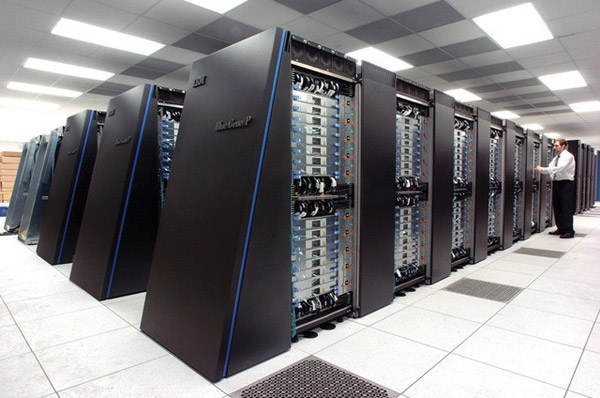
What are the supercomputers?
Supercomputers include 2 types:
The first is called computer cluster - a centralized type of computing: Using a large amount of CPUs close together, connected together to create a larger, more complete system. These CPUs are usually in many of the same computers. People consider this system as a single supercomputer. This supercomputer is taking up more than 80% of supercomputers worldwide.
The second type of supercomputer: Using many small computers that are geographically far apart and connected together into a network. A main machine (Control Node) is in the middle of controlling and allocating tasks for processing machines.
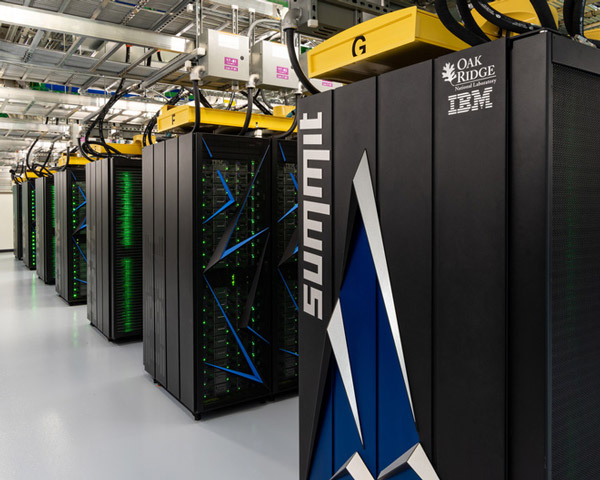
What is supercomputer used for?
Supercomputers are the backbone of computational science, they are used in many different areas such as: running simulations for large engineering projects and theoretical calculations in the field of physics; simulate protein metabolism, apply in cancer research in the field of health; monitor the stock market, to help investors make decisions that bring the most benefits in the field of finance - banking.
In each stage of development, supercomputers have new uses:
In the 1970s, supercomputers were used to analyze data to make predictions about the weather in the near future and to study aerodynamics, helping to build cars, airplanes, and missiles. the universe and the missile fighting.

In the 1980s, at the time of the Chernobyl nuclear disaster and the time of the Cold War at the risk of a nuclear war took place. At that time, people used supercomputers to find the probability, and to model the anti-radiation simulator.
In the 1990s, supercomputers were used to crack passwords using brute force, which is to constantly try and sort to find the right answer.
In the 2000s, supercomputers were used to create a simulated 3D model of a nuclear bomb test to calculate its damage. Based on that, people established the Nuclear Weapons Prohibition.
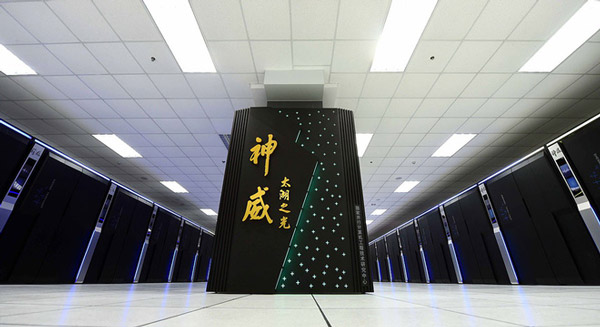
Ten years after this milestone, supercomputers are used by people to perform tasks that help them accelerate dozens of years of research such as modeling quantum environmental simulations, observing the Universe, finding new treatments for diseases.
And another aspect of technology, unparalleled computing power and data analysis of supercomputers is helping artificial intelligence become smarter.
Supercomputers increasingly show their strength and importance. It is being taken advantage of by humanity in the power of science.
FAQ
What is What Is Supercomputer Used For about?
It provides a structured overview of What is supercomputer, explains the main context, and highlights practical takeaways for readers.
Why does this topic matter?
Understanding the main concepts helps readers evaluate the issue, avoid common mistakes, and make better-informed decisions.
How should readers use this information?
Use the guidance as a practical starting point, confirm details that may have changed, and follow current product, safety, or security recommendations.
Related Articles
 Google's Quantum Supercomputer Can Solve the 'Impossible'3 minutes read
 Intel Unveiled Frontera, the Fastest Academic Supercomputer in11 minutes read
 Summit, the World's Most Powerful Supercomputer Used to Find3 minutes read
 Supercomputers Can Perform 1,000 Trillion Calculations Per Second: Explained4 minutes read
 Chinese Supercomputer Runs a Brain-Scale AI Model3 minutes read
 The Most Powerful Supercomputer Today, Has 1 Million Processing Cores, Equal to 1% of Human Brain3 minutes read
Reader Comments 0
Sign in with email or Google to join the discussion.