Table of Contents
Influence in technology is not limited to a job title or a company's valuation. It can come from building a widely used product, directing research, governing a major public company, operating complex engineering programs, or expanding access to technical education. The ten leaders below illustrate those different forms of impact.
This is a profile collection, not a definitive power ranking. Roles are current as of the article's latest review; several claims in the original version were corrected because executive positions and organizations changed.
Lisa Su — Chair and CEO of AMD
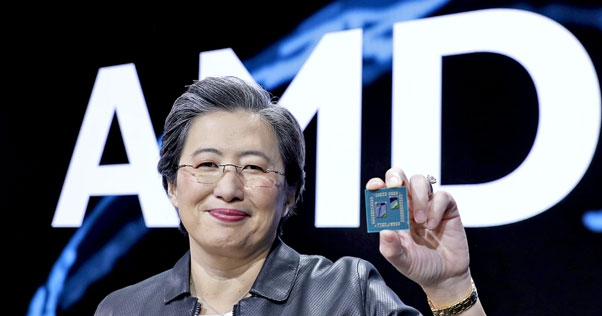
Electrical engineer Lisa Su joined AMD in 2012, became president and CEO in October 2014, and was named chair of the board in February 2022. AMD's official leadership biography credits her with directing its transformation around high-performance and adaptive computing.
Her influence comes from both engineering depth and corporate execution. AMD expanded its position in CPUs, data-center hardware, gaming, and AI accelerators during her tenure. Product leadership is better evaluated through architecture, performance, energy use, supply, and customer adoption than through a broad claim that one company has “beaten” another. TipsMake's Intel Arrow Lake and AMD Ryzen comparison shows how those trade-offs look in a specific processor generation.
Melanie Perkins — Co-founder and CEO of Canva

Melanie Perkins co-founded Canva with Cliff Obrecht and Cameron Adams and remains its CEO. Canva launched in 2013 with the aim of making visual communication more accessible through a browser-based design platform. Her role spans product direction, international growth, acquisitions, and the company's expansion into workplace and AI-assisted creative tools.
Canva's own newsroom biography confirms Perkins's current role. Readers comparing its workflow with other design platforms can use TipsMake's guide to Canva alternatives rather than relying on a single user-count or private valuation that can quickly become stale.
Safra Catz — Executive vice chair of Oracle
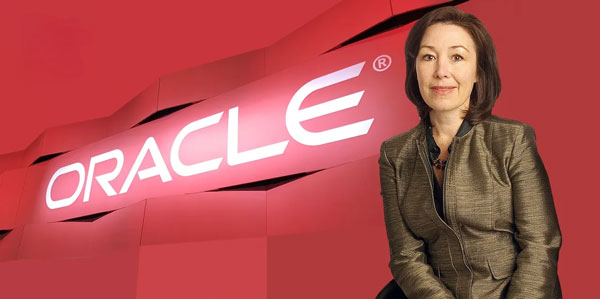
Safra Catz joined Oracle in 1999 and held senior operating and financial roles before becoming co-CEO in 2014 and sole CEO after Mark Hurd's death in 2019. She led the company through major acquisitions and its shift toward cloud infrastructure and subscription services.
Catz is no longer Oracle's CEO. In September 2025, Oracle appointed Clay Magouyrk and Mike Sicilia as CEOs and named Catz executive vice chair of the board. Oracle's current executive biography reflects that transition. Her continued board role makes her important to Oracle's strategy without mislabeling her current position.
Robyn Denholm — Chair of Tesla's board
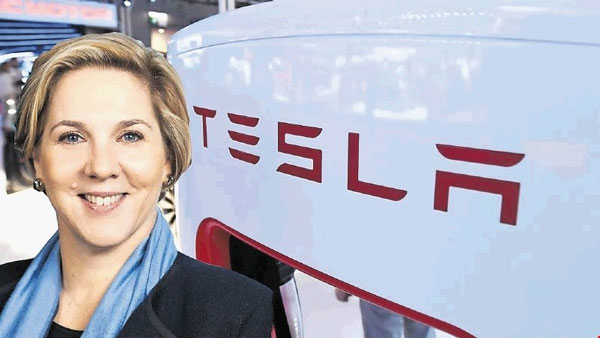
Robyn Denholm joined Tesla's board in August 2014 and has served as chair since November 2018. She provides board leadership and governance oversight; she is not Tesla's president and did not serve as Tesla's chief financial or operating officer.
Her prior executive experience includes finance and operations roles at technology and telecommunications companies, including Telstra and Juniper Networks. Tesla's board biography lists her current roles, including her work with Australian venture-capital and technology organizations.
Linda Yaccarino — Former CEO of X

Linda Yaccarino built her career in media advertising, including more than a decade at NBCUniversal, before becoming CEO of X in June 2023. Her remit centered on business operations, advertising relationships, partnerships, and the platform's effort to broaden its commercial services.
Yaccarino announced that she was stepping down in July 2025. Describing her as the current CEO is therefore outdated. Her tenure remains relevant to the intersection of social platforms, advertising, creator economics, and corporate reputation.
Gwynne Shotwell — President and COO of SpaceX
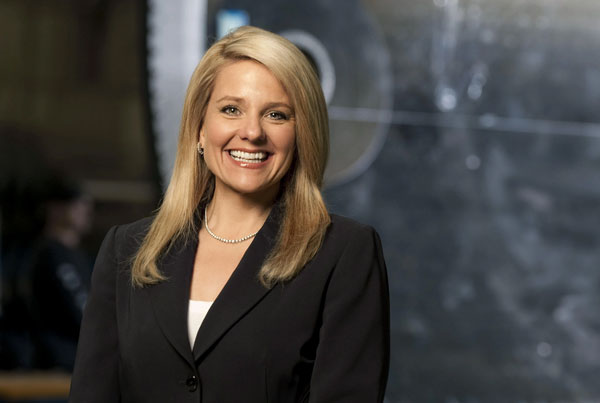
Gwynne Shotwell is president and chief operating officer of SpaceX. She joined the company in 2002 and became central to customer relationships, commercial launch contracts, day-to-day operations, and the translation of ambitious engineering programs into a functioning launch business.
SpaceX's current leadership page confirms her position. Shotwell's influence is operational: coordinating engineering, manufacturing, launch, regulatory, and commercial work at a scale where reliability and execution matter as much as product vision.
Susan Wojcicki — Former CEO of YouTube
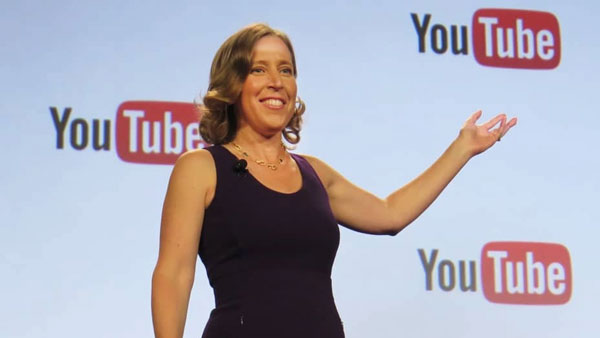
Susan Wojcicki was an early Google employee, and Google's founders worked from her garage during the company's beginnings. She held leadership roles in advertising and commerce, advocated for Google's acquisition of YouTube, and served as YouTube CEO from 2014 until 2023.
Wojcicki died in August 2024 after living with lung cancer for two years. Google's tribute to her life and career describes her influence across Google and YouTube. Her legacy includes the development of Google's advertising business and YouTube's growth into a global creator, media, and learning platform.
Marissa Mayer — Early Google engineer and former Yahoo CEO
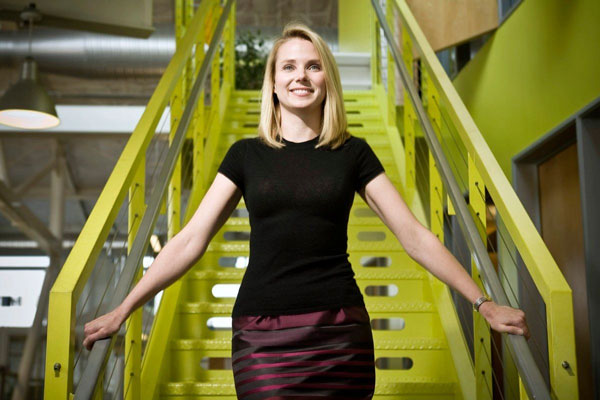
Marissa Mayer joined Google in 1999 as its twentieth employee and first woman engineer. She later led or contributed to prominent search and consumer-product work before becoming Yahoo's president and CEO in 2012. She remained in that role until Verizon acquired Yahoo's operating business in 2017.
After Yahoo, Mayer co-founded the consumer-software company Sunshine. That startup was wound down in 2025 and its assets were transferred to a new company called Dazzle, according to reporting on the transition. The update matters because describing Sunshine Contacts as her current company no longer reflects the business.
Kimberly Bryant — Founder of Black Girls CODE
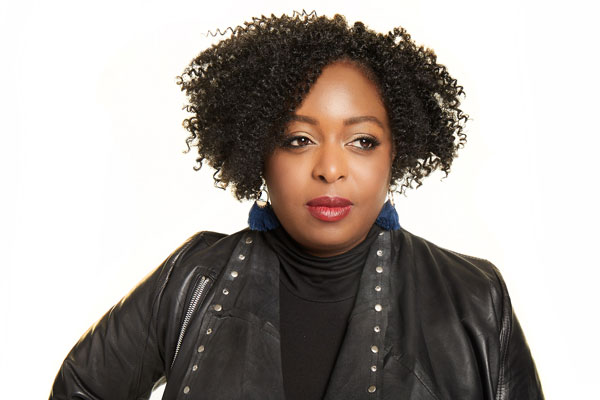
Engineer Kimberly Bryant founded Black Girls CODE in 2011 after seeing how difficult it was for her daughter to find a welcoming route into programming. The nonprofit created workshops and programs intended to give girls of color early experience with coding, robotics, and technology entrepreneurship.
Bryant should be described as the organization's founder, not its current CEO. Her impact lies in treating access and representation as infrastructure for the technology sector: who gets introduced to technical work, who sees a place for themselves, and who gains the network needed to continue. Families looking for beginner resources can also review TipsMake's list of websites that teach children about AI and machine learning.
Fei-Fei Li — Stanford professor and AI entrepreneur
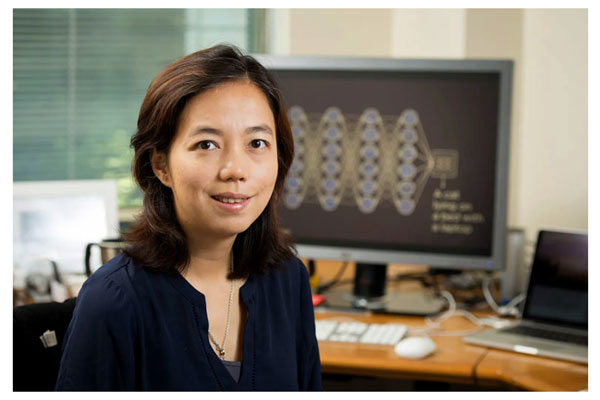
Fei-Fei Li is a Stanford computer-science professor and founding director of the Stanford Institute for Human-Centered Artificial Intelligence. She previously directed the Stanford AI Lab and served as chief scientist of AI and machine learning at Google Cloud. Her academic work includes ImageNet, the large visual dataset and benchmark that helped accelerate progress in computer vision.
Li also co-founded World Labs, which works on spatial intelligence. Stanford HAI's current biography documents her research and leadership roles. Her career connects foundational AI research, education, policy, and the effort to build systems that can reason about the three-dimensional world.
What these careers show
These leaders did not follow one route. Some trained as engineers, some built companies, some managed operations, some governed boards, and some created educational institutions. Several roles changed after the original article was published, which is why executive lists need dates, primary-source checks, and careful distinctions between founder, CEO, chair, and former executive.
The lasting lesson is more useful than a subjective ranking: technology leadership includes product judgment, research, finance, governance, operations, and access. Evaluating a leader means looking at the decisions and institutions she shaped—not repeating a valuation, user count, or title after it has gone stale.
Related Articles
 Portrait of 12 Powerful Women Who Rule the High-tech World Today9 minutes read
 The Most Powerful Women in the Tech World7 minutes read
 What Do Women Really Want: King Arthur5 minutes read
 The 5 Most Powerful Women of the World Technology Village11 minutes read
 Inspirational Quotes from the World's Most Famous Women: Key Facts24 minutes read
 6 Facts About Women That They Themselves Must Be Surprised5 minutes read
Reader Comments 0
Sign in with email or Google to join the discussion.