Table of Contents
This updated guide examines A Guide to Adding New Cities to Airvisual to See Air Pollution and organizes the essential facts, background, and practical takeaways in clear American English.
In such heavy air pollution, personal protective measures and air pollution measurement applications are an indispensable tool for every road trip.
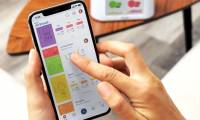
The AirVisual application is one of the precise air pollution measurement applications by region and is one of the most popular tools for measuring air.
In addition to the city you are currently living in, you can add other cities your relatives live in to remind them of air quality if they are at a dangerous level. Or simply look at the city's air index if you plan to travel, here's how to add a city to AirVisual.
- See air pollution index by BreezoMeter application
- 5 applications to help you track the activity of storms easily
- How to see the weather multiple locations on iPhone at the same time
How to add cities to the AirVisual list
- Download AirVisual for iOS
- Download AirVisual for Android
Step 1: Download the AirVisual app to your device using the download link above, then boot up and select My Air> Add a new place.
Next to the interface of cities to add to the list, click on the continent region with the cities you want to add.


Step 2: Select the city in the continental area you want to see air pollution level.


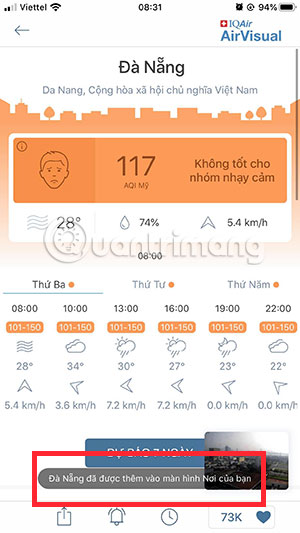
Step 3: Depending on the city, there will be different locations such as districts, you can select and add to the list of monitored cities. When adding cities successfully you will see the city notifications have been added to your screen.

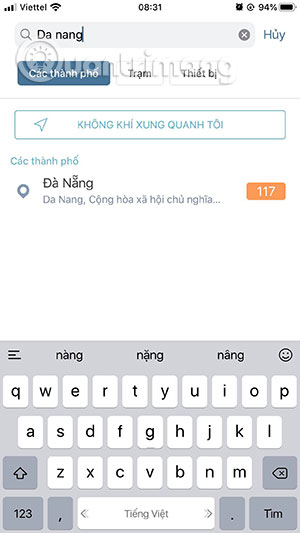
Or simply, you can always search for the city name (unsigned) in the search bar above and click the city below to add it.
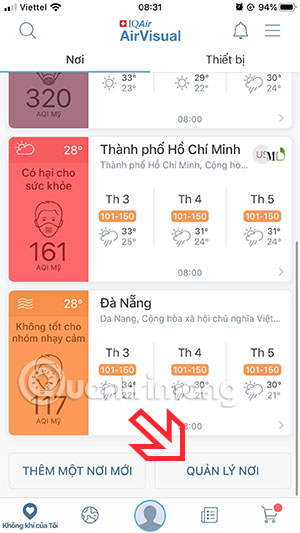
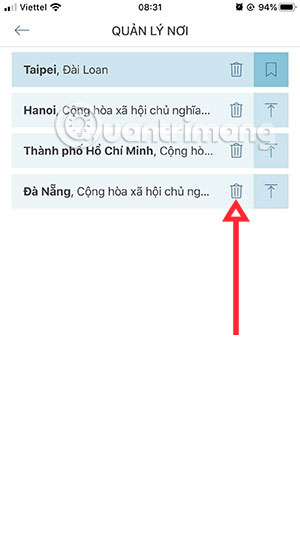
Step 4: If you want to delete the city added to the list, you just need to go outside the main screen and select Manage places . Here is a list of cities you have added to AirVisual, click the trash image if you want to leave that city.
If you want to add AirVisual to the Widget section of your iPhone, drag the iPhone's home screen all the way to the left. At the bottom of the Widget section, click Edit and click the blue plus sign in the AirVisual widget. Note that this widget will only display the first city in the list of AirVisual.
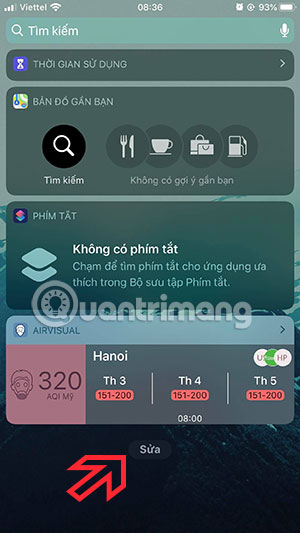
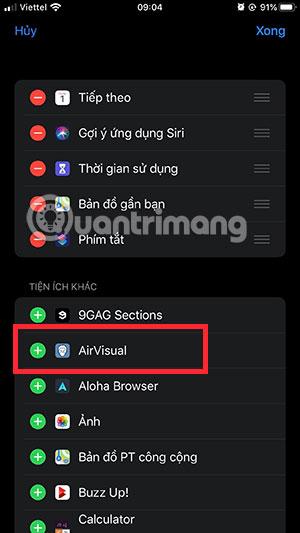
Now that you've added a new city to AirVisual, adding a city to AirVisual will help you keep track of air pollution levels in a relative city or monitor pollution levels in your location. Intends to travel to.
FAQ
What is A Guide to Adding New Cities to Airvisual to See Air Pollution about?
It provides a structured overview of airvisual, explains the main context, and highlights practical takeaways for readers.
Why does this topic matter?
Understanding the main concepts helps readers evaluate the issue, avoid common mistakes, and make better-informed decisions.
How should readers use this information?
Use the guidance as a practical starting point, confirm details that may have changed, and follow current product, safety, or security recommendations.
Related Articles
 How to Check the Air Pollution Level on the Phone7 minutes read
 AirVisual - Application to Check Air Pollution on iPhone, Android Phones5 minutes read
 The Blockade of 1.3 Billion People Returned to India a Clear4 minutes read
 Unusual Story: Air Pollution Can Adversely Affect Your Kidneys3 minutes read
 The Airvisual Air Quality Measurement Application Disappears from3 minutes read
 Low Levels of Air Pollution May Also Increase the Risk of Asthma3 minutes read
Reader Comments 0
Sign in with email or Google to join the discussion.