Table of Contents
Tết Nguyên Đán, the Vietnamese Lunar New Year, is a time to reunite with family, honor ancestors, and wish one another good fortune. Preparations begin in the last lunar month. Other customs take place at midnight or in the first days of the new year. Which ones a family observes depends on its region and household traditions.
1. Send off the Kitchen Gods (Ông Công, Ông Táo)
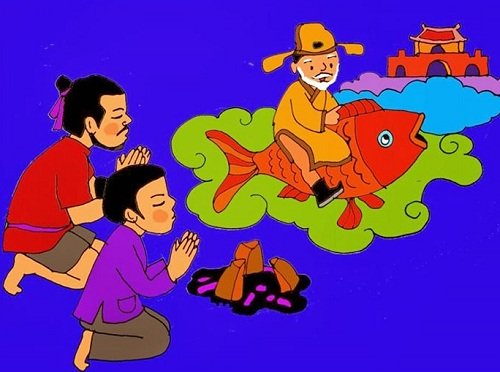
On the 23rd day of the twelfth lunar month, some families make offerings to the Kitchen Gods, who, according to tradition, report on the household to the Jade Emperor. Carp are associated with the send-off. The offerings and timing vary by household.
2. Wrap bánh chưng and bánh tét

Bánh chưng is a square sticky rice cake especially associated with northern Tết. Bánh tét, common in central and southern Vietnam, is cylindrical. Both are wrapped before cooking, and savory versions often contain mung beans and pork. Wrapping the cakes can be a family activity in the days leading up to Tết.
3. Decorate with flowers and kumquat trees
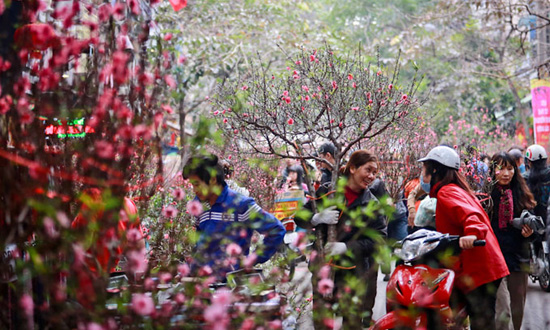
Peach blossoms are a familiar Tết decoration in the north, while yellow apricot blossoms are common in the south. Kumquat trees and chrysanthemums are also popular. What goes on display depends on the region and what the household can find.
4. Arrange a fruit tray (mâm ngũ quả)
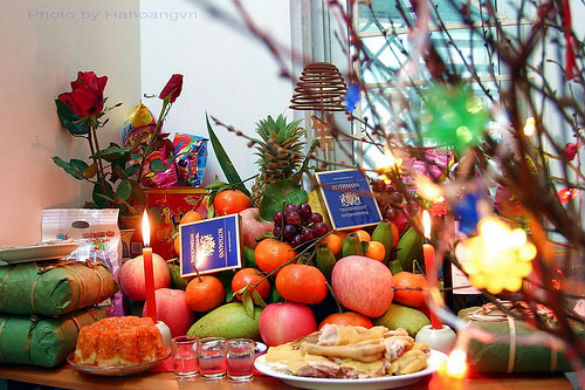
Families may arrange fruit on the ancestral altar as an offering and an expression of their hopes for the coming year. The fruits and their associations vary across regions. A tray in northern Vietnam may look quite different from one in the south.
5. Clean the house before Tết
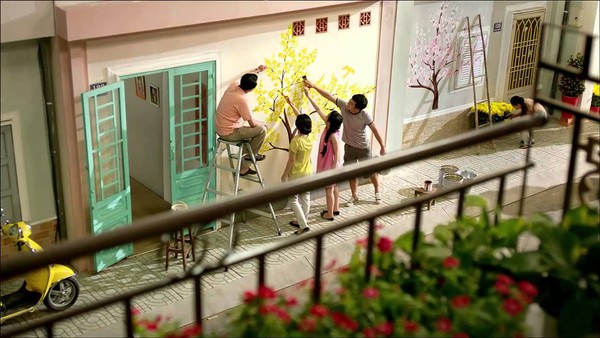
Cleaning and tidying before Tết readies the house for visitors and gives the family a symbolic fresh start. Families often do the larger chores before the first day of the new year.
6. Visit and tend ancestors’ graves
Some families visit relatives’ graves before Tết to tidy the site and pay their respects. It is one way of including deceased relatives in a holiday centered on family reunions.
7. Hold a year-end meal and offering (tất niên)
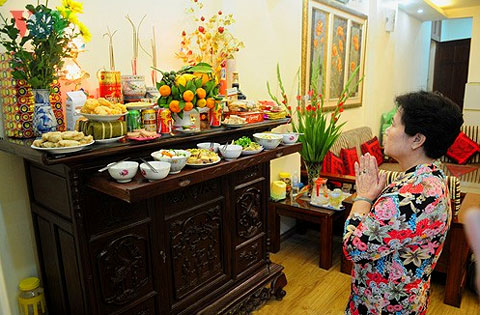
Before midnight on the last day of the lunar year, families may gather for a year-end meal and place food or incense on the ancestral altar. The gathering is an occasion to remember ancestors and share a meal before the holiday visits begin.
8. Mark the turn of the year (giao thừa)
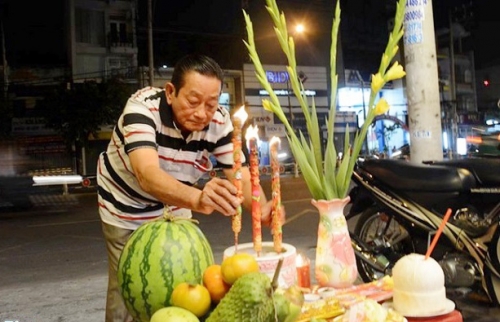
Giao thừa is the transition into the first day of the lunar year. Some households mark it at midnight with offerings indoors, outdoors, or both, depending on family practice.
9. Bring home a symbol of good fortune (hái lộc)
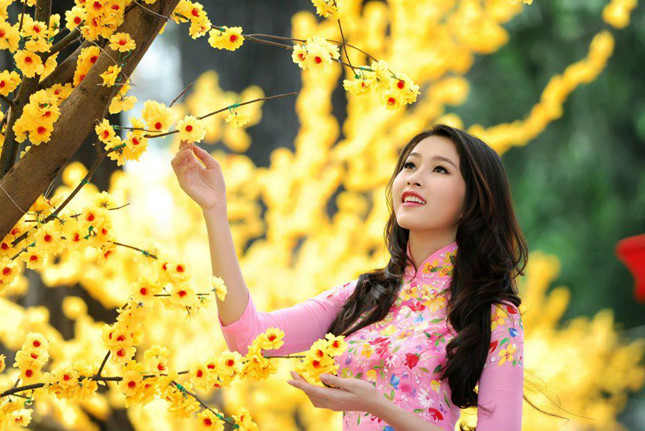
Hái lộc is a custom of bringing home a token of good fortune at the start of the year. It has traditionally been associated with a fresh twig or sprig. Where picking plants is prohibited, a token already offered by a temple or a plant bought for the home serves a similar purpose.
10. Welcome the first visitor (xông đất)
In this tradition, the first person to enter a home after the new year begins is thought to set the tone for the year ahead. Some households arrange the visit in advance. If you are unsure whether a family observes it, ask before dropping by on the first morning.
11. Ask for New Year calligraphy (xin chữ)
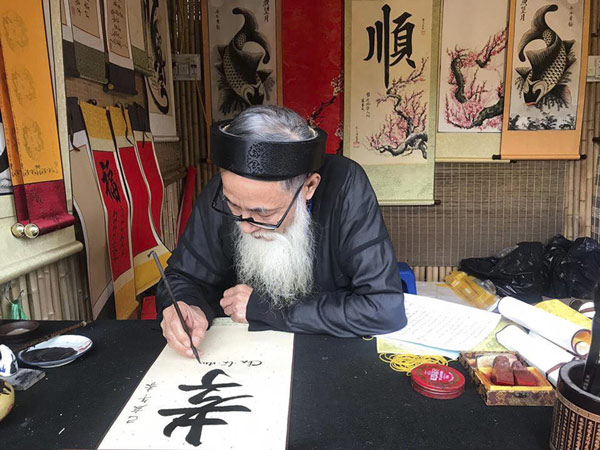
At a calligraphy stall or festival, people may request a character or phrase that expresses a wish for the year. Common choices express happiness, virtue, peace, or longevity. Households may also display paired New Year verses.
12. Raise a Tết pole (cây nêu)
In places that keep this custom, people erect a tall bamboo pole and decorate it with symbolic objects. The pole is traditionally associated with keeping misfortune away. The decorations and the days on which it goes up or comes down vary.
13. Exchange greetings and lucky money (lì xì)
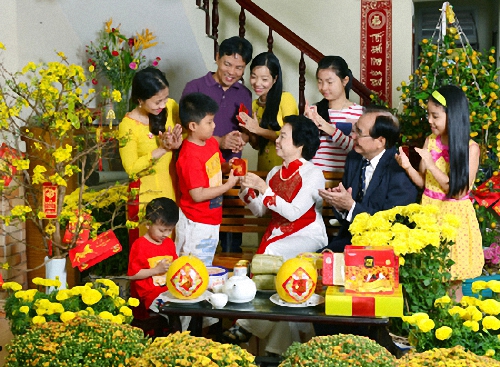
Children often greet parents and grandparents with wishes for health and long life. Adults may give children money in red envelopes as a wish for good fortune. The gesture matters more than the amount.
14. Choose the first outing (xuất hành)
Some people choose a favorable time and direction for their first trip outside the home in the new lunar year. The outing can be as simple as the first visit of the day.
15. Visit a pagoda (đi chùa)
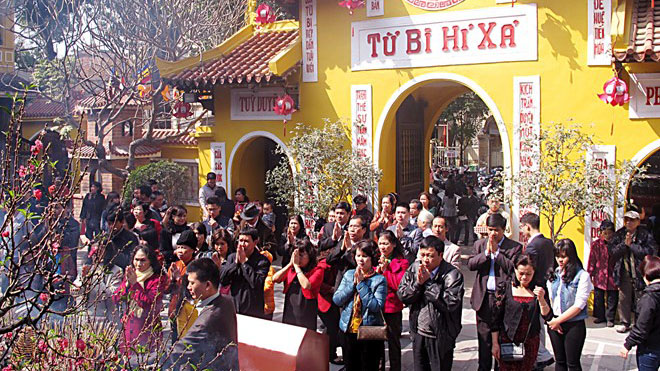
Some families visit a Buddhist pagoda during the first days of Tết to offer incense, pay their respects, or pray for peace. Customs vary by site. Follow posted guidance on offerings and photography.
Related Articles
 13 traditional customs during the traditional Vietnamese New Year
 Thanh Minh and Vietnamese customs
 The custom of welcoming unique New Year in the world
 Homework and outdoor worship offerings under Vietnamese traditional customs
 Origin and customary meaning to celebrate the Tet holiday
 The meaning of popular Lunar New Year traditions around the world
Reader Comments 0
Sign in with email or Google to join the discussion.