Table of Contents
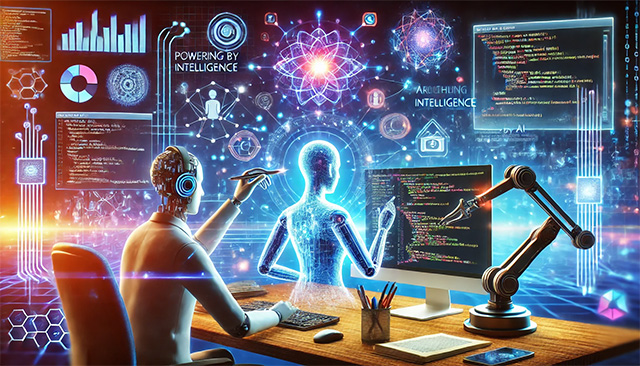
Vibe coding is a conversational way to build software: you describe the result you want, let an AI coding tool generate or modify the code, run the result, and continue refining it with more instructions. It can help people prototype quickly, but it does not remove the need to understand requirements, test behavior, protect data, and take responsibility for what the software does.
Tools such as Claude Code, OpenAI Codex, and Google's coding agents can inspect project files, propose changes, run approved commands, and respond to test results. Their exact capabilities and access controls change over time, so the workflow matters more than any one product name.
Therefore, many experts believe that applications created using 'vibe coding' could soon flood the market and put significant pressure on traditional programming.
This shift is already forcing businesses to think about how they can manage AI-generated code safely. While individual developers can use simple tools for small tasks, larger organizations need more control over their systems. Platforms like VibeFlow for development teams help coordinate multiple AI agents to build and test software under strict guidelines. This setup keeps a clear record of all changes and makes sure the code meets security standards. By using these governed platforms, companies can build applications quickly without losing oversight.
How vibe coding works
- Describe the outcome: explain the user, task, inputs, expected output, constraints, and environment.
- Let the agent inspect the project: it reads relevant code, configuration, and tests within the access you grant.
- Review a plan or proposed change: clarify assumptions before a large edit.
- Generate and run: the tool creates code and may run tests, linters, or a local preview.
- Inspect the result: test real scenarios, not only the happy path demonstrated by the agent.
- Iterate: report specific failures and request focused changes.
The process feels different from traditional line-by-line programming because the user spends more time specifying behavior and evaluating results. The code still exists, and someone still needs to own it.
Where it works well
- Disposable prototypes used to test an idea.
- Small internal utilities with limited data and a clearly defined owner.
- Boilerplate, repetitive migrations, test scaffolding, and documentation drafts.
- Exploring an unfamiliar codebase and locating relevant files.
- Creating several implementation options for a developer to compare.
- Automating a well-understood task with observable inputs and outputs.
AI is most effective when the request is concrete and the result can be checked cheaply. “Import this CSV, reject invalid rows, and show a report with these fields” is more testable than “build a good data platform.”
Where it becomes risky
A generated application may appear to work while containing hidden failures. Common risks include:
- Incorrect assumptions: the agent fills gaps in a vague requirement with behavior nobody approved.
- Security flaws: unsafe authentication, missing authorization, exposed secrets, weak validation, or vulnerable dependencies.
- Data loss: destructive database or filesystem operations that were not tested against backups and recovery procedures.
- False confidence: tests generated by the same model can repeat its misunderstanding instead of challenging it.
- Maintenance debt: duplicated logic, unnecessary packages, inconsistent architecture, and code the owner cannot debug.
- Privacy and intellectual-property concerns: project files or customer data may be processed outside the boundaries an organization permits.
- Prompt injection: instructions hidden in repository content, issues, webpages, or dependencies may attempt to redirect an agent's actions.
Can non-programmers build software with AI?
Non-programmers can create useful prototypes and personal tools, especially with a limited scope. The difficult part appears when the program handles logins, payments, private data, legal obligations, multiple users, unreliable networks, or long-term maintenance. At that point, judging the generated code requires engineering and domain knowledge even if typing the code does not.
A working demo is evidence that one path worked once. Production readiness also requires failure handling, accessibility, performance, monitoring, backups, upgrades, security review, and support.
Does vibe coding replace software companies?
AI can reduce the time required for some implementation tasks, which changes the economics of prototypes and routine software. It does not make complex projects equivalent to a short prompt. Organizations still need to decide what to build, integrate it with existing systems, validate regulatory and security requirements, migrate data, train users, operate the service, and respond when it fails.
Claims that a particular market lost a specific amount solely because of vibe coding, or that a professional system can always be recreated in hours, need strong evidence. Software costs vary widely with requirements and risk; a simple interface and a production system are not comparable merely because they look similar in a screenshot.
A safer AI-assisted development workflow
- Start in an isolated branch or test environment. Do not give an agent unrestricted access to production systems.
- Write acceptance criteria. Include error cases, permissions, data rules, browser or device support, and performance expectations.
- Limit access. Provide only the files, tools, credentials, and network destinations required for the task.
- Keep secrets out of prompts and repositories. Use established secret-management practices.
- Review every diff. Large unexplained changes should be split into smaller units.
- Test independently. Add negative cases, permission tests, recovery tests, and manual checks based on real user workflows.
- Scan dependencies and licenses. Generated code can introduce packages with security, maintenance, or licensing problems.
- Deploy gradually. Use backups, monitoring, rollback plans, and limited exposure before a broad release.
How the developer's role changes
AI shifts effort from entering every line toward defining systems and verifying them. Developers still translate ambiguous needs into precise requirements, choose architecture, manage tradeoffs, protect users, review code, design tests, investigate failures, and maintain the product after launch.
Code-reading becomes more important, not less. A person who can recognize an unsafe query, a race condition, a broken permission boundary, or an unmaintainable abstraction can use an agent productively without accepting every suggestion.
When to use vibe coding
| Situation | Recommended approach |
|---|---|
| Personal prototype with no sensitive data | Use AI freely, but keep backups and verify outputs |
| Internal tool with limited impact | Use AI with code review, access controls, tests, and an owner |
| Public app with accounts or payments | Require experienced engineering and security review |
| Medical, legal, financial, safety, or critical infrastructure system | Use governed development, qualified domain review, formal validation, and strict change control |
Vibe coding is best understood as a faster interface to software development, not a guarantee of correct software. The advantage comes from shortening the build-and-feedback loop; the quality still comes from clear decisions, careful review, and evidence that the system works safely.
Related Articles
 What Is Vibe Engineering?: What You Need to Know10 minutes read
 What Is Decomposition and Why Does AI Need You to Do It?21 minutes read
 Replit vs. Cursor: Which AI Coding Tool Is Better?12 minutes read
 Lenovo Sent an Invitation to Launch Vibe X2, an Invitation to4 minutes read
 Best AI Tools to Support Programming9 minutes read
 What Is Subframe? AI UI Design-to-Code Guide12 minutes read
Reader Comments 0
Sign in with email or Google to join the discussion.