Table of Contents
This updated guide explores interesting facts about refrigerators you should know with practical details, clear explanations, and useful takeaways. Refrigerators are the unsung heroes of everyday life, helping to keep food fresh and drinks cold for enjoyment. These amazing appliances work around the clock to keep products, such as food, safe by slowing the growth of harmful bacteria like E. coli.
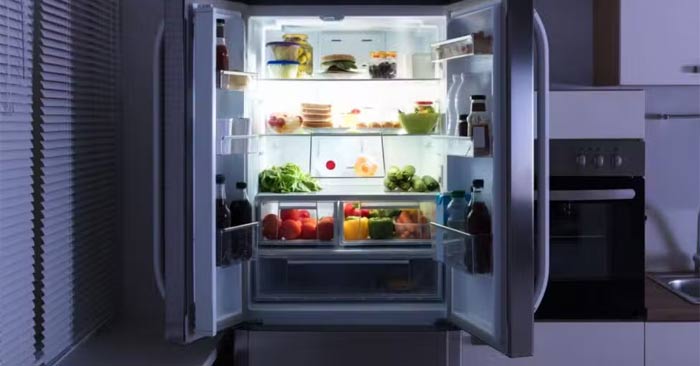
Not only that, the refrigerator also has an interesting development history and interesting facts about it that you may not have known.
- Zimri-Lim, the former king of Mari, built an ice house to preserve food in the ancient Middle Eastern city of Terqa. Details of the feat are found on a cuneiform inscription from 1780 BC.
- By 400 BC, the yakhchāl, an ancient type of ice house, was being used for refrigeration in Persia. These more advanced ice houses were also capable of making their own ice!
- In 1748, William Cullen of the University of Glasgow gave the first public demonstration of a basic refrigeration system. Although a marvel, it was not yet useful for any purpose.
- Then, in 1805, American inventor Oliver Evans took it a step further by making a practical design for the first refrigerator, but it also went nowhere.
- Often referred to as the 'father of the refrigerator,' Jacob Perkins, another American inventor, teamed up with Oliver Evans in 1835 to develop the first practical refrigerator using vapor compression technology.
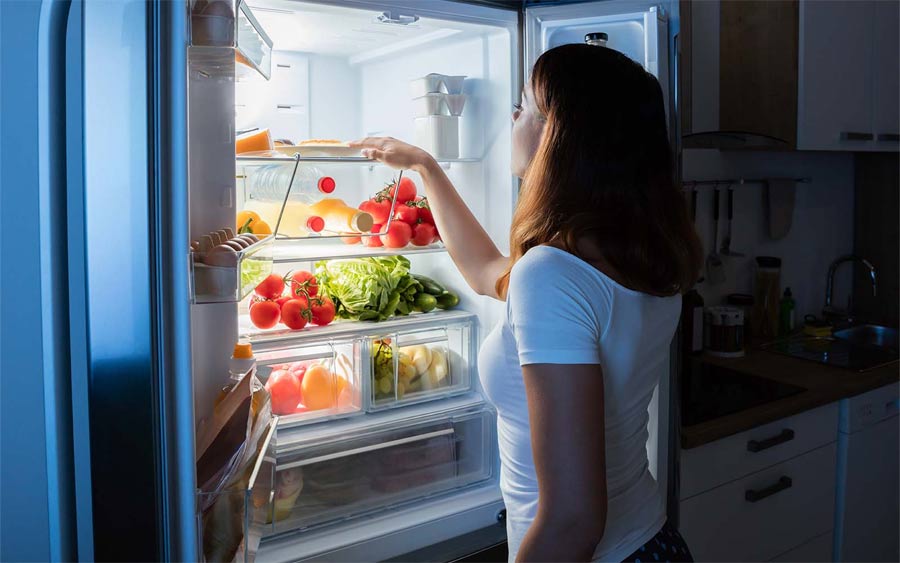
- In 1850, Alexander Twining developed the first commercial refrigerator, which was later used by establishments such as breweries.
- German scientist and engineer Carl von Linde revolutionized refrigeration in the 1870s by creating an efficient ammonia-powered refrigerator. Alarmingly, ammonia is a colorless, volatile gas containing nitrogen and hydrogen!
- In 1913, American engineer Fred W. Wolf created the first home electric refrigerator. It was still a basic design: a refrigeration unit on top of an ice chest.
- Just five years later, in 1918, William C. Durant unveiled the world's first freestanding household refrigerator. Kitchens would never be the same again; mass production had begun.
- The term refrigerator dates back to the early 1600s and is derived from the Latin words refrigerare ('to cool') and frigus ('cold').
- From the late 1800s to the 1920s, refrigerators began using methyl chloride and sulfur dioxide, both of which are dangerous gases.
- The first home refrigerators, introduced by William C. Durant in 1918, cost between $500 and $1,000 (about $7,000 to $14,000 today!).
- Refrigerator handles are considered one of the dirtiest parts of the home. Many hands touch them regularly, but they are rarely cleaned, making them a hotbed for bacteria and other nasty germs.
- In 2018, NASA launched the 'coldest refrigerator in space' to the International Space Station to study quantum physics of atoms near absolute zero, or 100 times colder than space.
- In East Africa, less than 9% of households own a refrigerator. Burundi, South Sudan and Rwanda have the lowest rates in the region, with some places having rates below 2%.
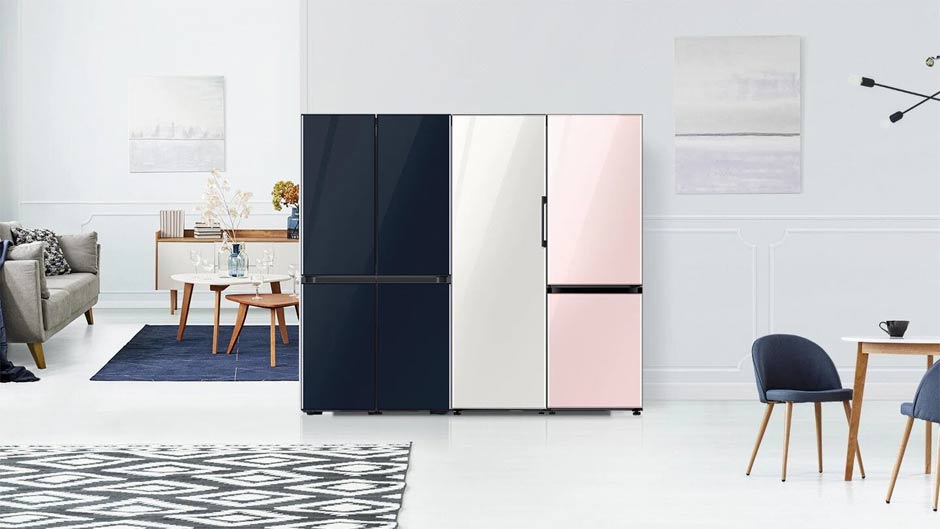
- The first smart refrigerator with Wi-Fi connectivity was launched by LG in 2000. Over time, smart refrigerators have evolved rapidly and now offer many features, such as replying to messages through the refrigerator door!
- Some refrigerators had ice-making capabilities since the 1950s, but in 1965, Frigidaire introduced models that could dispense ice cubes.
- The ideal refrigerator temperature is between 37°F (3°C) and 40°F (5°C).
- Modern refrigerators have automatic defrosting devices. These work by briefly warming the cooling element, called the evaporator coil, to remove any frost build-up. Previously, you had to chisel the ice out of your refrigerator.
- The average size of a refrigerator is 28 to 40 inches (71-101 cm) wide, 58 to 72 inches (147-182 cm) high, and 28 to 35 inches (71-89 cm) deep.
- The average lifespan of a standard modern refrigerator is 10 to 15 years. Still, built-in refrigerators can last up to 20 years.
- In 2008, the Large Hadron Collider broke the Guinness World Record for the world's largest refrigerator with a mass of 11,106 tonnes.
- One of the world's smallest refrigerators is MedActiv's LifeinaBox. Measuring just 7.9 x 3.9 x 3.9 inches (20x10x10 cm) and weighing just 3.1 pounds (1.4 kg), this refrigerator is designed to keep important medications at a consistently cold temperature when you're on the go.
- In 1947, home appliance brand Amana launched the first refrigerator with the freezer located at the bottom instead of on top.
- While Samsung is often associated with mobile phones and TVs, it is a major player in the refrigerator industry. Whirlpool and LG are also notable companies that manufacture refrigerators.
- Refrigerators are often among the most energy-consuming household appliances. In the United States, refrigerators use between 300 and 800 kWh of electricity per year, or about 10% of the average total electricity bill.
- If you grew up with magnetic letter and number puzzles on your refrigerator, you're one of many—they've been around since the 1960s!
- Some foods should never be refrigerated to maintain their best quality. for instance, potatoes and tomatoes lose their texture and flavor, and bananas turn brown and mushy.
- Every year on May 29, people celebrate Pillow on the Refrigerator Day. Placing a pillow on the refrigerator on this day is believed to bring wealth and good luck.
FAQ
What is the main takeaway about Interesting Facts About Refrigerators You Should Know?
The key is to understand the core idea, compare the available options, and apply the practical guidance that matches your situation.
What should beginners know about Interesting Facts About Refrigerators You Should Know?
Start with the essential steps and terminology. Avoid changing advanced settings until you understand how they affect performance, privacy, cost, or compatibility.
How can I use this information in practice?
Follow the relevant section in order, test one change at a time, and confirm the result before moving to the next step or recommendation.
Related Articles
 Interesting Facts About the Sun That You May Not Know15 minutes read
 40 Interesting Facts You Didn't Know About the Sun13 minutes read
 5 Models of Refrigerators Below 4 Million Worth Buying the Most7 minutes read
 15 Interesting Facts About DRAGON Phenomenon You May Not Know3 minutes read
 11 Interesting and Quirky Historical Facts That Make4 minutes read
 12 Interesting Facts About Food That Everyone Should Know7 minutes read
Reader Comments 0
Sign in with email or Google to join the discussion.